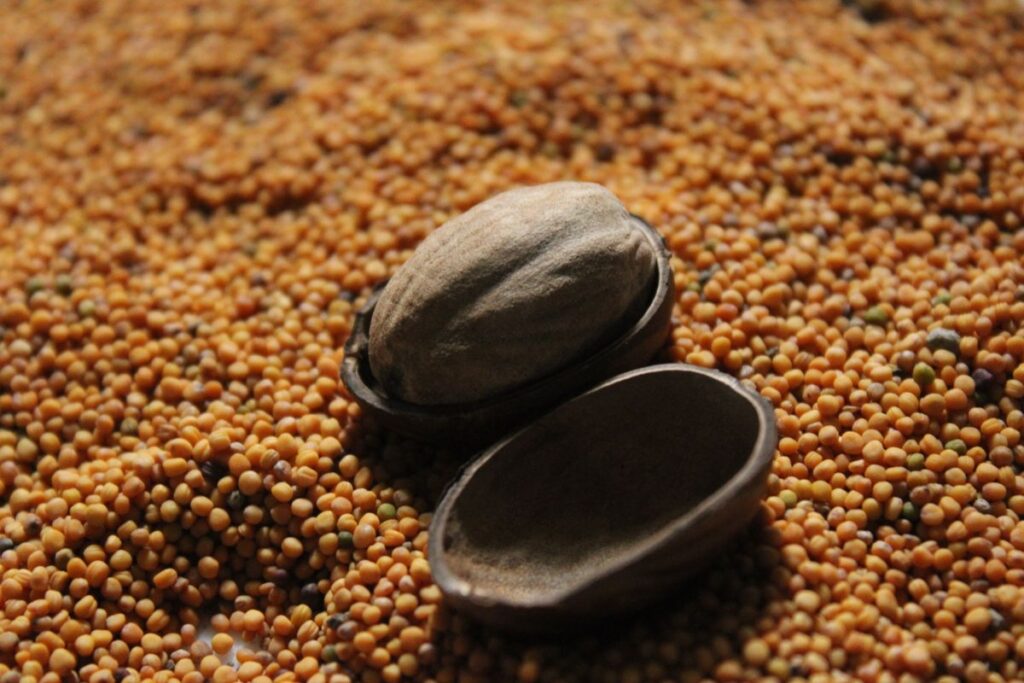
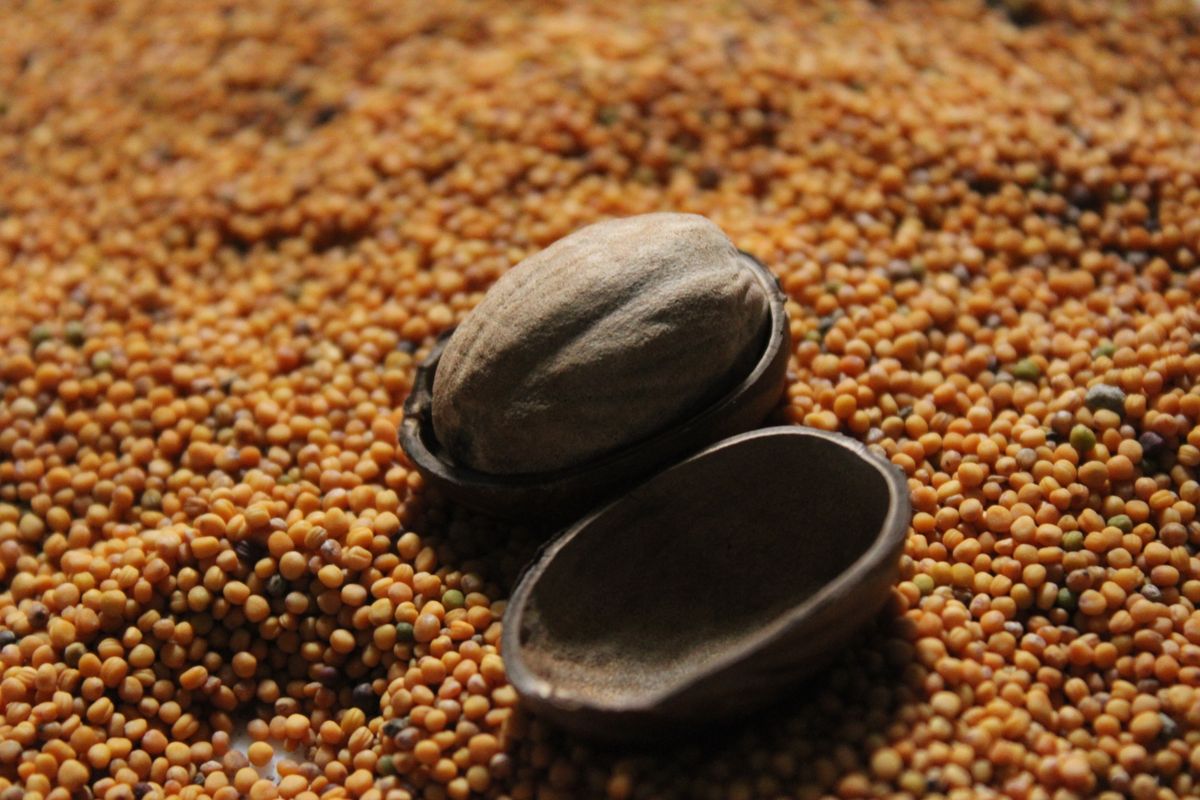
Open any Pakistani spice dabba and you will find a tiny jar of round seeds at the back — the one that pops and crackles the moment it hits hot oil. That is rai, mustard seed, and the question every cook asks before buying a pack is the same: what is the real mustard seed price in Pakistan right now, and which kind — yellow, black or brown — should you buy? A single teaspoon seasons a whole pot of daal, a spoonful holds a jar of achar together for months, and a 250g pack can last a family two months.
This guide gives you checked prices, not guesses. We checked live seller pages on 28 and 29 November 2026 and recorded 18 verified price rows for mustard seeds — whole and ground, yellow, black and white, from 50g to 1kg, from five Pakistani online sellers — with a per-100g column so a 50g pouch and a 1kg pack can be compared fairly. We also checked the mandi rate for sarson, so you can see what the farmer gets and what the shop charges.
One honest note first: BaBaShop does not sell mustard seeds. This is a price and buying guide, not a product page. Where we could not verify a price or a claim, we say so plainly instead of guessing. And one more honest note: this guide is about mustard seeds — sarson and rai. If you need mustard oil, our companion guide covers it separately, and we link to it below rather than repeating its prices here.
Quick answer: mustard seed price in Pakistan 2026
- Rs 78 buys the cheapest 50g pack — whole rai at Subhan Bazar.
- Rs 750 buys a 1kg pack of white mustard seed — Mufti Organics.
- Rs 75 per 100g is the lowest per-100g rate — Mufti white mustard at 1kg.
- Rs 240 per 100g is the highest per-100g rate — the same seller’s 50g pack.
- Rs 155 to Rs 160 a kilo is the mandi rate for sarson — AMIS Punjab, 4 November 2026.
- Rs 113 to Rs 150 a month is what a teaspoon a day costs at the cheapest rates — about Rs 4 to Rs 5 a day.
What this guide covers
- What are mustard seeds? Sarson and rai explained
- Mustard seed price in Pakistan: verified price table
- More verified prices: ranges, bulk and toria
- Mandi rate: sarso rate today in Pakistan
- Mustard seeds 1kg price in Pakistan
- Black mustard seeds in Urdu: kaali rai and sarson ke beej
- Yellow vs black vs brown mustard seeds: the honest comparison
- Mustard seeds vs mustard oil: the companion guide
- Best mustard seeds in Pakistan: our honest picks
- Mustard seed nutrition: what is in 100g?
- Mustard seed benefits: what is proven and what is not
- Mustard seed side effects and precautions
- Who should buy mustard seeds — and who should avoid them
- How to use mustard seeds: tadka, achar, paste and saag
- How to choose good mustard seeds: the 10-point check
- How to store mustard seeds
- City-wise prices: Lahore, Karachi, Islamabad, Sargodha
- Cost breakdown: what a month of mustard seeds really costs
- Mustard seeds vs kalonji vs sesame: which seed is better value?
- 12.12 buying checklist
- Methodology: how we checked these prices
- FAQs
- Conclusion
What are mustard seeds? Sarson and rai explained
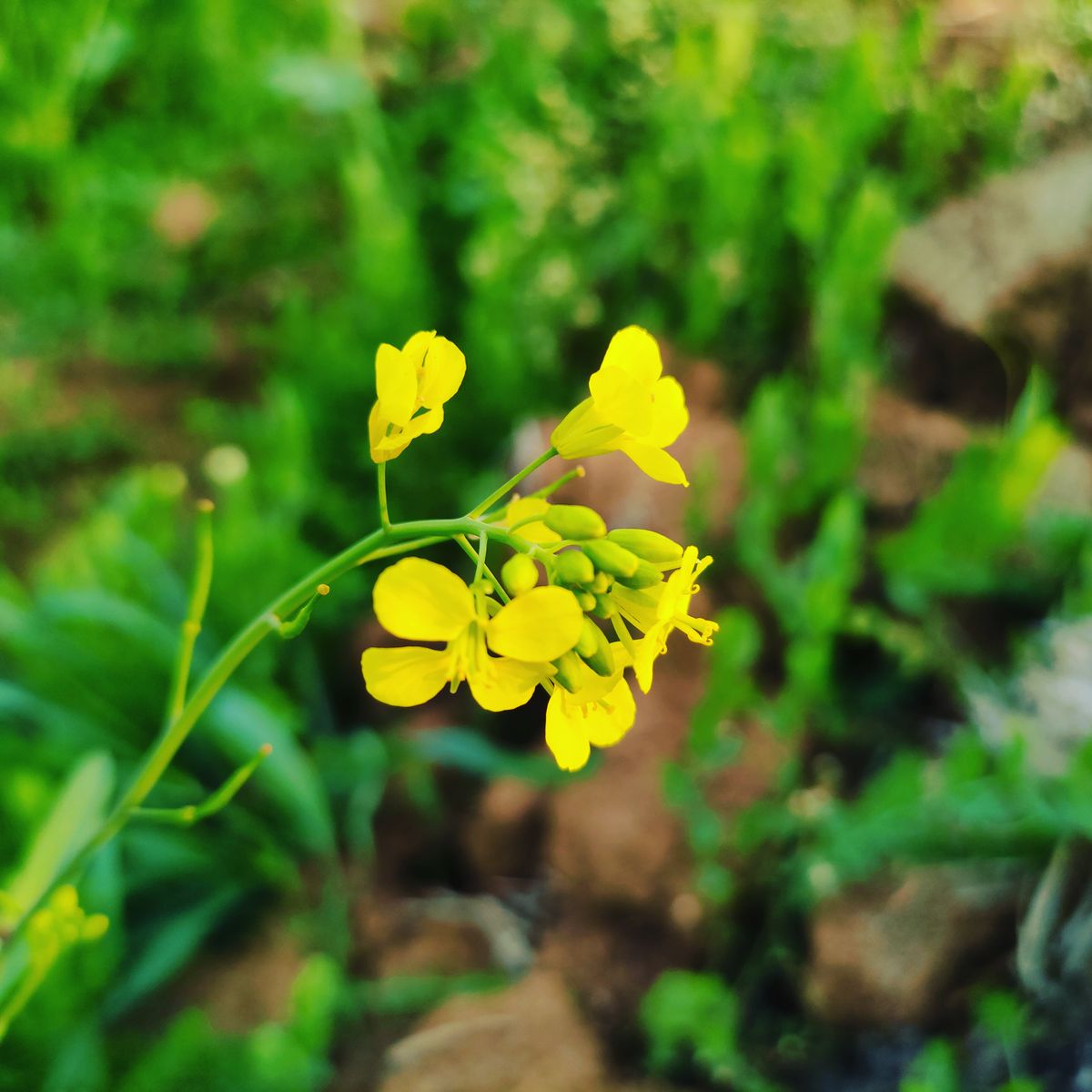
Mustard seeds are the tiny, round seeds of the mustard plant, a member of the cabbage family (Brassicaceae) — the same family as cauliflower, cabbage and broccoli. In Pakistan they are called sarson ke beej or rai, and they are one of the oldest spices in the world: mustard has been grown and eaten for more than 5,000 years, and it is mentioned in ancient Indian and Sumerian texts, in Ayurveda and Unani medicine, and in the New Testament, where the tiny mustard seed stands for faith.
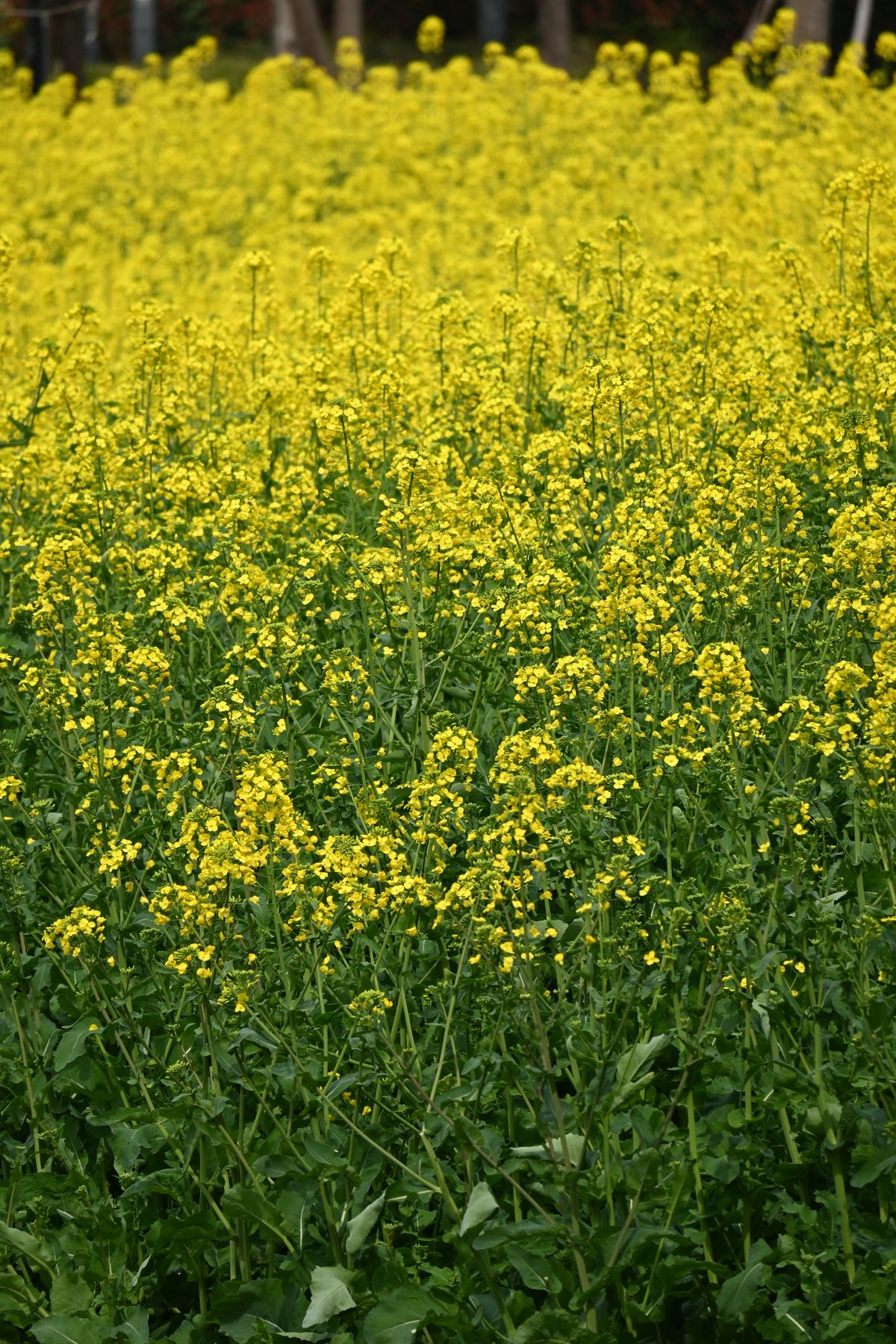
Pakistan grows mustard as a winter oilseed crop. The plant gives us three things at once: the green leaves become sarson da saag, the seeds are pressed for sarson ka tel (mustard oil), and the whole seeds season our food. The main growing areas are Punjab — Bhakkar, Layyah, Mianwali, Jhang, Faisalabad, Sargodha and Bahawalpur — with Sindh and Khyber Pakhtunkhwa as well. Toria is sown in September, raya and sarson in October to early November, and the new crop arrives in March and April. That calendar matters for price: rates are usually lowest at harvest in March and April, and they firm up later in the year as old-crop stocks run down.
Three kinds of mustard seed reach Pakistani kitchens, and they are not the same seed under three names. They come from three different plants, they look different, they taste different, and they cost different amounts — which is why the price tables below are split by kind, not lumped together.
Yellow mustard seed (peeli sarson, Sinapis alba)
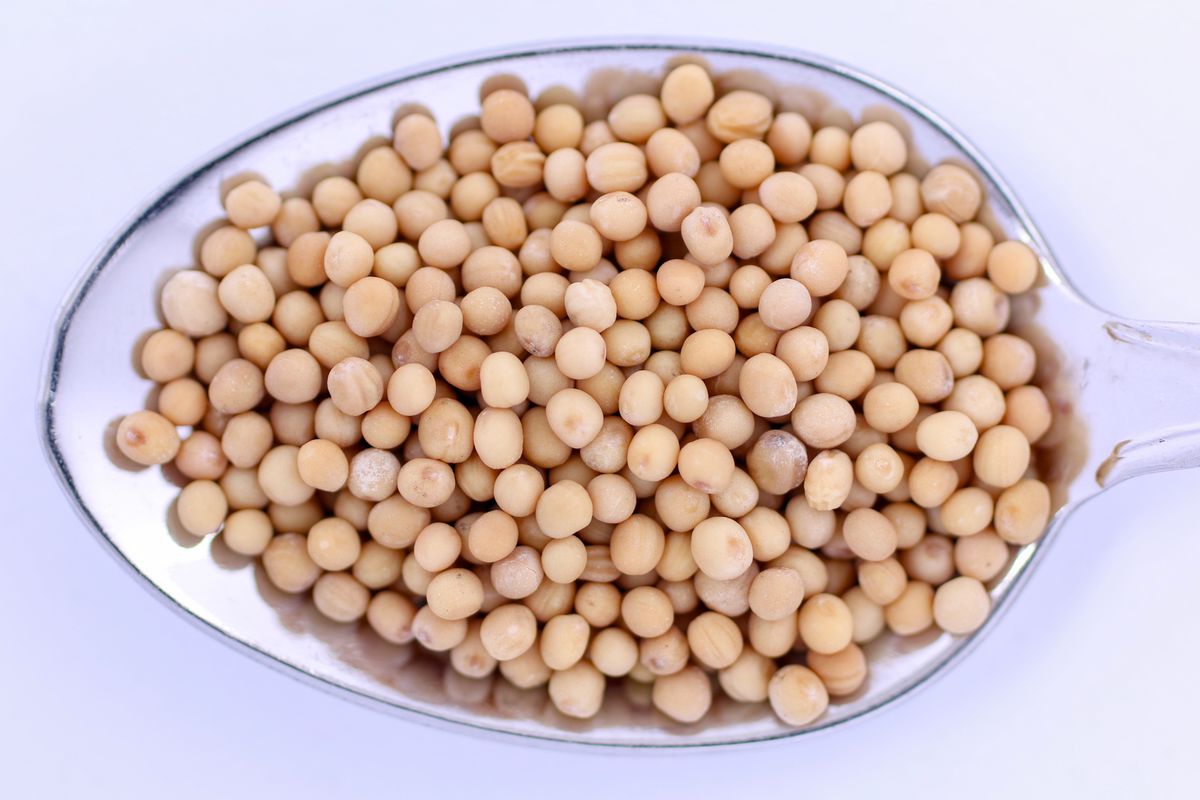
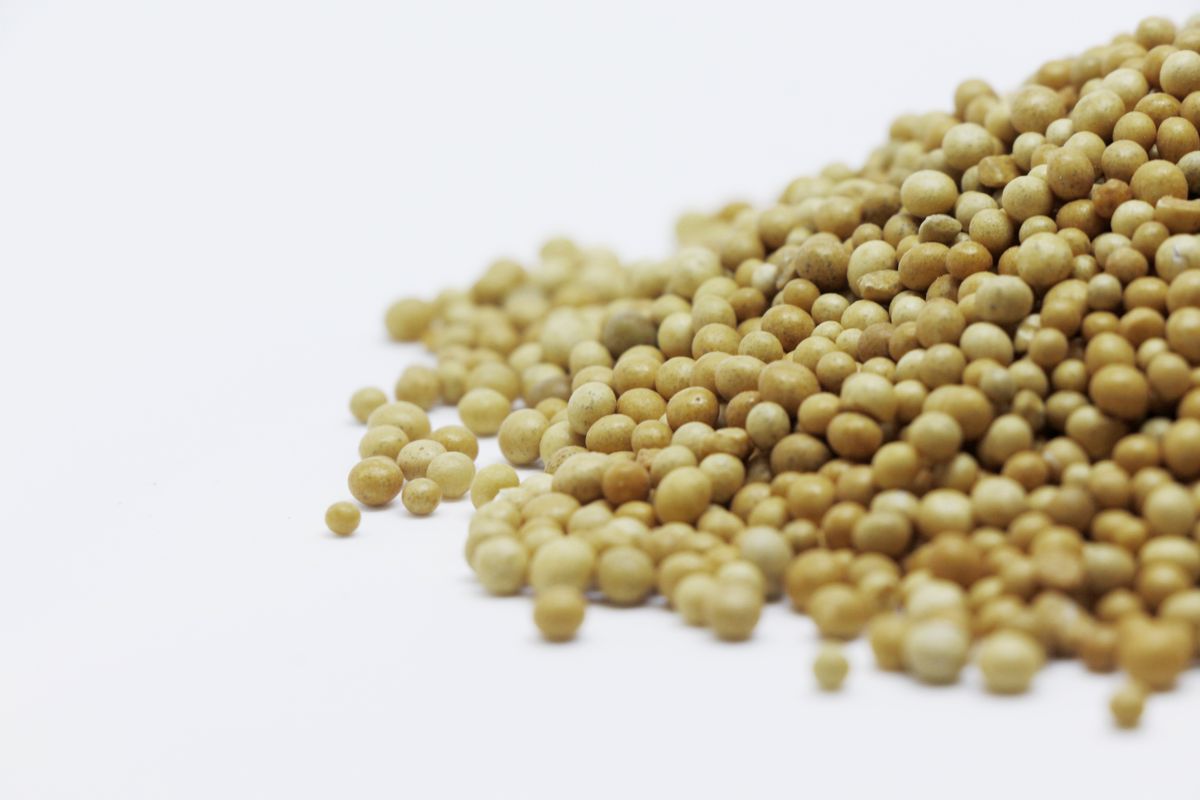
Yellow mustard seed — also called white mustard seed, safed sarson or peeli sarson — is the largest of the three, pale yellow to light tan, round and smooth. It is the mildest kind: a gentle, slightly tangy heat with a nutty taste. It is the seed of choice for pickles (achar), mustard paste and salad dressings, and it is the kind most often sold in the small branded-looking packs online. Its nutrition is a little different from the other two: about 469 calories per 100g, with more calcium (521 mg) than brown or black seed.
Black mustard seed (kaali rai, Brassica nigra)
Black mustard seed — kaali rai or sarson siyah — is the smallest of the three and the most pungent. A pinch of it in hot oil pops like tiny firecrackers and gives daal and sabzi their tempering (tadka). It is the seed of the classic desi kitchen: tadka daal, saag, fish curry and Bengali-style dishes. It is also the dearest kind per kilo in the retail market, because the seed is small, the yield is lower and the demand from pickle-makers is high.
Brown mustard seed (rai, Brassica juncea)
Brown mustard seed — rai, kali sarson or Banarasi rai — is the workhorse of Pakistan. It is medium in size and medium in heat, and it is the seed most commonly used in Indian and Pakistani pickles, curries and oil extraction. When a Pakistani shop sells a pack labelled simply “rai” or “mustard seeds” with no colour named, it is usually brown mustard. It is also the seed behind most of Pakistan’s mustard oil: the country grows rapeseed-mustard on about 307,000 hectares, producing about 233,000 tonnes a year, which supplies about 17 percent of our domestic edible oil.
Red mustard seed (rai surkh) and toria
Two more names appear on pansari shelves and are worth knowing so they do not confuse you. Red mustard seed (rai surkh) is a reddish-brown seed sold by herbal stores, used in traditional remedies more than in cooking. Toria is not a mustard seed at all in the kitchen sense — it is rapeseed (Brassica campestris), a short-duration oilseed crop sown in September and harvested in December and January. It trades dearer than sarson in the mandi — Rs 195 to Rs 225 a kilo against Rs 155 to Rs 160 for sarson — and it is sold by farm-supply stores in 1kg and 2kg packs for sowing and oil pressing, not for tadka. Do not buy toria thinking it is cooking rai.
Read the kind, not just the price: a 250g pack labelled “mustard seeds” can cost Rs 250 at one store and Rs 400 at another — and both prices can be honest, because the first is yellow seed and the second is a dearer kind, or because one is whole seed and the other is ground. Before you compare two prices, check which kind, which size and whether it is whole or ground. A price without a kind name tells you nothing.
Mustard seed price in Pakistan: the verified price table
Every price below was read directly from the seller’s own live product page on 28 or 29 November 2026. The per-100g column is our own arithmetic, rounded to the nearest rupee. Two sellers give the backbone of this table: Subhan Bazar, which lists whole rai, yellow rai and ground rai in four sizes each, and Mufti Organics, which lists white mustard seed in five sizes. ChiltanPure adds a single yellow-seed pack. Together they give 18 exact rows — the most complete mustard-seed price picture we could verify from live pages.
| Product / Pack | Price (Rs) | Pack size | Price per 100g | Where verified |
|---|---|---|---|---|
| Subhan Bazar — Pakistani Rai (whole) | Rs 78 | 50g | Rs 156 | Subhan Bazar |
| Subhan Bazar — Pakistani Rai (whole) | Rs 148 | 100g | Rs 148 | Subhan Bazar |
| Subhan Bazar — Pakistani Rai (whole) | Rs 267 | 200g | Rs 134 | Subhan Bazar |
| Subhan Bazar — Pakistani Rai (whole) | Rs 667 | 500g | Rs 133 | Subhan Bazar |
| Subhan Bazar — Rai Peeli (yellow) | Rs 88 | 50g | Rs 176 | Subhan Bazar |
| Subhan Bazar — Rai Peeli (yellow) | Rs 168 | 100g | Rs 168 | Subhan Bazar |
| Subhan Bazar — Rai Peeli (yellow) | Rs 303 | 200g | Rs 152 | Subhan Bazar |
| Subhan Bazar — Rai Peeli (yellow) | Rs 758 | 500g | Rs 152 | Subhan Bazar |
| Subhan Bazar — Rai Powder (ground) | Rs 88 | 50g | Rs 176 | Subhan Bazar |
| Subhan Bazar — Rai Powder (ground) | Rs 168 | 100g | Rs 168 | Subhan Bazar |
| Subhan Bazar — Rai Powder (ground) | Rs 303 | 200g | Rs 152 | Subhan Bazar |
| Subhan Bazar — Rai Powder (ground) | Rs 758 | 500g | Rs 152 | Subhan Bazar |
| Mufti Organics — White Mustard Seed | Rs 120 | 50g | Rs 240 | Mufti Organics |
| Mufti Organics — White Mustard Seed | Rs 200 | 100g | Rs 200 | Mufti Organics |
| Mufti Organics — White Mustard Seed | Rs 250 | 250g | Rs 100 | Mufti Organics |
| Mufti Organics — White Mustard Seed | Rs 400 | 500g | Rs 80 | Mufti Organics |
| Mufti Organics — White Mustard Seed | Rs 750 | 1kg | Rs 75 | Mufti Organics |
| ChiltanPure — Yellow Mustard Seeds | Rs 250 | 250g | Rs 100 | ChiltanPure |
Sources: Subhan Bazar product pages (rai-whole, rai-peeli, rai-powder — variant prices read from the store’s own price data, 28 November 2026); Mufti Organics white mustard seed page (additional-information table, 28 November 2026); ChiltanPure yellow mustard seed page (250g pack, Rs 250, 28 November 2026). Prices can change; confirm on the seller’s page before you pay.
The honest range for retail mustard seed is Rs 75 to Rs 240 per 100g — more than three times from the cheapest to the dearest, which is a bigger spread than most spices show. The spread is almost entirely pack size, not kind: the same white mustard seed costs Rs 240 per 100g in a 50g pouch and Rs 75 per 100g in a 1kg pack. At Subhan Bazar the pattern is the same — whole rai falls from Rs 156 per 100g at 50g to Rs 133 at 500g, and yellow rai falls from Rs 176 to Rs 152. Two useful details follow. First, ground rai costs exactly the same as whole yellow rai at Subhan Bazar at every size — Rs 88, Rs 168, Rs 303 and Rs 758 — so you pay nothing extra for grinding; buy whole and grind it yourself only if you want it fresher. Second, the cheapest 250g pack in the whole table is Rs 250, at both Mufti Organics and ChiltanPure, which is a useful cross-check: two different sellers agree that a quarter kilo of yellow or white seed costs about Rs 250 right now.
The two-minute rule: before you pay, divide the price by the grams and multiply by 100. For everyday mustard seed, anything under Rs 150 per 100g is fair value right now. Between Rs 150 and Rs 200 per 100g you are paying for a small pack or a premium label. AboveRs 200 per 100g, you are buying a 50g or 100g pouch — fine for trying a kind once, but a poor way to stock a kitchen.
More verified prices: ranges, bulk and toria
Not every seller shows a price per pack size. Several pansari stores list a price range — the cheapest variant to the dearest — without showing which size costs what on a plain text read. Those ranges are still useful, because they bound the market, but they are not exact pack prices, so they sit in this section rather than the main table. The same goes for the bulk and farm-supply listings: 40kg bags and sowing seed are a different market from the kitchen pack, and mixing them into the main table would mislead you.
| Seller / Product | Price shown | Pack sizes offered | What we could (and could not) verify |
|---|---|---|---|
| Spices.pk — Brown Mustard Seeds (Brassica juncea) | Rs 222 | “Small Pack” (weight not stated) | Price verified; pack weight not stated on the page, so no per-100g rate |
| Organic Kitchen — Black Mustard Seeds | Rs 275 | Weight not stated | Price verified; pack weight not stated, so no per-100g rate |
| New Pansari — White Mustard Seeds | Rs 200 – Rs 850 | 50g, 100g, 250g, 500g; whole, ground, powder | Range verified; per-variant prices load in the shop’s selector and were not readable |
| Super Pansar — White Mustard Seed | Rs 120 – Rs 800 | 50g to 1kg; whole, powder | Range verified; per-variant prices not readable |
| Super Pansar — Black Mustard Seed (Sarson Siyah) | Rs 100 – Rs 700 | 50g to 1kg; whole, powder | Range verified; per-variant prices not readable; delivery Rs 200, free over Rs 5,000 |
| Super Pansar — Red Mustard Seeds (Rai Surkh) | Rs 200 – Rs 1,850 | 50g to 1kg; whole, ground, powder | Range verified; per-variant prices not readable |
| Zakir Pansar — White Mustard Seed | Rs 450 – Rs 7,200 | 100g to 1kg; whole, powder | Range verified; powder costs more than whole, but the split was not readable |
| The Lands Store — Toria Mustard Seed 1kg | Rs 850 | 1kg (sowing/oil seed) | Price verified; this is toria, not kitchen rai |
| The Lands Store — Super Raya Seed 2kg | Rs 1,745 | 2kg (sowing seed) | Price verified; Rs 873 a kilo, sowing seed, not kitchen rai |
| The Lands Store — Mustard Seed 40kg | Rs 10,200 | 40kg bag (oil extraction) | Price verified; Rs 255 a kilo, bulk bag |
| Kissan Store — Mustard Seed 40kg | Rs 11,150 | 40kg bag | Price verified; Rs 279 a kilo, bulk bag |
| Kissan Store — Yellow Mustard Seed 40kg | Rs 9,820 | 40kg bag | Price verified but OUT OF STOCK; Rs 246 a kilo |
All prices read 28–29 November 2026 from the sellers’ own pages. Ranges are the sellers’ own lowest-to-highest variant prices as shown on the page.
Three things in this table deserve a second look. First, the pansari ranges line up with the main table: Super Pansar’s black seed starts at Rs 100 (a 50g pack, most likely) and runs to Rs 700 (a 1kg pack, most likely), which matches the main table’s shape almost exactly. Second, Zakir Pansar’s white mustard looks dearer — Rs 450 to Rs 7,200 — but its range starts at 100g, not 50g, and its powder form costs more than whole, so the top of its range is a 1kg powder pack, not a 1kg whole-seed pack. Do not compare its Rs 7,200 with Mufti’s Rs 750 for 1kg without checking the form first. Third, the bulk bags tell you what the seed itself is worth: Rs 246 to Rs 279 a kilo in a 40kg bag, against Rs 750 a kilo for the same kind of seed in a 1kg retail pack. The gap is cleaning, grading, packing, small-pack handling and the seller’s margin — not the seed. If you press oil at home or pickle in bulk, the 40kg bag is the honest price; if you cook for a family, the retail pack is the one that matters.
What about Daraz and the supermarkets?
Daraz is where many Pakistanis check prices first, so it is worth saying plainly: we could not read a Daraz mustard-seed price directly, because the Daraz search page loads no product listings or prices in a text fetch — the same limit our earlier anjeer guide hit. Subhan Bazar’s own guide lists Daraz, HumMart and Sabzi.pk among the places to buy mustard seeds, and supermarkets such as Metro, Imtiaz and Carrefour among the offline options, but no Daraz listing price could be verified by us, so no Daraz price is in this guide. The same applies to branded spice packs from National or Shan: they sell mustard seeds in supermarkets, but no supermarket publishes a live shelf price online, so no branded-pack price could be verified. If you check Daraz or a supermarket shelf, compare the per-100g rate with the tables above before you decide.
Subhan Bazar also publishes its own older price table, dated June 2025: yellow mustard seeds Rs 350 to Rs 500 a kilo, black mustard seeds Rs 400 to Rs 600 a kilo. Those are the seller’s own figures, but they are five months old, and they sit below the live listing prices in our main table — Subhan’s own live 500g yellow pack works out to Rs 1,516 a kilo. That gap is a useful warning: a price table inside an article goes stale, and the live listing is the price that matters. We report the June 2025 table here so you can see it, but we do not use it as a current price.
Mandi rate: sarso rate today in Pakistan
The retail pack is only half the story. The other half is the mandi, where the seed changes hands in 40kg bags before it is cleaned, graded and packed. Zarat Ghar’s sarso-rate page, which reports the official AMIS Punjab figures, puts the mustard-seed rate at Rs 6,200 to Rs 6,400 per 40kg in Faisalabad — about Rs 155 to Rs 160 a kilo — with toria dearer at Rs 7,800 to Rs 9,000 per 40kg (Rs 195 to Rs 225 a kilo). The AMIS figures are dated 4 November 2026, and old-crop stocks are being traded now; the new sarson crop arrives in March and April.
| Crop / Mandi | Lowest (40kg) | Highest (40kg) | Average (40kg) | Per kilo |
|---|---|---|---|---|
| Sarson / mustard seed — Faisalabad | Rs 6,200 | Rs 6,400 | Rs 6,300 | Rs 155 – Rs 160 |
| Toria (rapeseed) — Faisalabad | Rs 8,500 | Rs 8,700 | Rs 8,600 | Rs 213 – Rs 218 |
| Toria (rapeseed) — Rawalpindi | Rs 8,000 | Rs 9,000 | Rs 8,500 | Rs 200 – Rs 225 |
| Toria (rapeseed) — Multan | Rs 8,000 | Rs 8,600 | Rs 8,300 | Rs 200 – Rs 215 |
| Toria (rapeseed) — Bhakkar | Rs 7,800 | Rs 8,000 | Rs 7,900 | Rs 195 – Rs 200 |
Source: Zarat Ghar sarso-rate page, reporting AMIS Punjab, 4 November 2026 (converted from per-100kg to per-40kg).
Compare the mandi kilo with the retail kilo and the chain becomes clear. The farmer’s sarson is worth about Rs 155 to Rs 160 a kilo in the mandi. The same seed in a 40kg bulk bag online costs Rs 246 to Rs 279 a kilo. In a 1kg retail pack it costs Rs 750 a kilo. And in a 50g pouch it costs up to Rs 2,400 a kilo. Each step — cleaning, grading, packing, small quantities, delivery, the seller’s margin — adds its share. None of that is a trick: a 50g pouch is a convenience, not a bulk buy. But it is the reason this guide keeps saying the same thing — buy the biggest pack you will actually finish, and compare the per-100g rate, not the sticker price.
Mustard seeds 1kg price in Pakistan
The 1kg pack is the size serious buyers ask about, so here is every verified 1kg-equivalent price in one place, sorted from cheapest to dearest. Only one of these is a true 1kg retail pack; the rest are per-kilo rates worked out from bigger or different packs, and the table says which is which.
| Product (1kg or per-kilo rate) | Price (Rs) | Price per 100g | Where verified |
|---|---|---|---|
| Sarson — mandi rate, Faisalabad (40kg bags) | Rs 155 – Rs 160 | Rs 16 | AMIS Punjab via Zarat Ghar, 4 Nov 2026 |
| Yellow mustard seed — 40kg bag (Kissan Store) | Rs 246 | Rs 25 | Kissan Store (out of stock) |
| Mustard seed — 40kg bag (The Lands Store) | Rs 255 | Rs 26 | The Lands Store |
| Mustard seed — 40kg bag (Kissan Store) | Rs 279 | Rs 28 | Kissan Store |
| Mufti Organics — White Mustard Seed, 1kg pack | Rs 750 | Rs 75 | Mufti Organics |
| Toria mustard seed — 1kg pack (The Lands Store) | Rs 850 | Rs 85 | The Lands Store |
| Super Raya seed — 2kg pack (The Lands Store) | Rs 873 | Rs 87 | The Lands Store |
Per-kilo rates for the 40kg bags and the 2kg pack are our own arithmetic from the listed pack price. The mandi rate is a wholesale rate for uncleaned seed in 40kg bags, not a retail price.
The honest 1kg answer is therefore two numbers, not one. A kilo of retail mustard seed costs Rs 750 — the only true 1kg kitchen pack we could verify — while a kilo of bulk seed costs Rs 246 to Rs 279, and a kilo at the mandi costs Rs 155 to Rs 160. If a seller quotes you Rs 300 for a kilo of “premium black mustard seed” in a sealed retail pack, be careful: that is well below every verified retail kilo in this guide, and cheap premium seed is usually a smaller grade, an older stock, or a different kind under a premium name. And if a seller quotes you Rs 1,500 for a kilo, ask which kind it is and whether it is powder — Zakir Pansar’s range runs to Rs 7,200 for a 1kg powder pack, so dearer kilos exist, but they are powder, not whole seed.
Black mustard seeds in Urdu: kaali rai and sarson ke beej
The family keyword for this guide is “black mustard seeds in urdu” — about 140 searches a month in Pakistan, KD 7 — and it deserves its own section, because the Urdu names are where most of the confusion lives. In Urdu, mustard seeds are rai ke beej (رائی کے بیج) or sarson ke beej (سرسوں کے بیج). The three kinds have their own names, and using the right one at the shop is the difference between coming home with the seed you wanted and coming home with the wrong one.
- Kaali rai (کالی رائی) — black mustard seed, Brassica nigra. The smallest seed, the sharpest heat, the one for tadka. Also sold as sarson siyah (سرسوں سیاہ).
- Peeli rai (پیلی رائی) — yellow mustard seed, Sinapis alba. The big, pale, mild seed for achar and paste. Also sold as sarson safed or safed sarson (سرسوں سفید).
- Rai (رائی) or kali sarson (کالی سرسوں) — brown mustard seed, Brassica juncea. The everyday seed, also called Banarasi rai. When a shopkeeper just says “rai”, he usually means this one.
- Rai surkh (رائی سرخ) — red mustard seed, sold mainly by pansaris for traditional remedies, not for cooking.
- Sarson ka tel (سرسوں کا تیل) — mustard oil, pressed from the seed. It is a different product with its own prices; see our cold-pressed mustard oil guide.
- Sarson da saag (سرسوں دا ساگ) — mustard greens, the leaves of the same plant, cooked with makki di roti in winter. The seed and the saag come from one plant, but they are bought and priced separately.
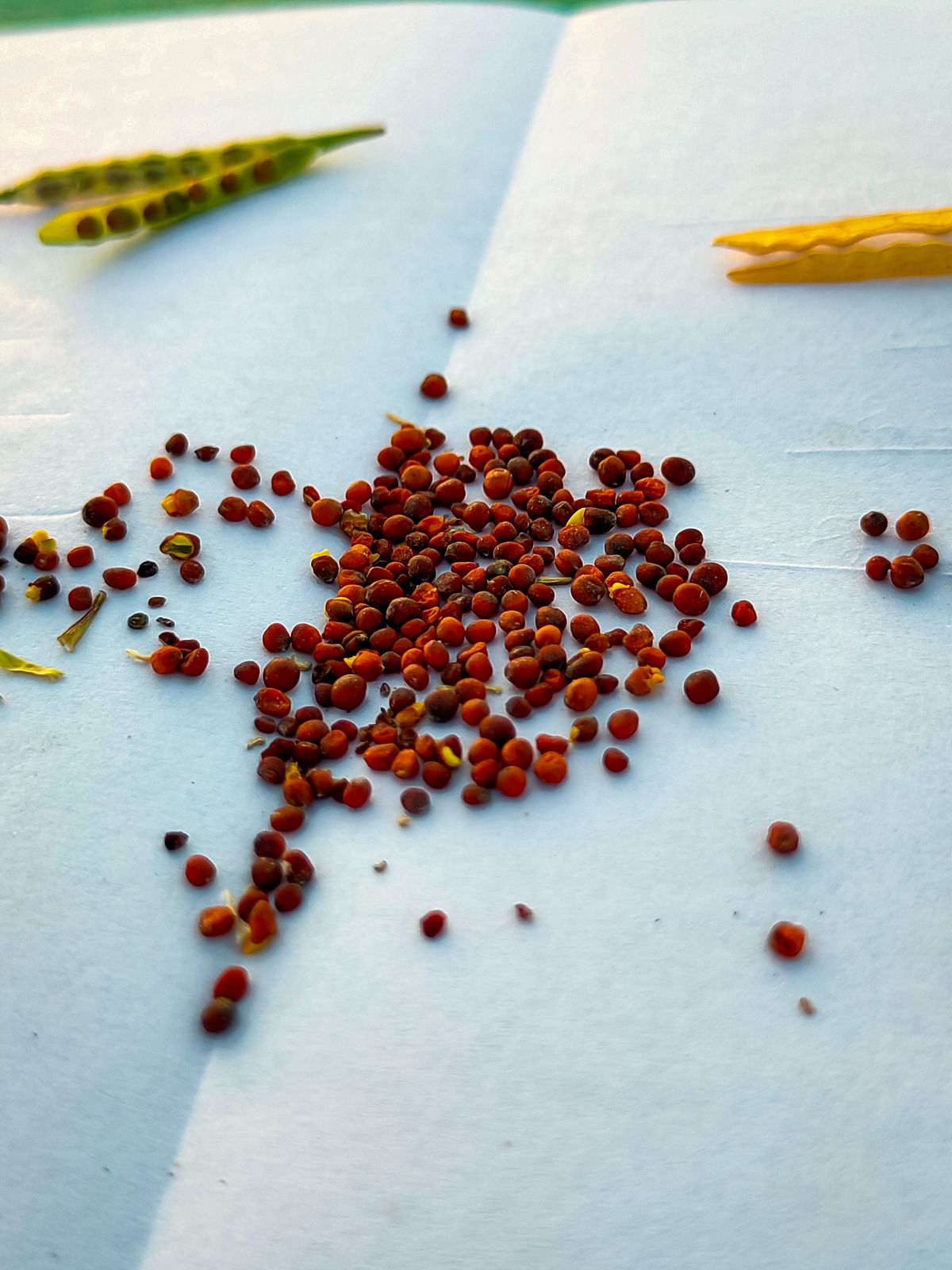
At a karyana shop or pansari, say the kind name, not just “rai”. “Kaali rai chahiye, tadke ke liye” gets you black seed; “peeli rai, achar ke liye” gets you yellow seed; “rai, tel nikalne ke liye” tells the seller you want brown seed in bulk. And check the seed before you pay: kaali rai is dark brown to black and very small, peeli rai is pale yellow and visibly bigger, and brown rai sits between the two. If the seeds in the jar are all one colour and one size, they are probably one kind; if they are mixed colours and sizes, they are probably a blend, and a blend is not what you want for a pickle that has to keep for months.
Kaali rai vs peeli rai — the one-line difference: kaali rai is small, dark and hot — it pops in oil and seasons the dish. Peeli rai is big, pale and mild — it goes into achar and paste and keeps them safe. If you use peeli rai for tadka, the dish will taste flat; if you use kaali rai for achar, the pickle will be too sharp. Buy the right one for the job.
Yellow vs black vs brown mustard seeds: the honest comparison
Three seeds, three jobs. Here is how they compare on the things that matter at the shop — size, heat, use and price.
| Yellow (peeli rai) | Black (kaali rai) | Brown (rai) | |
|---|---|---|---|
| Botanical name | Sinapis alba | Brassica nigra | Brassica juncea |
| Size | Largest, 2–3 mm | Smallest, about 1 mm | Medium, 1–2 mm |
| Colour | Pale yellow to light tan | Dark brown to black | Reddish brown |
| Heat | Mild, slightly tangy | Sharpest, most pungent | Medium, warming |
| Best for | Achar, mustard paste, dressings | Tadka, daal, saag, fish curry | Pickles, curries, oil pressing |
| Retail price (verified) | Rs 100–Rs 176 per 100g | Rs 133–Rs 176 per 100g (rai whole/powder) | Rs 222 per small pack (Spices.pk) |
| Shelf life (whole) | 18–24 months | 18–24 months | 18–24 months |
| Oil yield | Lower | Lower | Highest — the oilseed kind |
Retail prices are the per-100g rates from the verified tables above. Black-seed prices at retail are reported as “rai” without a colour name at most sellers, so the black column uses the whole-rai rows; treat them as indicative for black seed specifically.
One honest gap in this table: no seller we checked labels a retail pack “black mustard seed” with a per-size price except Organic Kitchen, whose Rs 275 pack states no weight, and Super Pansar, whose black range is Rs 100 to Rs 700 without a per-size split. That is why the black column leans on the whole-rai rows. The kind that is easiest to buy with a clear label and a clear price is yellow; the kind that is hardest to pin down by name is black, because shops sell it loose as “rai” and the buyer is expected to know it by sight. If you want black seed specifically, buy from a pansari who will show you the seed, or from a seller whose page names the kind — and check the seed yourself with the size and colour test in the Urdu section above.
Whole vs ground mustard seed
Whole seed keeps its pungency for 18 to 24 months in a sealed jar; ground seed loses it in about six months, because the volatile oils that make mustard hot escape once the seed is broken. That is why every seller in this guide sells whole seed first and ground seed second — and why Subhan Bazar charges exactly the same for its ground rai as for its whole yellow rai. The honest advice is to buy whole and grind what you need, when you need it: a small mortar, a spice grinder, or even a clean coffee grinder does the job in seconds. Buy ground only if you use it every day and finish the pack within a few months. And never buy pre-ground seed that has no date on it — ground mustard with no date is a gamble on flavour.
Mustard seeds vs mustard oil: the companion guide
This guide is about the seed. The oil has its own market, its own prices and its own traps — and we cover it in full in our companion guide, Cold-Pressed Mustard Oil Price in Pakistan. We do not repeat its oil prices here, because this guide is about seeds and the oil prices would go stale twice as fast if they were copied into two places. What you need to know here is the relationship between the two.
- One kilo of seed makes about 300 to 400 ml of oil in a small press, depending on the seed and the press. At the mandi rate of Rs 155 to Rs 160 a kilo, the seed for a litre of oil costs roughly Rs 400 to Rs 530 before pressing, packing and the seller’s margin — which is why cold-pressed oil costs far more per litre than the seed costs per kilo.
- Brown mustard (Brassica juncea) is the oilseed kind. If you are buying seed to press at home, buy brown rai in bulk, not yellow seed in small packs.
- Oil and seed are not substitutes in cooking. A teaspoon of seed in hot oil gives you the crackle and the aroma; a spoon of oil gives you the fat and the heat. A recipe that calls for tadka needs seed; a recipe that calls for sarson ka tel needs oil.
- Do not judge seed quality by oil quality, or the other way round. A seller can sell good seed and poor oil, or good oil and poor seed. Check each one on its own merits.
If you need oil, read the companion guide. If you need seed, you are in the right place.
Best mustard seeds in Pakistan: our honest picks
There is no single “best” mustard seed — the best choice depends on your budget and what you will use it for. Here is our honest shortlist, based only on verified prices. We have not lab-tested any of these seeds, and no expert reviewed this draft.
| If you want… | Pick | Why | Price |
|---|---|---|---|
| The lowest cost per 100g | Mufti White Mustard 1kg | Rs 75 per 100g — lowest rate in our tables. | Rs 750 |
| The cheapest small pack to try | Subhan Whole Rai 50g | Rs 78 — the cheapest verified pack of all. | Rs 78 |
| Everyday tadka and daal | Subhan Whole Rai 500g | Rs 133 per 100g; lasts months at a teaspoon a day. | Rs 667 |
| Achar and mustard paste | Subhan Rai Peeli 500g | Rs 152 per 100g; yellow seed, mild and safe for pickles. | Rs 758 |
| A trusted 250g pack | ChiltanPure Yellow 250g | Rs 100 per 100g; clean, whole, well-described pack. | Rs 250 |
| Seed for oil pressing | 40kg bulk bag | Rs 246–Rs 279 a kilo; buy brown seed, not yellow. | Rs 9,820 – Rs 11,150 |
What about buyer reviews? We found no verified, aggregated buyer-review set for any mustard-seed seller in Pakistan — no star ratings tied to a specific pack, no review count we could check. That is normal for a spice: people buy it, cook with it and rarely write about it. When you shortlist a seller, read the reviews on the seller’s own page before paying — that is the one check we cannot do for you, and we will not invent review scores to fill the gap.
Mustard seed nutrition: what is in 100g?
Mustard seeds are small, but they are dense — in calories, in protein and in minerals. The table below uses the USDA FoodData Central figures for ground mustard seed (FDC ID 170929), as reported by NutritionValue.org, with the yellow-seed figures from the USDA yellow mustard seed entry alongside them. The two kinds differ a little: yellow seed carries more calcium, brown and black seed a little more of most other things. Treat these as the seed’s own figures, not any one seller’s — no seller we checked publishes lab-tested nutrition for its own seed.
| Nutrient (per 100g) | Ground mustard seed (USDA) | Yellow mustard seed (USDA) |
|---|---|---|
| Energy | 508 kcal | 469 kcal |
| Protein | 26.08g | 24.94g |
| Fat | 36.24g | 28.76g |
| Carbohydrate | 28.09g | 34.94g |
| Dietary fibre | 12.2g | 14.7g |
| Sugar | 6.79g | 6.89g |
| Calcium | 266 mg | 521 mg |
| Iron | 9.21 mg | 9.98 mg |
| Magnesium | 370 mg | 298 mg |
| Phosphorus | 841 mg | 841 mg |
| Potassium | 738 mg | 682 mg |
| Selenium | 208 µg | — |
| Zinc | 6.08 mg | 5.7 mg |
| Sodium | 13 mg | 5 mg |
Source: USDA FoodData Central, “Spices, mustard seed, ground” (FDC ID 170929) and “Spices, mustard seed, yellow”, via NutritionValue.org and the USDA entries cited there. Figures are for the dry seed, not for prepared mustard sauce, which is mostly water and vinegar.
Two numbers matter most. First, the selenium: 208 micrograms per 100g is about four times the daily need — mustard seed is one of the richest food sources of selenium there is. Second, the portion: nobody eats 100g of mustard seed. A teaspoon — about 5g, the amount in a tadka — gives you about 25 calories, 1.3g of protein, 0.6g of fibre, 13 mg of calcium, 0.46 mg of iron and about 10 micrograms of selenium. That is the honest scale for this spice: it is a seasoning, not a meal, and its nutrition counts in teaspoons, not in handfuls. The protein and fibre figures look impressive per 100g and modest per teaspoon — both are true, and the teaspoon is the one that matters.
Mustard seed benefits: what is proven and what is not
Mustard seeds have been used as food and medicine for thousands of years, and the internet is full of claims about them — some true, some stretched, some invented. Here is the balanced version, with sources named. We are not doctors, and this guide makes no medical claims: the findings below are the published sources’, not ours.
What the evidence supports
- A genuinely nutrient-dense seasoning: the strongest, plainest case. Per 100g, mustard seed carries 26g of protein, 12g of fibre, 370 mg of magnesium, 9.2 mg of iron and 208 µg of selenium — figures from the USDA database itself. No other common Pakistani spice matches that mineral spread at the same price. In teaspoon amounts the contribution is small, but it is real, and it costs almost nothing.
- Glucosinolates and the mustard bite: the heat in mustard comes from glucosinolates — chiefly sinigrin — which turn into allyl isothiocyanate when the seed is crushed or chewed. That compound is what makes mustard hot, and it is also the compound behind most of the laboratory research on mustard: antioxidant and antibacterial activity in lab tests, and the natural preservative effect that keeps pickles safe for months. Spices.pk’s own product page cites the same mechanism. The lab results are real; the leap from a petri dish to a human body is not proven.
- Omega-3 fats: mustard seed oil is rich in alpha-linolenic acid (ALA), a plant omega-3, and the whole seed carries the same fats — about 36g of fat per 100g, mostly monounsaturated. That supports heart health as part of a balanced diet. It does not make mustard seed a heart treatment, and the ALA in a teaspoon is a small amount.
- Pickle preservation: the antibacterial effect is the one traditional use with a clear, practical mechanism. Mustard seed’s isothiocyanates slow the bacteria that spoil pickles, which is why achar made with real rai keeps for months without refrigeration. That is a food-safety benefit you can see in your own kitchen, not a laboratory claim.
What is not proven
- Cancer prevention and cures: not proven. Some sellers’ pages list “prevents cancer” among the benefits, and laboratory studies do show isothiocyanates affecting cancer cells in dishes and in animals — but no human trial shows that eating mustard seeds prevents or treats cancer. Any seller or site that promises that is selling a story, not a result.
- Diabetes control: not proven. Mustard seed is sometimes listed as a diabetes remedy, but there is no large human trial behind that claim. Mustard seed is low in sugar — about 7g per 100g — so it does not raise blood sugar the way sweet foods do, but “does not raise blood sugar” and “controls diabetes” are two very different claims, and only the first is true.
- Weight loss, hair growth and skin cures: not proven. Mustard seed is sometimes sold as a hair-growth or skin treatment, usually as oil or a paste, and the evidence is traditional use and small studies, not trials. The seed is a seasoning; treat it as one.
- Respiratory relief and detox: not proven. Traditional mustard plasters and foot soaks are still used in Pakistani homes for colds and congestion, and the warmth and the smell can feel soothing — but that is comfort, not a cure, and a mustard plaster left on too long burns the skin (see the side effects below).
The honest summary: mustard seed is a genuinely mineral-rich, cheap seasoning whose preservative effect in pickles is real and visible, and whose heat comes from compounds that laboratories find interesting. It is also a teaspoon-a-day food, not a medicine. Any guide that tells you only the benefits — or only the warnings — is not being honest with you.
Mustard seed side effects and precautions
Mustard seed is a food, not a medicine — and like any food, it has a wrong way to use it. The side effects are not dramatic at cooking amounts, but two of them are serious enough to know before you buy a kilo.
Mustard allergy — the one that matters most
Mustard is a major food allergen. In the European Union it is one of the 14 allergens that must be declared on labels, and in the United States the FDA added sesame — not mustard — to its list, but mustard allergy is well recognised everywhere: it can cause hives, itching, swelling of the lips and tongue, stomach cramps and, rarely, anaphylaxis. It is also one of the allergies most likely to cross-react — people allergic to mustard are often sensitive to other Brassica seeds and to tree nuts. If you or a child has never eaten mustard seed, try a tiny amount first. If you feel itching or swelling after eating it, stop at once and seek help. And if you cook for guests, say the dish contains rai — an allergy you do not mention is a risk you did not need to take.
Skin burns from mustard plasters and pastes
The same compound that makes mustard hot — allyl isothiocyanate — burns skin on contact. Traditional mustard plasters, foot soaks and face pastes can cause redness, blistering and burns if they are left on too long or used too strong, and children and people with sensitive skin are most at risk. A kitchen tadka is safe because the seed is in oil and in food; a paste smeared directly on skin is a different thing. Never leave a mustard paste on skin for more than a few minutes, never use it on broken skin, and never use it on a child without asking a doctor first.
Goitrogens and the thyroid
Mustard seed, like other Brassica foods, contains goitrogens — compounds that can interfere with iodine uptake by the thyroid when eaten in very large amounts. At cooking amounts — a teaspoon a day — this is not a concern for most people, and cooking reduces goitrogens further. But if you have a thyroid condition, or you eat large amounts of raw mustard seed or mustard greens every day, ask your doctor. This is a caution, not a ban — and it applies to cabbage, cauliflower and broccoli too.
Stomach irritation and medicines
Large amounts of mustard seed can irritate the stomach and cause cramps and diarrhoea — the same story as any hot spice eaten to excess. The fix is portion, not avoidance: a teaspoon in a pot of daal is a seasoning; a spoonful eaten raw is a stomach ache. Mustard seed is also rich in vitamin K in some preparations, which matters for people on blood-thinning medicine — keep your daily amount steady, and tell your doctor if you plan a big change in how much you eat. And mustard oil, not the seed, is where the erucic-acid question lives: that is covered in our oil guide, not here, because the seed and the oil are different products.
Honest note: most of the strong health claims about mustard seeds come from laboratory and animal studies, not from large human trials. That does not make mustard seed unhealthy. It means the honest claims are the modest ones: a mineral-rich seasoning, a natural pickle preservative, and a cheap source of flavour. Treat any site that promises cures from mustard seed with the same care you would treat a seller promising a miracle price.
Who should buy mustard seeds — and who should avoid them
Buy them if you cook daal, sabzi or saag and want the real tadka crackle; make achar at home and want it to keep for months; grind your own mustard paste for sandwiches and dressings; press your own oil and want the right seed in bulk; or want the cheapest mineral-rich seasoning in the Pakistani kitchen — a teaspoon a day costs about Rs 4 to Rs 5. Think twice — or ask a doctor first — if you have a mustard allergy or a nut allergy (cross-reaction is possible); have a thyroid condition and eat large amounts of raw seed or greens; take blood-thinning medicine and plan a big daily change; have a sensitive stomach and eat raw seed in quantity; or expect mustard seed to cure cancer, diabetes, hair loss or any other condition on its own (it seasons food — it is not a treatment).
How to use mustard seeds: tadka, achar, paste and saag
Mustard seed is one of the easiest spices to use, because it needs no preparation beyond a quick rinse and a hot pan. Here is how Pakistani homes actually use it.
Tadka: the crackle that seasons the pot
- Heat 2 to 3 tablespoons of ghee or oil until it shimmers, then add half to one teaspoon of whole mustard seeds. Wait for them to crackle and pop — just a few seconds — before adding other aromatics such as curry leaves, cumin or asafoetida.
- Do not burn them: burnt mustard seed turns bitter, and bitter tadka spoils the whole pot. If the seeds stop popping and start smoking, throw that oil away and start again.
- This is the foundation of countless daals, vegetable curries (aloo gobi, baingan bharta) and fish dishes. Our kalonji guide covers another small seed that shares the tadka pan.
Achar: the pickle that keeps for months
- Mustard seed is a non-negotiable ingredient in traditional Pakistani pickles — mango, lemon, carrot and mixed vegetable. Use the seeds whole, or coarsely grind them as a base for the masala paste.
- The seed’s natural antibacterial effect helps keep pickles fresh for months without artificial preservatives — that is the practical benefit this guide verified, not a laboratory claim.
- Use yellow seed for a mild pickle and brown seed for a sharper one. Black seed makes the pickle too hot for most tastes.
Mustard paste: the five-minute sauce
- Soak 2 tablespoons of yellow mustard seed in water for a few hours, then grind with a spoon of vinegar, a pinch of salt and a little water until smooth. Let it sit for a day to develop flavour.
- Use it on sandwiches, with grilled meat, or thinned with lemon and oil as a salad dressing. Homemade paste keeps about two weeks in the fridge.
- Do not use black seed for paste unless you like it very hot — yellow seed is the paste seed.
Saag, sprouts and salads
- For sarson da saag, the leaves are the star and the seed is a background note — a teaspoon of brown seed in the tadka, not a handful in the pot.
- Yellow mustard seeds can be sprouted: soak for 6 to 8 hours, drain, rinse and keep moist, and sprouts appear in 2 to 3 days. Use them in salads and sandwiches.
- Whole seeds can be scattered over salads and rice dishes for a mild, nutty crunch — but keep the amount small, a teaspoon at most.
How to choose good mustard seeds: the 10-point check
Use this list every time you buy — it takes two minutes and catches most bad seed.
- Check the kind name: the pack should say yellow, black or brown — not just “mustard seeds”. A price without a kind name cannot be compared.
- Look at the colour: good seed is even in colour — pale yellow for yellow seed, dark brown to black for black seed, reddish brown for brown seed. Mixed colours in one pack usually mean a blend.
- Check the size: good seed is uniform in size. Very small, broken or dusty seed is old stock or poor grading.
- Smell the pack: fresh mustard seed smells nutty and faintly sharp. A flat, dusty or musty smell means it is old.
- Do the pop test: drop a few seeds in hot oil. Fresh seed pops and crackles within seconds. Old seed sits there, or pops weakly.
- Look for stones and straw: a few small stems are normal. Grit, stones or a lot of broken pieces are a sign of poor cleaning.
- Work out the per-100g price: divide the price by the grams and multiply by 100. Under Rs 150 per 100g is fair value for everyday seed right now.
- Buy whole, not ground: whole seed keeps its pungency for 18 to 24 months; ground seed loses it in about six. Grind what you need, when you need it.
- Buy the size you will finish: a 250g pack lasts about 50 days at a teaspoon a day. A 1kg pack is the best value per 100g, but only if your family uses it before it goes stale.
- Prefer a sealed pack from a known seller: buy from a spice or pansari store you trust, keep the receipt, and check the return policy before you pay for a large pack.
How to store mustard seeds
Mustard seed is one of the easiest spices to store, because its own antibacterial compounds protect it. Keep whole seed in an airtight glass jar in a cool, dry place away from direct sunlight and moisture, and it stays good for 18 to 24 months. Ground seed keeps for about six months in the same conditions — write the grinding date on the jar, and throw it away when the smell goes flat. Never store seed in an open bowl in a damp kitchen, and never store it above the stove, where heat and steam wear it out. If your seed stops popping in hot oil, it is not spoiled — it is stale. Use it for a paste, where the flavour matters less, and buy a fresh pack for tadka.
City-wise prices: Lahore, Karachi, Islamabad, Sargodha
Online prices are broadly the same across Pakistan — a 250g pack of yellow mustard seed costs Rs 250 at ChiltanPure whether you order from Lahore or Sargodha. What changes by city is delivery, the offline market, and which sellers serve you. The notes below are indicative, not source-verified shelf prices — check before buying, because no seller publishes a city-wise price list for the same pack.
- Lahore: the best-served city for spices. Akbari Mandi is the wholesale heart of the trade, and the pansari shops of Naya Bazaar — where Super Pansar itself sits — sell every kind in this guide loose by weight. Online, all the sellers in this guide deliver to Lahore, and Super Pansar lists 3-to-4-day delivery across Pakistan with Rs 200 shipping, free over Rs 5,000. Loose seed at Akbari Mandi can be cheaper than a sealed online pack — but weigh it yourself and do the pop test before you buy the kilo.
- Karachi: Jodia Bazaar is the city’s spice wholesale market, and the shops there sell rai by the kilo for pickles and oil pressing. The big supermarkets stock sealed packs of the same kinds. Online sellers deliver to Karachi with cash on delivery, though delivery can take a day longer than to Lahore. Karachi’s humidity is a storage warning: keep your seed airtight and dry, because damp air dulls the pop faster here than anywhere else in Pakistan.
- Islamabad: the supermarkets in F-6, F-7 and Blue Area stock sealed spice packs, and the online sellers in this guide deliver to Islamabad and Rawalpindi. Prices in Islamabad’s supermarkets run a little higher than the online prices in this guide — usually Rs 20 to Rs 50 more on a 250g pack — because of transport and smaller volumes.
- Sargodha and smaller cities: online ordering with cash on delivery is the practical route — the sellers in this guide deliver nationwide. Small-city karyana shops may stock only one kind, often without a kind name on the pack, so ask which kind it is before you pay. Compare the per-100g rate, and keep the receipt.
Cost breakdown: what a month of mustard seeds really costs
The pack price is not the real cost. The real cost is what you use in a month. A teaspoon of mustard seed — about 5g — is the amount in a daily tadka, and it adds up to about 150g a month. That figure is simple arithmetic from the portion, not a survey: your own use may be higher if you make achar often, and lower if you cook tadka only a few times a week.
Monthly cost at 1 teaspoon (5g) a day
| Mustard seed (per-100g price) | Cost per day (5g) | Cost per month (150g) |
|---|---|---|
| Mufti 1kg (Rs 75 per 100g) | Rs 4 | Rs 113 |
| Mufti / ChiltanPure 250g (Rs 100 per 100g) | Rs 5 | Rs 150 |
| Subhan Whole Rai 500g (Rs 133 per 100g) | Rs 7 | Rs 200 |
| Subhan Yellow Rai 500g (Rs 152 per 100g) | Rs 8 | Rs 228 |
| Small 50g pouch (Rs 240 per 100g) | Rs 12 | Rs 360 |
Two lessons follow. First, a month of everyday mustard seed costs Rs 113 to Rs 150 at the cheapest rates — about Rs 4 to Rs 5 a day — which is less than a single toffee. Mustard seed is the cheapest flavour in the Pakistani kitchen by a distance. Second, the pack-size gap is worth Rs 247 a month: the same teaspoon a day costs Rs 113 on the 1kg pack and Rs 360 on 50g pouches. Over a year, that gap is about Rs 3,000 — for a spice that costs almost nothing to begin with. A 250g pack lasts about 50 days at a teaspoon a day, a 500g pack about 100 days, and a 1kg pack about 200 days. Buy the 250g or 500g pack for everyday use, and the 1kg pack only if your family cooks tadka every day or makes achar in bulk.
Delivery matters too. Super Pansar charges Rs 200 shipping, free over Rs 5,000 — so a single Rs 250 pack costs Rs 450 landed, which is dearer per 100g than a Rs 400 pack with free delivery from another seller. Always check the delivery charge before you compare: a cheap pack with expensive delivery is not a cheap pack.
Mustard seeds vs kalonji vs sesame: which seed is better value?
Mustard seed is not the only small seed in a Pakistani spice dabba. Kalonji (black seed) and til (sesame) sit on the same shelf, and they are worth comparing — on price, on use, and on what each one is actually for — before you spend your money on one of them.
| Mustard seed (rai) | Kalonji (black seed) | Black sesame (kala til) | |
|---|---|---|---|
| Main use | Tadka, achar, paste | Bread, pickles, traditional remedies | Sweets, til laddoo, garnish |
| Heat | Sharp, popping heat | Bitter, peppery, no pop | Nutty, no heat |
| Price per 100g (verified) | Rs 75–Rs 240 | See our kalonji guide | See our black sesame guide |
| Stand-out nutrient | Selenium (208 µg per 100g) | Thymoquinone (traditional use) | Calcium-rich seed |
| Daily portion | 1 teaspoon (5g) | A pinch (1–2g) | A tablespoon (9g) |
| Monthly cost | Rs 113–Rs 150 | Lower portion, dearer seed | Higher portion, dearer seed |
| Best for | Everyday cooking flavour | Remedies and bread topping | Sweets and winter energy |
Mustard-seed figures are the USDA values cited in this guide. For verified kalonji prices see our kalonji price guide; for black sesame see our black sesame seeds in Urdu guide.
On price, mustard seed wins clearly: Rs 75 to Rs 240 per 100g is cheaper than either kalonji or sesame in their guides, and the daily portion is a teaspoon, so the monthly cost is Rs 113 to Rs 150. On tradition, each seed has its own job — kalonji for remedies and naan, til for sweets, rai for tadka — and they do not replace each other. The honest answer is that no one seed wins everything: rai for everyday cooking, kalonji for its traditional uses, til for sweets and calcium. A spice dabba with a little of each beats a kilo of any one of them.
12.12 buying checklist
The 12.12 sale is on 12 December 2026. Spices are a winter essential, so a sale can save real money on a 1kg pack — but only if the discount is real.
- Shortlist now. Pick two options (for example, Mufti white 1kg at Rs 750 and Subhan whole rai 500g at Rs 667) and note their prices today.
- Watch the “was” price. If a seller raises the price before 12.12 and then “discounts” it back, you save nothing. Your notes from today are your protection.
- Buy the size you will finish. A 1kg pack bought on discount is good value only if your family uses it within 18 to 24 months. A small household should buy 250g or 500g, even on sale.
- Check the delivery charge. A discount that is eaten by delivery is not a discount. Compare the landed price, not the sticker price.
- Check the kind on the sale listing. A “50% off mustard seeds” banner means nothing if the sale pack is a different kind than the one in this guide. Compare the kind name, the weight and the per-100g price.
- Pay by cash on delivery if you are unsure. COD lets you check the seed — colour, size, smell — before paying. Most of the sellers in this guide offer COD.
Looking for seeds and nutrition for your kitchen?
BaBaShop does not sell mustard seeds — but our chia seeds, flax seeds and other Seeds and Nutrition essentials are made for Pakistani kitchens, with cash on delivery across Pakistan.
Questions? WhatsApp us at 0302-4096495.
Related BaBaShop guides
If this guide helped, these ones will too.
- Cold-Pressed Mustard Oil Price in Pakistan
- Kalonji Price in Pakistan
- Black Sesame Seeds in Urdu
- Castor Oil Price in Pakistan
- Chia Seeds — BaBaShop.pk
- Golden Flax Seeds — BaBaShop.pk
Methodology: how we checked these prices
We checked live seller pages on 28 and 29 November 2026 and recorded the price shown on the page that day. The main table comes from Subhan Bazar’s product pages (rai-whole, rai-peeli and rai-powder — variant prices read from the store’s own price data), Mufti Organics’ white mustard seed page (the additional-information table), and ChiltanPure’s yellow mustard seed page (250g pack). The second table comes from Spices.pk, Organic Kitchen, New Pansari, Super Pansar, Zakir Pansar, The Lands Store and Kissan Store — ranges where the per-variant split was not readable, and exact bulk prices where it was. The mandi table comes from Zarat Ghar’s sarso-rate page, reporting AMIS Punjab figures dated 4 November 2026. Per-100g and per-kilo figures are our own arithmetic, rounded to the nearest rupee. Monthly costs are arithmetic from the portion of 1 teaspoon (about 5g) a day. We did not phone sellers for quotes, and we did not copy prices from other buying guides — except for Subhan Bazar’s own June 2025 price table (yellow Rs 350–Rs 500 a kilo, black Rs 400–Rs 600 a kilo), which is reported as a dated table, not used as a current price, and flagged as stale.
About the keyword itself: “mustard seed price in pakistan” gets about 170 searches a month in Pakistan with a keyword difficulty of 7 (Semrush Pakistan database, 28 November 2026 run). That is BELOW BaBaShop’s usual 1,000+ monthly volume rule — this is a niche guide, not a high-volume keyword, and it is published as a companion to the mustard-oil guide and as part of the Seeds and Nutrition cluster, not because it meets the volume rule. The family keyword “black mustard seeds in urdu” gets about 140 searches a month (KD 7) and is covered as its own section above. We say this plainly because the volume rule matters, and hiding a miss would be dishonest.
What we could not verify: any Daraz mustard-seed price directly (the Daraz search page loads no product listings or prices in a text fetch, so no Daraz price could be read by us); a branded National or Shan mustard-seed pack price (no supermarket publishes a live shelf price online); a mandi loose-seed retail rate (the AMIS figures are wholesale 40kg rates, not retail); a city-wise shelf price for the same pack (no seller publishes one); per-variant prices at New Pansari, Super Pansar and Zakir Pansar (the shops show ranges, and the variant selector prices were not readable); the pack weight behind Spices.pk’s Rs 222 “Small Pack” and Organic Kitchen’s Rs 275 black-seed pack (neither page states a weight); lab-tested composition for any seller’s own seed; and an aggregated buyer-review set (none found for any seller). All of these were left out or flagged rather than guessed.
What we have not tested: we have not bought, cooked with or lab-tested any of these seeds. We do not sell mustard seeds, we have no lab results, and the prices are the sellers’ own listed prices — not our recommendation of any one seller. No expert reviewed this draft — we cite the USDA figures and the sellers’ own pages by name and link instead. No author photo is available for “BaBaShop.pk Team”.
Sources used for health and research claims: NutritionValue.org — “Spices, ground, mustard seed” (USDA FoodData Central, FDC ID 170929) (nutrition table per 100g and per teaspoon). Spices.pk — Mustard Seeds, Rai Dana (varieties, glucosinolates and sinigrin, nutrition figures, storage life of 18–24 months). Subhan Bazar — Pakistani Rai (Mustard Seeds) (types, Urdu names, uses, June 2025 price table). Zarat Ghar — Sarso Rate Today in Pakistan (mandi rates, AMIS Punjab 4 November 2026, sowing and harvest calendar, growing areas). Price sources: Subhan Bazar, Mufti Organics, ChiltanPure, Spices.pk, Organic Kitchen, New Pansari, Super Pansar, Zakir Pansar, The Lands Store, Kissan Store — all linked in the tables above.
About BaBaShop: BaBaShop.pk is an online store in Sargodha (Shop No: 85, General Bus Stand, Jinnah Colony). Delivery on our own products is weight-based at Rs 200 per 0.5 kg slab. Cash on delivery is available across Pakistan, and Raast online payment gets Rs 50 off.
FAQs: mustard seed price in Pakistan
What is the mustard seed price in Pakistan?
Mustard seed costs Rs 75 to Rs 240 per 100g from Pakistani online sellers. A 50g pack costs Rs 78 to Rs 120, a 250g pack Rs 250, a 500g pack Rs 400 to Rs 758, and a 1kg pack Rs 750. The mandi rate for sarson is Rs 155 to Rs 160 a kilo (AMIS Punjab, 4 November 2026), while retail packs cost far more per kilo because of cleaning, packing and small quantities.
What is the mustard seed 1kg price in Pakistan?
A 1kg pack of white mustard seed costs Rs 750 at Mufti Organics, verified 28 November 2026 — the only true 1kg retail kitchen pack we could verify. A 1kg pack of toria seed costs Rs 850 at The Lands Store, and bulk 40kg bags work out to Rs 246 to Rs 279 a kilo. The mandi wholesale rate is Rs 155 to Rs 160 a kilo in 40kg bags.
What are black mustard seeds called in Urdu?
Black mustard seeds are called kaali rai (کالی رائی) or sarson siyah (سرسوں سیاہ) in Urdu. Yellow mustard seeds are peeli rai (پیلی رائی) or sarson safed (سرسوں سفید), and brown mustard seeds are just rai (رائی) or kali sarson (کالی سرسوں). Mustard seeds in general are rai ke beej (رائی کے بیج) or sarson ke beej (سرسوں کے بیج).
What is the difference between yellow and black mustard seeds?
Yellow mustard seeds (Sinapis alba) are large, pale and mild, and are best for pickles, mustard paste and dressings. Black mustard seeds (Brassica nigra) are the smallest and most pungent, and are best for tadka in daal, saag and fish curry. Yellow seed costs about Rs 100 to Rs 176 per 100g; black seed is usually sold loose as “rai”, so check the size and colour before you buy.
Where can I buy mustard seeds in Pakistan?
Mustard seeds are sold by online spice and pansari stores such as Subhan Bazar, Spices.pk, ChiltanPure, Super Pansar, New Pansari and Zakir Pansar, in supermarkets such as Metro, Imtiaz and Carrefour, and loose by weight in spice markets such as Jodia Bazaar in Karachi and Akbari Mandi in Lahore. Daraz also lists them, but no Daraz price could be verified directly for this guide.
How much mustard seed should I use a day?
About one teaspoon — roughly 5g — a day is the usual amount, as the tadka for a pot of daal or sabzi. That is about 25 calories, 1.3g of protein and 0.6g of fibre. A 250g pack lasts about 50 days at that rate. Eating large amounts raw can irritate the stomach, so keep it to a teaspoon in cooking, not a spoonful on its own.
Are mustard seeds good for health?
Mustard seeds are a mineral-rich seasoning — 26g of protein, 12g of fibre and 208 micrograms of selenium per 100g, from USDA figures — and their natural antibacterial effect helps pickles keep for months. But they are a teaspoon-a-day food, not a medicine: cancer, diabetes and hair-growth cures are not proven, and mustard is a major food allergen, so try a tiny amount first if you have never eaten it.
Does BaBaShop sell mustard seeds?
No. BaBaShop does not sell mustard seeds. This is a price and buying guide only. Our chia seeds and golden flax seeds are available with cash on delivery across Pakistan. WhatsApp us at 0302-4096495.
Conclusion: mustard seed price in Pakistan
The mustard seed price in Pakistan comes down to three numbers. A 50g pack costs Rs 78 to Rs 120. A 1kg pack of white mustard seed costs Rs 750. And a teaspoon a day — the amount in a daily tadka — costs Rs 4 to Rs 5 a day, or about Rs 113 to Rs 150 a month.
Buy the 50g Subhan whole-rai pack first if you are trying mustard seed for the first time, then move to the pack that fits your household: a 250g ChiltanPure or Mufti pack for everyday tadka, a 500g Subhan pack if you make achar, and a 1kg Mufti pack if your family cooks with rai every day. Check the kind name, the weight and the per-100g price before you compare — and never pay a premium price for a pack that does not name its kind. And before the 12.12 sale, write down today’s prices for your two shortlisted packs. That one habit is worth more than any discount banner.
If you want seeds and nutrition from a shop that states its prices plainly, BaBaShop’s golden flax seeds are here: babashop.pk/product/golden-flax-seeds/.
Transparency note: BaBaShop does not sell mustard seeds. All prices are market prices from the sellers’ own live pages, checked on 28–29 November 2026. Prices can change — confirm on the seller’s page before you pay. This guide contains no affiliate links. The keyword “mustard seed price in pakistan” gets about 170 searches a month in Pakistan (KD 7), which is BELOW our usual 1,000+ volume rule — this guide is published as a companion to the mustard-oil guide and as part of the Seeds and Nutrition cluster, not because it meets the volume rule. See the methodology section above.
Written by BaBaShop.pk Team, Sargodha — Shop No: 85, General Bus Stand, Jinnah Colony. WhatsApp: 0302-4096495. Updated: 29 November 2026.