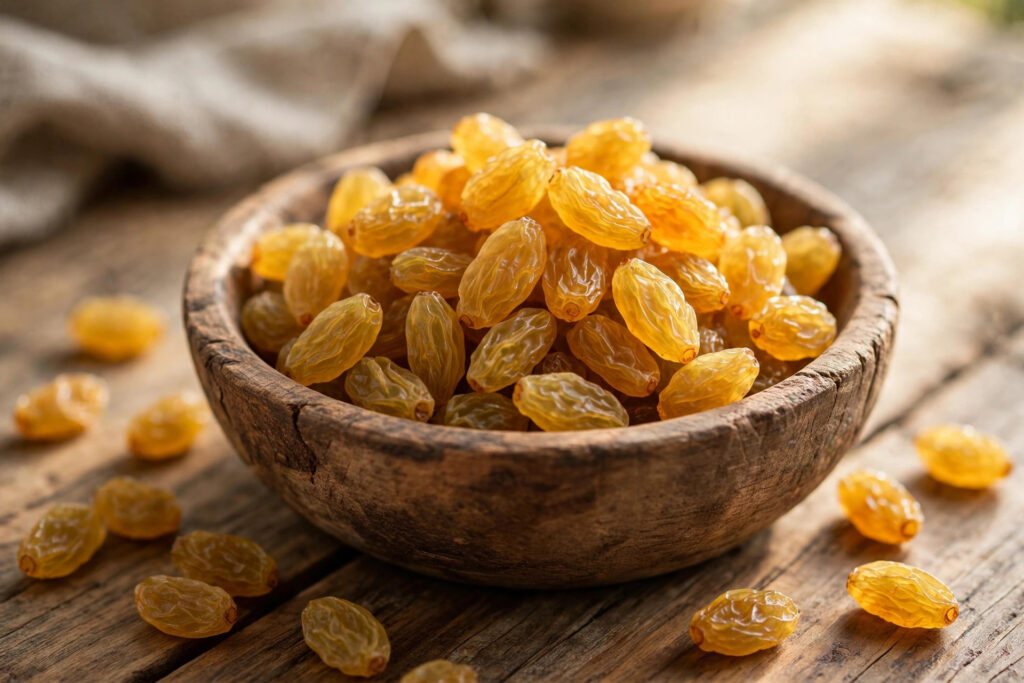
Kishmish Price in Pakistan 2026: Buying Guide
By BaBaShop.pk Team | Updated: 10 November 2026
The kishmish price in Pakistan starts at Rs 350 for a 250g pack and goes up to Rs 2,340 for a 1kg pack, based on live prices we checked on 10 November 2026.
That is a fair spread for a small dried fruit. A 250g pack costs less than a kilo of good basmati, while a premium kilo of Sundarkhani can cost more than a kilo of desi ghee. So which pack is worth your money — and which names on the shelf are even the same thing?
This guide gives you a straight answer. We checked real prices from six real sellers, sorted out kishmish from munakka and golden raisins, and listed the quality checks that actually work — and the myths that do not.
💡 Quick answer — kishmish price in Pakistan (10 November 2026)
- Rs 350 — cheapest verified pack: Khan Dry Fruits Munakka, 250g (Rs 140 per 100g)
- Rs 1,400–Rs 2,000 — typical 1kg range for packed kishmish and munakka from verified sellers
- Rs 2,340 — priciest verified 1kg pack: Organic and Pure Black Raisins (Rs 234 per 100g)
- Rs 140–Rs 200 per 100g — the best value band for packed kishmish; anything far below Rs 100 per 100g deserves a second look
- Rs 1,390 — cheapest verified kilo on paper (Hunza Foodways), but it was out of stock when we checked, so treat it as a listed price, not a pack you can buy today
- 11.11 tip: compare the per-100g price, not the discount percentage — a “40% off” 250g pack can still cost more per gram than a full-price 1kg pack
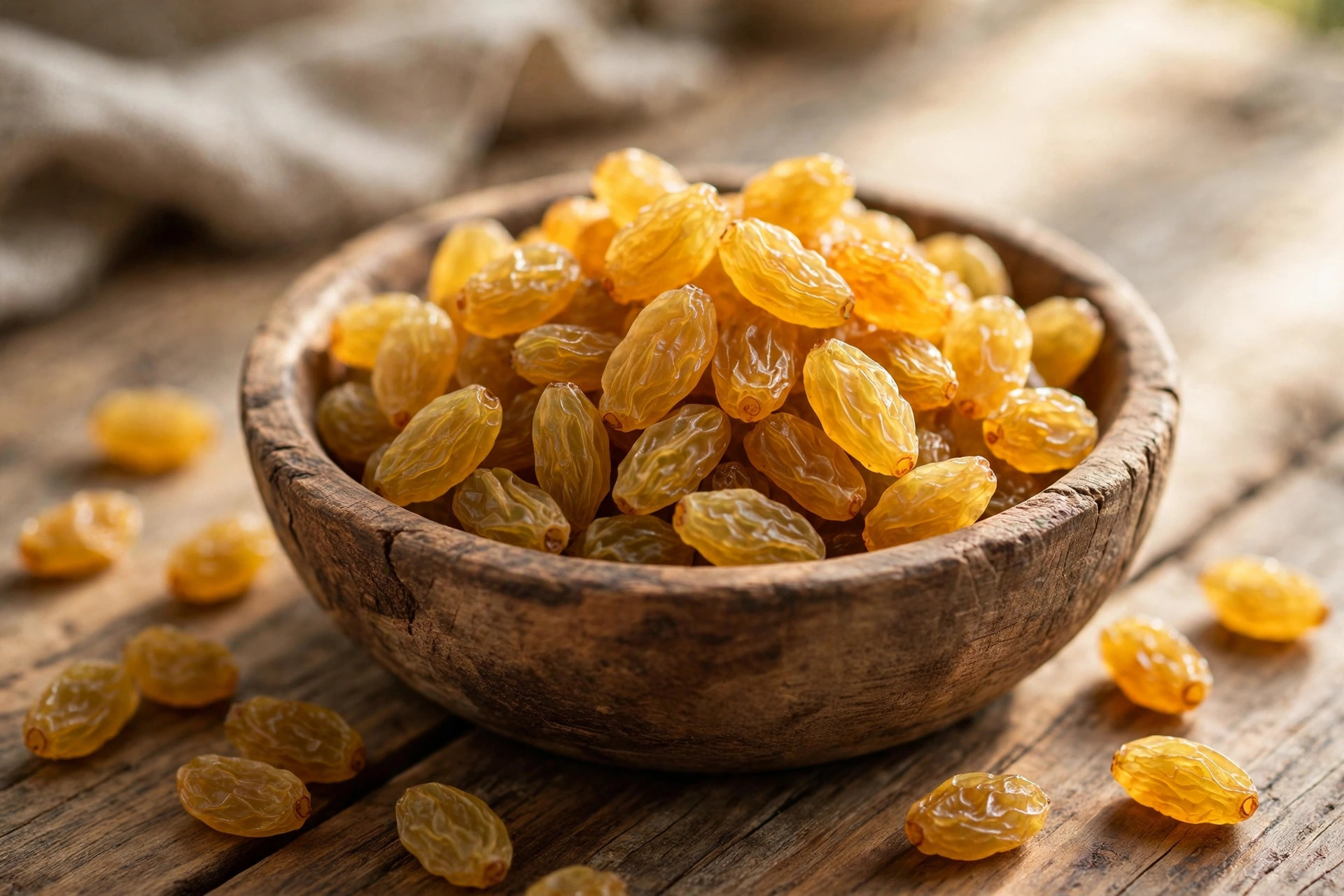
Kishmish is the everyday dry fruit in Pakistani kitchens — cheap, sweet and easy to use.
📑 In this guide
- What is kishmish?
- Kishmish price in Pakistan — full comparison table
- What decides the price?
- Kishmish vs other dry fruits
- How to spot good quality kishmish (and fake or sugar-coated packs)
- How to use kishmish
- Benefits — what the research actually says
- Side effects and who should avoid it
- Shelf life and storage
- City-wise prices: Karachi, Lahore, Islamabad, Sargodha
- Kishmish vs munakka vs golden raisins — clearing the confusion
- 11.11 buying tips
- Methodology and transparency
- FAQs
- Conclusion
🍇 What is kishmish?
Kishmish is dried grapes. Small seedless grapes are dried in the sun or in shade until most of the water is gone, leaving a sweet, chewy fruit that keeps for months without a fridge.
In Pakistan, kishmish is an everyday food, not a luxury. It goes into kheer, pulao, halwa, sheer khurma and cakes. It sits in the dry-fruit bowl at Eid and weddings. Many families soak a spoonful overnight and eat it in the morning. Children eat it straight from the pack as a snack.
The taste is simple: sweet, a little tangy, and chewy. Good kishmish is soft and plump, not rock-hard. It should taste of grape, not of plain sugar.
Where does Pakistani kishmish come from?
Most of Pakistan’s kishmish comes from Balochistan and Khyber Pakhtunkhwa, with the famous Sundarkhani variety coming from Afghanistan and the northern areas. Quetta’s dry-fruit markets are the main wholesale hub, and the new crop arrives in late autumn, which is why November is a good month to buy.
The drying method matters. Sun-dried kishmish turns darker and tastes deeper. Shade-dried green kishmish keeps a lighter colour and a milder taste. Golden raisins are usually dried faster, sometimes with a sulphur treatment to hold the golden colour — more on that in the side-effects section.
Kishmish vs munakka vs golden raisins — the short version
These three names cause most of the confusion in the bazaar, so here is the short version. The full comparison is in the confusion section near the end of this guide.
Kishmish is the general name for small seedless dried grapes — golden, green or black. Munakka is a different thing: large dried grapes with seeds inside, bigger and chewier, often sold for soaking and traditional home remedies. Golden raisins are kishmish made from light-coloured grapes and dried to keep a golden colour.
A seller who calls munakka “bari kishmish” is not wrong — munakka is the big cousin. But the price is different, the seeds are different, and the use is different. Do not pay kishmish prices for munakka, or munakka prices for kishmish, without knowing which one you are holding.
Nutrition: what is actually in it?
Kishmish is a concentrated food. Drying removes the water, so the sugar, minerals and fibre of the grape are packed into a small weight. Per 100g, seedless raisins give about 299 kcal, 79g of carbohydrate and 65g of sugars, according to USDA FoodData Central figures (SR Legacy entry 168165, “Raisins, seedless”).
That is the honest picture. Kishmish is not a low-sugar food. A small handful of 30g gives about 90 kcal and around 20g of sugars — roughly the sugar in a small banana, but in a much smaller bite.
The same 100g also gives 3.7g of fibre, 3.1g of protein, 0.5g of fat, 744mg of potassium, 1.8mg of iron and 50mg of calcium. The potassium figure is the one worth noting: 744mg is about 16% of an adult’s daily value, which is high for a snack food. Golden raisins are close behind at 302 kcal per 100g, with 746mg of potassium.
So kishmish is a useful snack with real minerals — and real sugar. Both facts belong in the same sentence.
📖 Expert view: “Raisins have the potential to significantly reduce the risk for developing diabetes or cardiovascular disease.” — Anderson and Waters, “Raisin consumption by humans: effects on glycemia and insulinemia and cardiovascular risk factors”, Journal of Food Science, 2013; 78(Suppl 1): A11–A17 (DOI: 10.1111/1750-3841.12071; PMID: 23789931).
Read that sentence with care. The authors are reviewing meal studies and longer trials, not promising a cure. Their review found that raisins have a low to moderate glycaemic index and a low insulinemic index, and that one 12-week study recorded a significant fall in blood pressure. “Potential to reduce risk” is a research finding, not a guarantee — and it applies to raisins eaten instead of processed snacks, not on top of them.
💰 Kishmish price in Pakistan — full comparison table
We checked live prices on 10 November 2026. Every price below was visible on the seller’s own website on that date. Prices can change, and delivery charges are extra unless stated.
| Brand / Product | Size | Price (Rs) | Per 100g (Rs) | Where to buy |
|---|---|---|---|---|
| Hunza Foodways Kishmish | 1kg | Rs 1,390 | Rs 139 | hunzafoodways.com |
| Khan Dry Fruits Munakka | 1kg | Rs 1,400 | Rs 140 | khandryfruit.com |
| Dry Fruits Mart Kala Munakka | 1kg | Rs 1,600 | Rs 160 | dryfruitsmart.pk |
| Khan Dry Fruits Dried Munakka (premium) | 1kg | Rs 1,700 | Rs 170 | khandryfruit.com |
| ARY Sahulat Bazar Raisins | 1kg | Rs 1,760 | Rs 176 | arysahulatbazar.pk |
| Khan Dry Fruits Golden Sundar Khani | 1kg | Rs 1,800 | Rs 180 | khandryfruit.com |
| Khan Dry Fruits Desi Green Kishmish | 1kg | Rs 1,900 | Rs 190 | khandryfruit.com |
| Khan Dry Fruits Sundarkhani Raisins | 1kg | Rs 2,000 | Rs 200 | khandryfruit.com |
| Khan Dry Fruits Black Raisins | 1kg | Rs 2,000 | Rs 200 | khandryfruit.com |
| Organic and Pure Black Raisins | 1kg | Rs 2,340 | Rs 234 | organicandpure.store |
Two notes on this table. First, the Hunza Foodways kilo at Rs 1,390 was out of stock when we checked, so treat it as the listed price, not a pack you can buy today. Second, every row in this table is a 1kg pack, so the per-100g column is simply the kilo price divided by ten — the comparison is clean, with no small-pack distortion.
Small packs tell a different story. The cheapest 250g pack we verified was Khan Dry Fruits Munakka at Rs 350 (Rs 140 per 100g). Khan’s Sundarkhani, Desi Green and Black Raisins 250g packs are Rs 500 to Rs 520, and Organic and Pure’s Black Raisins 250g pack is Rs 585 (Rs 234 per 100g). Small packs are handy for trying a new seller, but they cost more per gram than the same seller’s kilo pack.
Two more sellers quoted prices we could not put in the table as exact pack prices. Bombay Dry Fruits lists green raisins in jars — a 300g jar at Rs 1,160 and a 600g jar at Rs 2,320 — which works out to Rs 387 per 100g, the dearest per-gram rate we found. Its loose black raisins (Rs 150–Rs 600 for 125g–250g), green raisins (Rs 400–Rs 1,600) and munakka (Rs 225–Rs 450) are shown as ranges, not matched to exact pack sizes, so we report them here instead of the table. Rasa.pk lists Sundarkhani raisins from Rs 540, but the page does not match that price to one of its four pack sizes (300g, 500g, 700g, 1kg), so we have not guessed which size costs Rs 540.
What the table tells you
The cheapest honest kilo in stock costs about Rs 1,400. Khan Dry Fruits’ Munakka at Rs 1,400 works out to Rs 140 per 100g. Dry Fruits Mart’s Kala Munakka is close behind at Rs 160 per 100g.
Munakka is cheaper per kilo than small seedless kishmish. The two cheapest in-stock kilos in our table are both munakka. That makes sense: munakka is a bigger, seeded fruit, dried in larger volumes, while graded seedless Sundarkhani costs more to sort and pack.
Black raisins cost more than golden or green. The dearest verified kilo is black raisins at Rs 2,340, and Khan’s black raisins at Rs 2,000 sit above its golden Sundar Khani at Rs 1,800. Black kishmish is often sold as a premium grade, so expect to pay for it.
Jars cost far more per gram. Bombay’s green raisins in a jar work out to Rs 387 per 100g — nearly double the price of the same weight bought loose in a sealed pack. You are paying for the jar, the shelf look and the brand, not for better kishmish.
Loose bazaar kishmish is cheaper — and riskier. A market report on Pakistan’s dried-grapes trade puts loose, ungraded domestic raisins at roughly Rs 400–Rs 900 a kilo, while premium packaged raisins retail at roughly Rs 1,200–Rs 2,500 a kilo. Our verified table sits inside that premium band, which is what you would expect from graded, packed, delivered stock. Loose kishmish from a bazaar can be a bargain, but it is ungraded, often dusty, and sold without a packing date or a seller you can call back.
Cost breakdown: what does a kilo actually cost you?
Take the cheapest in-stock kilo, Rs 1,400. A family that eats a small handful (30g) a day will finish it in about 33 days. That works out to roughly Rs 42 a day, or about Rs 1,300 a month.
At the dearest per-100g rate in our table (Rs 234 for Organic and Pure black raisins), the same daily handful costs about Rs 70 a day. Over a month, the gap between the cheapest and dearest kilo is more than Rs 800 — for the same daily handful of kishmish.
So the pack you pick matters more than it looks. Check the per-100g column every time.
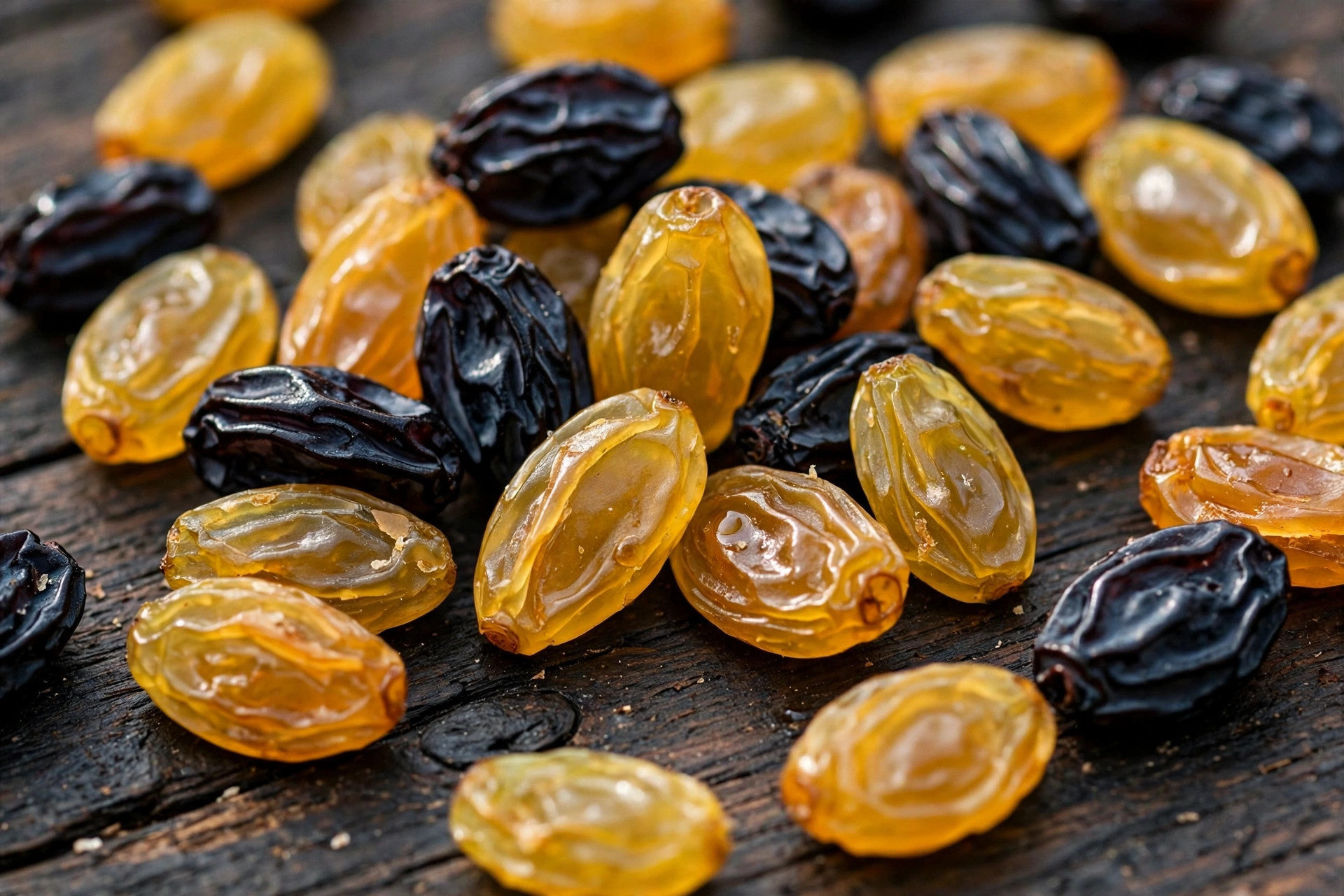
Good kishmish is soft, plump and glossy — not hard, dull or sticky.
⚖️ What decides the price?
Six things set the kishmish price in Pakistan. Knowing them stops you from overpaying.
1. Grade and size
Sundarkhani is the premium grade: long, plump, evenly sized berries with a clean golden-green colour. Smaller, mixed-size kishmish costs less. Munakka is graded by size too — bigger berries with intact seeds cost more than broken or mixed lots.
A pack that names its grade (“Sundarkhani”, “premium”, “large”) and shows the berries in a clear photo is easier to judge than a pack that just says “kishmish”. If the seller will not show the berries, ask why.
2. Seedless vs seeded
Seedless kishmish costs more than seeded munakka, gram for gram. Removing seeds — or rather, growing seedless grapes and drying them — takes more care, and the seedless fruit is the one buyers want for cooking and snacking.
Munakka keeps its seeds. That is not a flaw; the seeds are part of the traditional use, especially for soaking. But it is one reason munakka kilos cost less than seedless kishmish kilos in our table.
3. Origin
Afghani Sundarkhani, Hunza kishmish and Quetta-market kishmish all carry different prices. Imported Sundarkhani from Afghanistan costs more because of transport, border costs and grading. Local Balochistan kishmish is cheaper but more variable in size and colour.
Origin is not a quality guarantee. A well-graded local pack beats a poorly graded imported one. Ask where the kishmish comes from, then judge the berries in front of you.
4. Drying method and colour
Shade-dried green kishmish keeps its colour and costs more to produce, because drying is slower and the fruit must be handled more carefully. Sun-dried kishmish is cheaper and darker. Golden raisins are often treated to hold their colour, which adds a processing step and a cost.
A very bright, uniform golden colour can mean a sulphur treatment. That is legal and common, but people with sulphite sensitivity should know about it — see the side-effects section.
5. Packaging
Sealed branded packs cost more than loose bazaar kishmish, and glass jars cost the most per gram. Our table shows the gap clearly: Bombay’s jarred green raisins cost Rs 387 per 100g, while sealed packs of similar kishmish cost Rs 140–Rs 200 per 100g.
Packaging does have a real benefit. A sealed pack keeps dust, moisture and insects out, and it carries a packing date. Loose kishmish from an open sack in a bazaar has none of that. Pay for the seal, not for the jar.
6. Pack size
Small packs cost far more per gram. Khan’s Munakka is Rs 140 per 100g in a 1kg pack and the same Rs 140 per 100g in a 250g pack — that seller keeps its per-gram price flat. But Organic and Pure’s black raisins are Rs 234 per 100g at 250g and the same at 1kg, so the premium is in the grade, not the size.
The rule still holds in general: compare the per-100g price across sellers and sizes. A “family pack” that costs more per 100g than a smaller pack from the same seller is not a deal.
🔍 Kishmish vs other dry fruits
Kishmish is the cheapest dry fruit in most Pakistani kitchens. Here is how it stacks up against the usual alternatives.
| Dry fruit | Energy per 100g* | Sugars per 100g* | Typical 1kg price† | Best for |
|---|---|---|---|---|
| Kishmish (raisins) | 299 kcal | 65g | Rs 1,400–Rs 2,340 (verified) | Daily snacking, kheer, pulao, soaking |
| Dates (khajoor) | ~282 kcal | ~63g | Rs 800–Rs 1,500 | Iftar, snacking, natural sweetener |
| Ajwa dates | ~282 kcal | ~63g | Rs 4,000–Rs 6,000 | Gifting, traditional use |
| Almonds (badam) | ~579 kcal | ~4g | Rs 2,500–Rs 4,000 | Snacking, milk, baking |
| Walnuts (akhrot) | ~654 kcal | ~3g | Rs 2,000–Rs 3,500 | Brain-food snacking, baking |
| Figs (anjeer) | ~249 kcal | ~48g | Rs 2,500–Rs 4,500 | Soaking, desserts, fibre |
*Energy and sugar figures are USDA FoodData Central values for the plain dried fruit, rounded. †Kishmish prices are verified in this guide (10 November 2026). Other prices are typical market ranges, not verified pack prices — confirm before buying.
Three things stand out. First, kishmish is the cheapest of the six by the kilo, and the only one under Rs 1,500 at the low end. Second, kishmish and dates are both sweet fruits — high in natural sugars — while almonds and walnuts are low in sugar and high in fat. Third, kishmish is the most versatile in cooking: it goes into sweet and savoury dishes alike, while figs and walnuts are more limited.
If your budget is tight and you want a daily dry fruit, kishmish is the easy pick. If you want low sugar and healthy fats, almonds or walnuts are the better choice — at roughly double the price. And if you want the premium gift fruit, Ajwa dates cost two to three times more than the dearest kishmish kilo in our table.
For more on the seed side of the pantry, see our guides to chia seeds and golden flax seeds at BaBa Shop — both are low-sugar, high-fibre options that pair well with kishmish in breakfast bowls.
✅ How to spot good quality kishmish (and fake or sugar-coated packs)
Fake kishmish is less common than fake honey, but bad kishmish is everywhere. The tricks are simpler: sugar coating, added oil for shine, old stock, and mixed grades. Here is what works.
Checks that actually help
Look at the colour. Good golden kishmish is amber-gold, not bright yellow and not brown-black. Good green kishmish is olive-green, not neon green. A colour that looks painted on usually is — excess shine often means added oil or a sugar glaze.
Feel the berries. Squeeze one between your fingers. Good kishmish is soft and springs back a little. Rock-hard berries are over-dried or old. Sticky berries that leave sugar on your fingers have been coated.
Taste one berry. Good kishmish tastes of grape — sweet with a slight tang. Sugar-coated kishmish tastes flat and one-note sweet, like a sweet. If the first berry tastes of plain sugar, the pack is coated.
Check for stems and stones. A clean pack has few stems, no stones and no dust. A pack full of stems and broken bits is a lower grade sold at a higher price. Pour a spoonful onto a white plate and look.
Read the label. A real label names the type (Sundarkhani, desi green, black, munakka), the weight, the packer and a packing date. “Kishmish” with no type, no weight and no date tells you nothing.
Ask for the packing date. Kishmish does not have a printed expiry in the way milk does, but old stock loses softness and flavour. A pack from this year’s crop is worth more than a pack from last year.
The sugar-coating test
Put a small handful in a bowl of plain water and stir gently. Real kishmish will release a little colour and soften. Sugar-coated kishmish will leave the water noticeably sweet and the berries will look duller once the coating washes off.
Taste the water after a minute. If it tastes like sugar syrup, the pack was coated. This test is not perfect — a little natural sugar will dissolve too — but a syrup-sweet bowl is a clear warning.
The soaking test
Soak a spoonful overnight in a glass of water. Good kishmish swells up, turns plump and soft, and the water turns lightly golden. Bad kishmish stays hard, or falls apart into mush. Munakka swells the most of all, because the berries are bigger.
This is the test most Pakistani homes already use. It works because it tests the thing that matters: whether the fruit still holds its structure.
Myths — do not rely on these
“Shiny kishmish is always better.” False. Shine often means added oil or a sugar glaze. Good kishmish has a soft, natural sheen, not a polished look.
“Bigger is always better.” False for kishmish. Big berries are munakka, not kishmish. For seedless kishmish, even size matters more than big size.
“Dark kishmish is old kishmish.” False. Black raisins are dark by nature. Colour tells you the type, not the age. Age shows in hardness and flat taste.
“Washing kishmish ruins it.” False. A quick rinse removes dust and surface sugar. Dry the berries on a clean cloth before storing, so they do not go sticky.
Bottom line: no single test proves quality on its own. Combine the look, the feel, the taste, the label and the price. If a kilo costs far below Rs 1,400 and the berries are dull, hard or sticky, walk away.
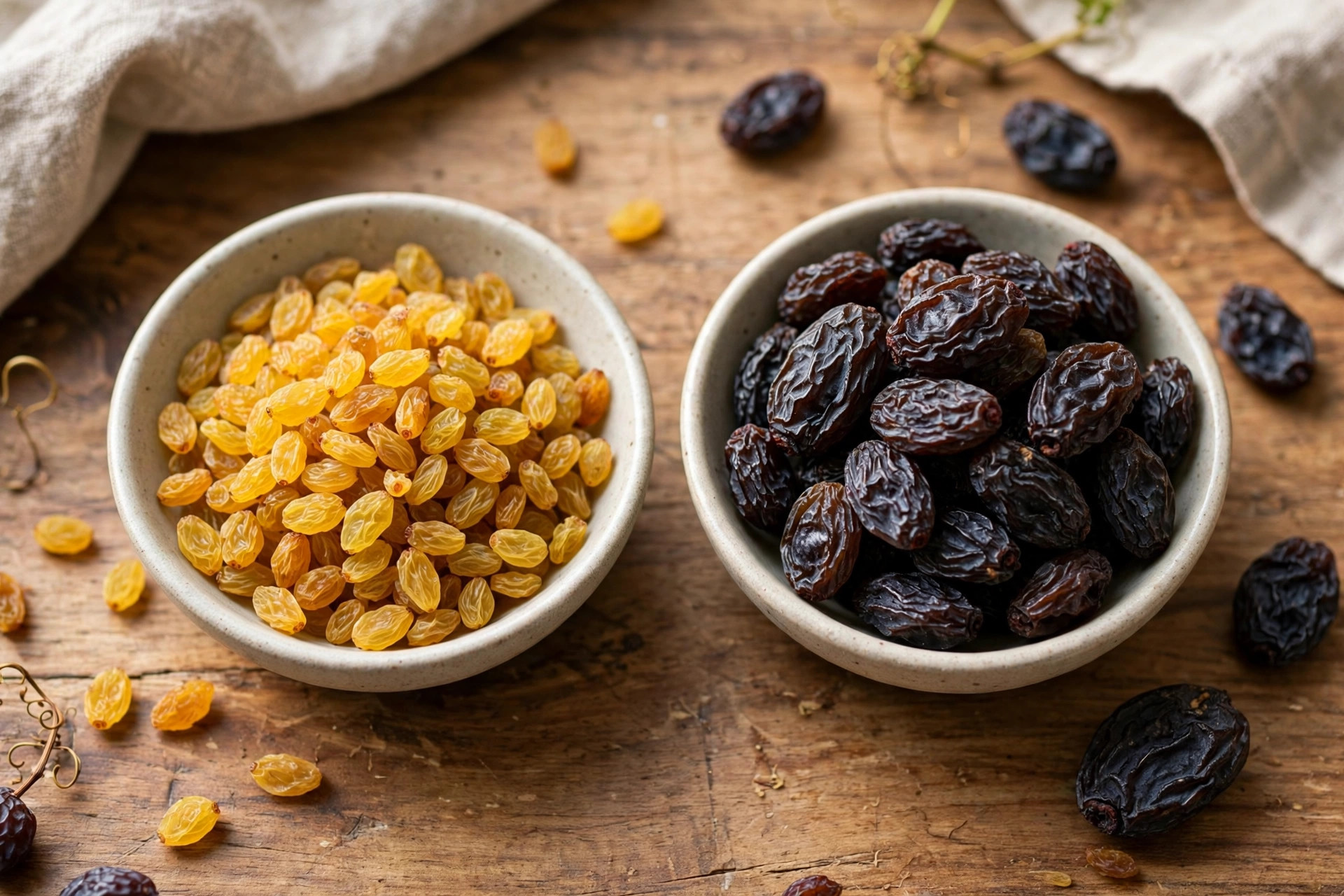
Kishmish is small and seedless; munakka is large and seeded. They are different products with different prices.
🍵 How to use kishmish
In food and drink
Kishmish is one of the easiest dry fruits to use. Eat a small handful as a snack, add it to porridge, yogurt or a fruit bowl, or cook it into kheer, halwa, sheer khurma and pulao. It also works in baking — cakes, cookies and breads — and in salads, where a sweet bite balances a sharp dressing.
One practical tip: soak kishmish for 20–30 minutes in warm water before adding it to a dish. Soaked berries plump up, cook more evenly, and do not draw moisture out of the dish. For pulao, add the soaked kishmish near the end so the berries stay whole.
Soaked kishmish in the morning
Many Pakistani homes soak a spoonful of kishmish — or munakka — overnight and eat it first thing in the morning, sometimes with the soaking water. The berries are softer, easier to chew, and gentler on the stomach.
This is a home habit, not a medical treatment. Soaked kishmish has the same sugar as dry kishmish, so the portion still counts. A spoonful (about 30g) is a sensible daily portion for most adults.
On skin and hair
Kishmish is sometimes used in home skin and hair care, because it contains iron, potassium and plant compounds called polyphenols. Some people add soaked kishmish to face packs or eat it for “glowing skin”.
That is a home remedy, not a proven treatment. No clinical trial shows that eating kishmish clears skin or grows hair. The iron and potassium are real, but they are also in many other foods. Eat kishmish because you like it, not because a seller promised you new hair.
Honest limits — what we have NOT tested
BaBaShop.pk has not tested any of the kishmish in this guide in a lab. We have not tasted every pack. Our prices come from the sellers’ own websites, checked on 10 November 2026.
We also do not sell kishmish. This guide is market research to help you buy well from other sellers. If a claim in this article matters for your health, check it with your doctor or a qualified dietitian.
💪 Benefits — what the research actually says
Kishmish has real research behind it. It also has real limits. Here is the balanced picture, with the studies named.
Blood sugar: low to moderate glycaemic index
Raisins have a low to moderate glycaemic index (GI). In a 2014 study by Kanellos and colleagues, published in the Journal of Nutritional Science, the GI of raisins was 49.4 and 49.6 in two groups of healthy adults (low GI) and 62.3 in a third group (moderate GI). The same study found a low insulin index, and raisin meals gave lower blood-sugar and insulin responses than the same amount of carbohydrate from white bread (Kanellos et al. 2014; J Nutr Sci 3: e1; DOI: 10.1017/jns.2013.33; PMCID: PMC4153099).
That matters because it means raisins raise blood sugar more slowly than white bread or table sugar. But “low to moderate GI” is not “low sugar”. A 30g serving still carries about 20g of sugars, so the portion size decides the effect.
Blood pressure: a real finding in a real trial
In a 12-week randomised trial of 51 people with type 2 diabetes, those who ate dark raisins instead of processed snacks had a 23% lower post-meal glucose level and a 8.7 mmHg lower systolic blood pressure than the snack group (Bays, Weiter and Anderson 2015; The Physician and Sportsmedicine 43(1): 37–43; DOI: 10.1080/00913847.2015.998410; PMID: 25609549).
The blood-pressure result was statistically significant. The fasting-glucose result (19% lower) and the HbA1c result (0.12% lower) pointed the same way but did not reach statistical significance in that small trial. So the honest reading is: raisins beat processed snacks, clearly, on blood pressure and after-meal glucose — in people who replaced their snacks with raisins, not in people who added raisins on top.
Heart health markers
The Anderson and Waters review (2013) also notes that raisin intake was linked to lower LDL cholesterol, lower triglycerides and lower oxidised LDL in the studies they reviewed. These are risk markers, not proof of fewer heart attacks. No long trial has yet shown that eating raisins prevents heart disease.
Teeth: a surprise from the lab
Raisins are sticky and sweet, so most people assume they cause cavities. Lab work by Wu and colleagues at the University of Illinois at Chicago found the opposite direction: compounds in Thompson seedless raisins, especially oleanolic acid, stopped the growth of Streptococcus mutans (the main cavity bacterium) and Porphyromonas gingivalis (a gum-disease bacterium) in the lab, and blocked the bacteria from sticking to surfaces (Wu 2009; Journal of Nutrition 139: 1818S–1823S; DOI: 10.3945/jn.109.107854).
That is lab evidence, not a dental recommendation. Raisins still contain sugar, and they still stick to teeth. Rinse or brush after eating them, especially for children. The study changes how researchers think about raisins — it does not make them a toothpaste.
Fibre and gut health
With 3.7g of fibre per 100g, kishmish is a reasonable fibre source for a snack. Raisins also contain inulin-type compounds that feed gut bacteria, according to the same research reviewed by Anderson and Waters. A small daily portion helps a fibre-poor diet, but it will not fix one on its own.
Balanced view
Kishmish has real positives: a low to moderate GI, potassium, iron and fibre, and trial evidence that swapping processed snacks for raisins improves blood pressure and after-meal glucose. It also has real limits: it is high in sugar, it is not medicine, and no study shows it cures diabetes, clears skin or grows hair. Both sides belong in any honest guide.
⚠️ Side effects and who should avoid it
Kishmish is safe for most healthy adults in small amounts. But it is still a sugary dried fruit, and it has real risks for some people.
People with diabetes
Kishmish has a low to moderate GI, but it still raises blood sugar. A 30g handful has about 20g of sugars. People with diabetes should treat kishmish like any other sweet food: small amounts, counted in the daily total, and only as their doctor advises.
Kishmish does not cure diabetes. Any seller who says so is lying. The Bays trial (2015) showed raisins beating processed snacks in people with diabetes — it did not show raisins treating diabetes.
Weight
At 299 kcal per 100g, kishmish adds up fast. A 30g handful is about 90 kcal. Two handfuls a day add about 180 kcal — roughly the same as a small roti with ghee. Kishmish is easy to overeat because the berries are small and sweet, so measure the portion instead of eating from the pack.
Teeth
Kishmish sticks to teeth, and its sugars feed mouth bacteria. The oleanolic-acid lab finding is interesting, but it does not cancel the sugar. Rinse with water or brush after eating kishmish, especially for children, and do not let children fall asleep with kishmish in their mouths.
Sulphites in golden raisins
Golden raisins are often treated with sulphur dioxide to keep their golden colour. Most people have no problem with this. But people with sulphite sensitivity — including some people with asthma — can react, with symptoms from a headache to breathing trouble. If golden raisins give you a headache or wheeze, try sun-dried brown or black raisins instead, and check the label for sulphur dioxide or the preservative code E220.
Allergies
A true grape or raisin allergy is uncommon, but it exists. Symptoms can range from an itchy mouth to, rarely, a serious allergic response. People with a known grape allergy should avoid kishmish and ask their doctor first. Kishmish can also carry traces of nuts if it is packed in a facility that handles nuts — check the label if you have a nut allergy.
Babies and small children
Kishmish is a choking risk for babies and toddlers, because the berries are small, round and chewy. Do not give whole kishmish to children under four. For older children, chop the berries or soak them until soft, and always supervise while they eat.
Balanced view
Kishmish is a useful everyday food with real minerals and real research behind it. It is also a sugary food that needs portion control, a diabetes caution, and care around sulphites, teeth and small children. Both sides belong in any honest guide.
🏺 Shelf life and storage
Kishmish keeps well, but it does not keep forever. Stored badly, it dries out, hardens, or picks up moisture and goes sticky.
Store it right:
- Keep kishmish in a clean, airtight jar or sealed pack, away from direct sunlight.
- Keep it in a cool, dry place. A kitchen cupboard is fine. The fridge is also fine and slows drying, but keep the jar sealed so the berries do not pick up fridge smells.
- Use a clean, dry spoon or clean dry hands every time. A wet spoon adds moisture and can start mould.
- Keep it away from strong-smelling foods. Kishmish picks up odours easily.
How long does it last? Sealed kishmish keeps for about 6 to 12 months from packing if stored well. Once opened, aim to finish it within 2 to 3 months for the best softness and flavour. A pack from this year’s crop will be softer than a pack from last year.
If it goes hard: soak the berries in warm water for 20–30 minutes. Most good kishmish softens again. If the berries stay hard and tasteless after soaking, the pack is too old — use it in cooking where it will soften in the dish, or replace it.
If it smells sour, looks mouldy or has insects: do not eat it. Throw it away and contact the seller. White sugar crystals on the surface are harmless — that is just fruit sugar coming out of the berries — but fuzzy mould is not.
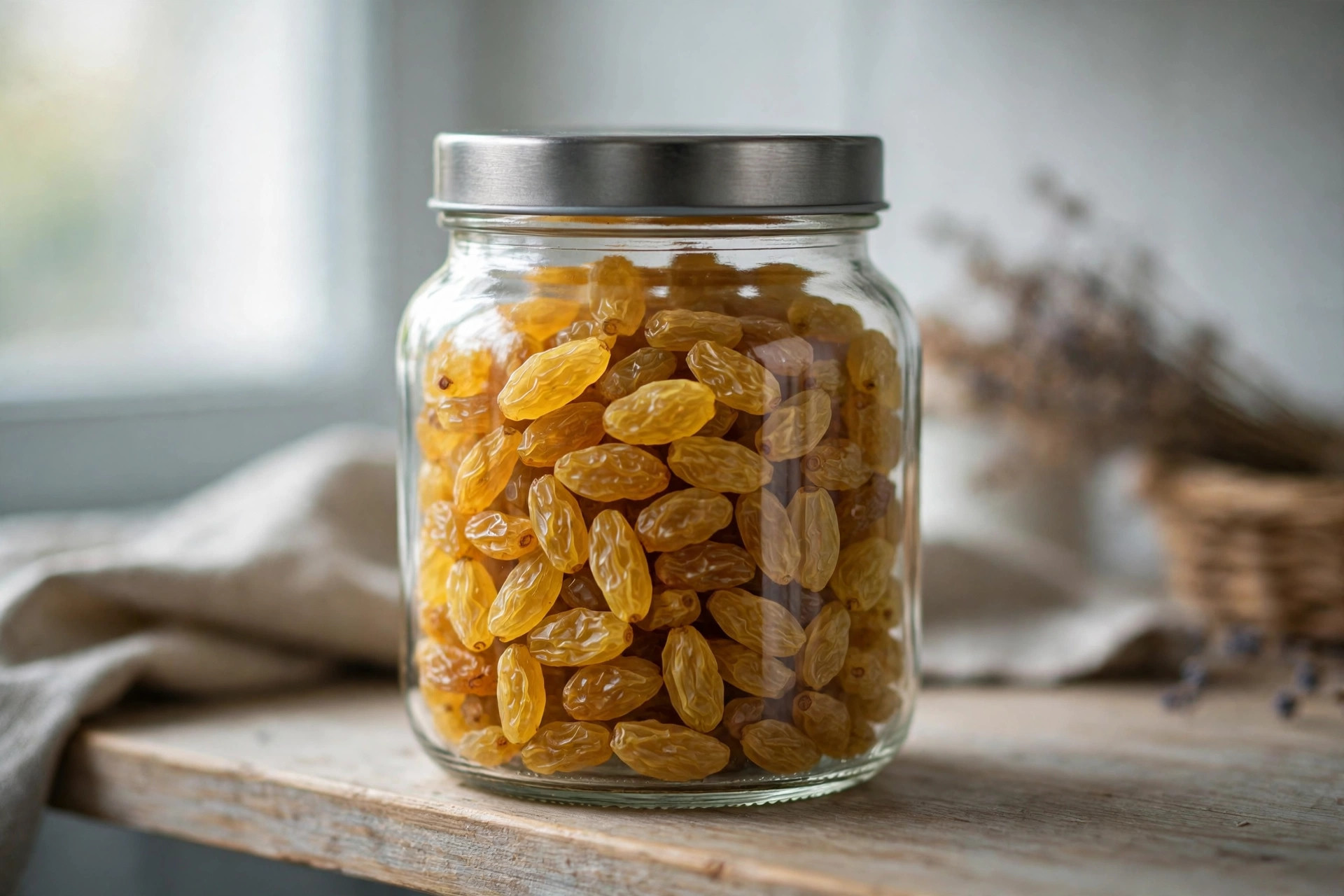
Sealed, cool and dry — that is all a jar of kishmish needs.
🏙️ City-wise prices: Karachi, Lahore, Islamabad, Sargodha
Online kishmish prices are the same across Pakistan. A 1kg pack listed at Rs 1,800 on khandryfruit.com costs Rs 1,800 whether you order it in Karachi, Lahore, Islamabad or Sargodha. What changes is delivery.
Delivery charges we saw ranged from free (on orders above a minimum spend at some stores) to Rs 100–Rs 300 per order. Khan Dry Fruits offers same-day delivery in Lahore and nationwide delivery in 1–3 days. Always add delivery to the pack price before you compare two sellers.
In physical shops, prices vary more. A 1kg pack in a Saddar or Anarkali shop may cost Rs 100–Rs 200 more than the same pack online, because the shop pays rent and keeps small stock. In Sargodha, dry-fruit sellers near the main bazaars often sell kishmish loose by weight, and the price depends on the day’s mandi rate and the seller’s own stock.
Quetta’s Alamdar Road market is the wholesale hub for kishmish, and wholesale rates there are lower than retail — a local market report from November 2026 puts Sundarkhani at about Rs 1,800 a kilo wholesale in Quetta, which matches the retail price of the same grade online. That tells you the online sellers are not far off the wholesale market.
Our advice is the same in every city: check the online price first, then decide if the shop price is fair. And on 11.11, check whether the “sale price” is actually lower than the price the same seller charged last week.
We could not verify separate city-wise shelf prices for kishmish from published sources, so we have not invented any. The figures in this guide are the live online prices, which apply nationwide.
❓ Kishmish vs munakka vs golden raisins — clearing the confusion
Walk into any Pakistani bazaar and you will hear half a dozen names for dried grapes. Here is what they actually mean.
Kishmish. The general name for small seedless dried grapes. Golden, green or black. This is the kishmish in this guide.
Munakka. Large dried grapes with seeds inside. Bigger, chewier, and usually eaten soaked. Also called “bari kishmish”. Munakka is not simply big kishmish — it comes from a different, larger grape, and it keeps its seeds. In our table, munakka kilos cost Rs 1,400–Rs 1,700, less than seedless kishmish kilos.
Sundarkhani kishmish. The premium green-gold kishmish, long and plump, mostly from Afghanistan. The name is a grade and an origin, not a different fruit. Sundarkhani kilos in our table cost Rs 1,800–Rs 2,000.
Desi kishmish / soghi. Local green kishmish, often smaller and darker than Sundarkhani. “Soghi” is a local name for the same desi green raisin. It costs less than Sundarkhani and is the everyday cooking kishmish in many homes.
Kali kishmish / black raisins. Small seedless black grapes, dried dark. Chewy, with a deeper flavour than golden kishmish. The dearest kilo in our table (Rs 2,340) is black raisins.
Golden raisins. Kishmish made from light grapes and dried to keep a golden colour, often with a sulphur treatment. Not a different fruit — a different drying and colour treatment.
Sultanas. The imported name for golden seedless raisins, usually from Turkey or Iran. In Pakistan, “sultana” and “golden kishmish” are often the same pack with a different label.
“Organic kishmish”. Sellers use the word freely. In Pakistan there is no single official organic kishmish certificate that shoppers can check at a glance. Treat “organic” on a label as a marketing word unless the seller can show a certificate from a named certifying body. We have not called any kishmish in this guide “organic” as a fact, because we could not verify a certificate for any of them.
“Afghani kishmish”. Usually means Sundarkhani from Afghanistan. It is a real origin, but the label alone does not prove the grade. Check the berries: long, plump, even-sized and clean.
🎉 11.11 buying tips
The 11.11 sale starts on 10 November 2026 at 8pm PKT. Dry-fruit sellers on Daraz and brand stores will run discounts. Use the sale — but use it smartly.
- Screenshot the price today. Check the price now, then check it again during the sale. A real discount beats last week’s price. A fake discount only beats an inflated “was” price.
- Compare per 100g, not the discount percentage. A 40% discount on a 250g pack can still cost more per gram than a full-price 1kg pack.
- Buy the size you will finish. A 1kg pack is cheaper per gram, but kishmish stored badly for a year loses softness. A 1kg pack is the sweet spot for most families; a 250g pack is the right start for a new seller.
- Check the delivery fee. Some sellers raise delivery charges during sales. Add it before you compare.
- Do not bulk-buy a brand you have never tried. Order one small pack first. If the berries are soft, clean and sweet, order the kilo next time.
- Skip gift boxes unless you need a gift. The box costs money and the kishmish inside is the same.
- Buy the new crop. November is the new-crop season for kishmish, so the freshest stock is on the shelves now. Ask the seller for this year’s packing date before you pay.
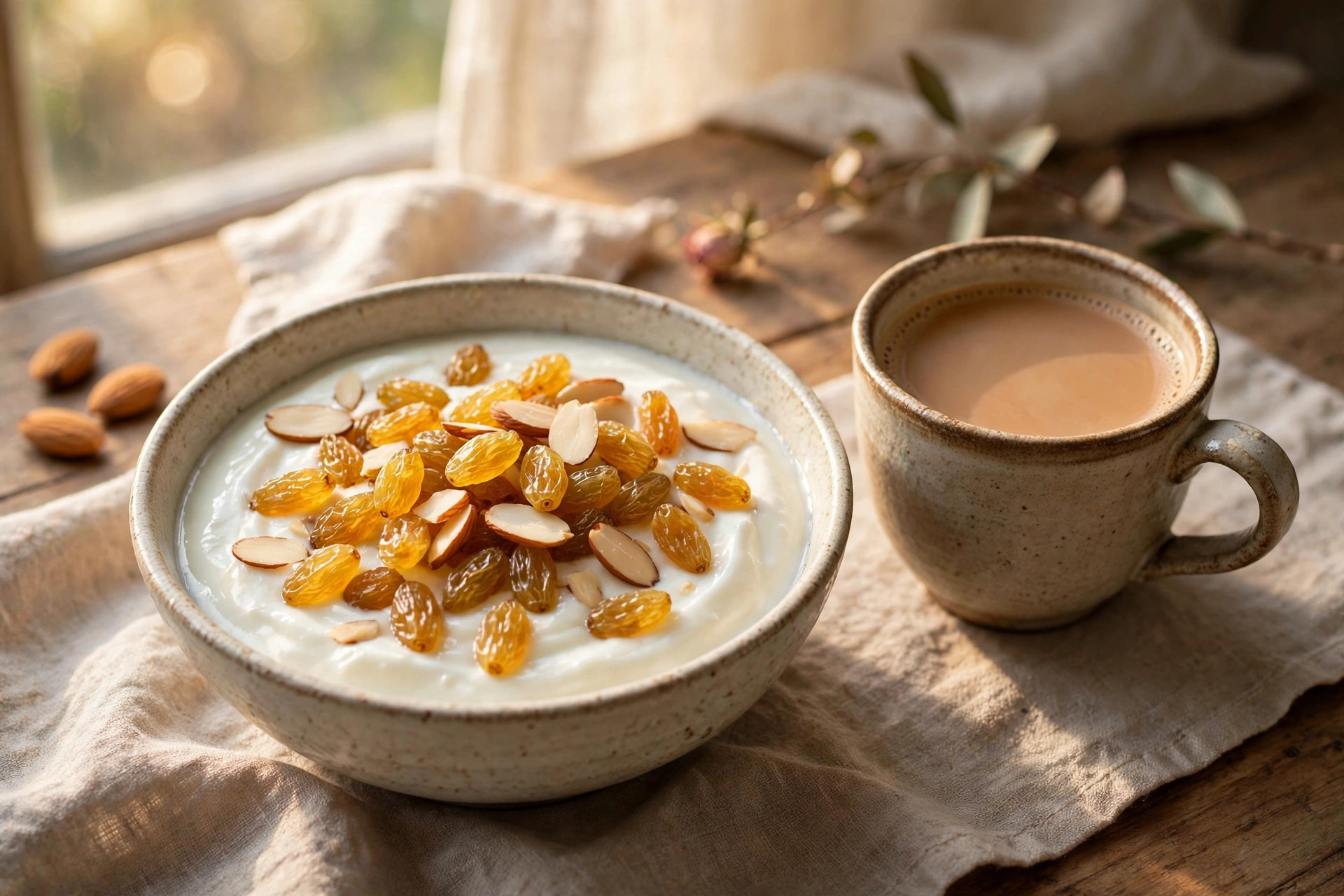
Kishmish over yogurt with almonds — a quick breakfast that uses the fruit’s sweetness well.
📋 Methodology and transparency
How we checked prices
On 10 November 2026 we searched for kishmish sold in Pakistan and opened each seller’s own product page, or a search result showing that page’s live price. We recorded the price shown on the page, the pack size, and the delivery note where given.
We kept only prices we could see on the seller’s own site. We did not verify a stable kishmish price on Daraz.pk today — Daraz listings for kishmish change by seller and by the hour, and no single Daraz price could be pinned to a pack size and seller with confidence — so Daraz prices are left out, even though Daraz is a well-known marketplace. HumMart, Naheed, Chase Value, iShopping and Metro did not return a verifiable kishmish pack price in our checks today, so they are left out too.
Two sellers (Bombay Dry Fruits and Rasa.pk) showed prices we could not match exactly to pack sizes, so we reported their figures in the text instead of the table. We did not guess which size costs what.
A note on this keyword
This guide targets “kishmish price in pakistan”, which Semrush PK data shows at 720 searches a month with a KD of 6. That is below the site’s usual rule of 1,000+ monthly volume, and we say so plainly. Pride SEO Tools was down tonight, so this keyword was used as the best available fallback — low competition (KD 6), a real Pakistani search, and a clean match for the BaBaShop seeds and nutrition range. The 1,000+ rule still stands for the main keyword library; this article is the honest exception, not a change to the rule.
Transparency note
BaBaShop.pk does not sell kishmish. We do not stock kishmish, munakka or any other dried grapes. This guide is market research, written to help you buy well from other sellers.
We earn nothing from the links in this guide. The retailer links are there so you can check the price yourself. If a price has changed since 10 November 2026, the seller’s page is the correct price — not this article.
Related guides from BaBa Shop
If you are building a healthier pantry, these BaBa Shop guides may help:
- Acacia honey price in Pakistan — our honey buying guide, with verified prices and purity checks
- Argan oil price in Pakistan — argan oil brands compared, with purity checks
- Chia seeds — chia seeds at BaBa Shop, a low-sugar, high-fibre pantry staple
- Golden flax seeds — golden flax seeds at BaBa Shop, for breakfast bowls and baking
And if you want to stock your pantry with seeds and nutrition staples, browse the seeds range at BaBa Shop.
💬 FAQs
What is the price of kishmish in Pakistan?
The kishmish price in Pakistan starts at Rs 350 for a 250g pack (Khan Dry Fruits Munakka) and goes up to Rs 2,340 for a 1kg pack (Organic and Pure Black Raisins). A typical 1kg pack of packed kishmish or munakka costs Rs 1,400 to Rs 2,000. The best value we verified in stock was Rs 140 per 100g for a 1kg pack of munakka.
Which kishmish is best in Pakistan?
There is no single “best” kishmish. Sundarkhani is the premium grade for looks and plumpness. Munakka is the best value per kilo and the usual pick for soaking. Black raisins are the dearest and the most strongly flavoured. Pick by what matters to you: lowest price, a grade you trust, or the type your recipe needs.
Is kishmish the same as munakka?
No. Kishmish is small seedless dried grapes. Munakka is large dried grapes with seeds inside. Munakka is bigger, chewier and usually cheaper per kilo, and it is the one most often soaked overnight. Both are dried grapes, but they are different products with different prices.
Is kishmish good for diabetes?
Kishmish has a low to moderate glycaemic index (about 49–62 in the studies we cite), but it is still high in sugar — about 65g of sugars per 100g. People with diabetes should use it only in small amounts and only as their doctor advises. It does not cure or treat diabetes.
How can I tell if kishmish is sugar-coated?
Taste one berry. Sugar-coated kishmish tastes flat and one-note sweet, and it leaves sugar on your fingers. Put a handful in water and stir: if the water turns syrup-sweet, the pack was coated. Good kishmish tastes of grape, not of plain sugar.
How long does kishmish last?
Sealed kishmish keeps for about 6 to 12 months from packing if stored in a cool, dry, airtight jar. Once opened, aim to finish it within 2 to 3 months. If it goes hard, soak it in warm water for 20–30 minutes. If it smells sour or shows mould, throw it away.
Why is Sundarkhani kishmish more expensive?
Sundarkhani is a premium grade: long, plump, evenly sized berries, mostly from Afghanistan, graded and packed for retail. Grading, transport and packing all add cost. Desi green kishmish from local markets is smaller and less even, so it costs less.
Does BaBaShop.pk sell kishmish?
No. BaBaShop.pk does not sell kishmish or munakka. This guide is market research to help you buy well from other sellers. For seeds and nutrition staples we do stock, see our chia seeds and golden flax seeds.
🎯 Conclusion
The kishmish price in Pakistan in November 2026 runs from Rs 350 for a small 250g pack to Rs 2,340 for a 1kg pack of black raisins, with honest 1kg packs at Rs 1,400 to Rs 2,000.
The smart buy is simple. Pick the type you actually need — kishmish for cooking and snacking, munakka for soaking. Check the per-100g price and aim for Rs 140 to Rs 200. Start with a small pack from a new seller. Taste one berry before you buy a kilo, and ask for the packing date.
Kishmish is a useful everyday food with real minerals and real research behind it — a low to moderate GI, potassium, iron and fibre, and trial evidence that swapping processed snacks for raisins helps blood pressure and after-meal glucose. It is also a sugary food that needs portion control, a diabetes caution, and care around sulphites, teeth and small children.
This 11.11, let the price table do the work. Screenshot today’s prices, compare per 100g during the sale, and buy the pack — not the discount banner.
📲 Need help choosing?
Message BaBa Shop on WhatsApp at 0302-4096495 and we will point you to the right guide.
For seeds, nuts and pantry staples, browse our chia seeds and golden flax seeds.
🔗 Sources and price checks (10 November 2026)
- Khan Dry Fruits — Sundarkhani Raisins 1kg Rs 2,000 / 500g Rs 1,000 / 250g Rs 500 — khandryfruit.com
- Khan Dry Fruits — Golden Sundar Khani 1kg Rs 1,800 / 500g Rs 1,000 / 250g Rs 500 — khandryfruit.com
- Khan Dry Fruits — Desi Green Kishmish 1kg Rs 1,900 / 500g Rs 1,000 / 250g Rs 500 — khandryfruit.com
- Khan Dry Fruits — Black Raisins 1kg Rs 2,000 / 500g Rs 1,000 / 250g Rs 520 — khandryfruit.com
- Khan Dry Fruits — Munakka 1kg Rs 1,400 / 500g Rs 700 / 250g Rs 350 — khandryfruit.com
- Khan Dry Fruits — Dried Munakka (premium) 1kg Rs 1,700 / 500g Rs 880 / 250g Rs 440 — khandryfruit.com
- Hunza Foodways — Kishmish 1kg Rs 1,390 / 500g Rs 790 (out of stock when checked) — hunzafoodways.com
- Dry Fruits Mart — Dry Black Grapes (Kala Munakka) 1kg Rs 1,600 / 500g Rs 800 / 250g Rs 450 — dryfruitsmart.pk
- ARY Sahulat Bazar — Raisins 1kg Rs 1,760 / 500g Rs 880 — arysahulatbazar.pk
- Organic and Pure — Black Raisins 1kg Rs 2,340 / 250g Rs 585 — organicandpure.store
- Bombay Dry Fruits — Green Raisins jars 300g Rs 1,160 / 600g Rs 2,320; ranges for black, green and munakka — bombaydryfruits.com
- Rasa.pk — Sundarkhani Raisins from Rs 540 (size not matched to price on page) — rasa.pk
- Anderson JW, Waters AR. “Raisin consumption by humans: effects on glycemia and insulinemia and cardiovascular risk factors.” Journal of Food Science 2013; 78(Suppl 1): A11–A17. DOI: 10.1111/1750-3841.12071 — PubMed 23789931
- Bays H, Weiter K, Anderson JW. “A randomized study of raisins versus alternative snacks on glycemic control and other cardiovascular risk factors in patients with type 2 diabetes mellitus.” The Physician and Sportsmedicine 2015; 43(1): 37–43. DOI: 10.1080/00913847.2015.998410 — PubMed 25609549
- Kanellos PT et al. “Acute effects of raisin consumption on glucose and insulin responses in healthy individuals.” Journal of Nutritional Science 2014; 3: e1. DOI: 10.1017/jns.2013.33 — PMC4153099
- Wu CD. “Grape Products and Oral Health.” Journal of Nutrition 2009; 139: 1818S–1823S. DOI: 10.3945/jn.109.107854 — calraisins.org (PDF)
- USDA FoodData Central — Raisins, seedless, per 100g: 299 kcal, 79.2g carbohydrate, 65.2g sugars, 3.7g fibre, 744mg potassium, 1.8mg iron (SR Legacy fdcId 168165) — fdc.nal.usda.gov
- IndexBox — Pakistan’s Dried Grapes Market Report 2026 (loose raisins roughly Rs 400–Rs 900/kg; premium packaged roughly Rs 1,200–Rs 2,500/kg) — indexbox.io