
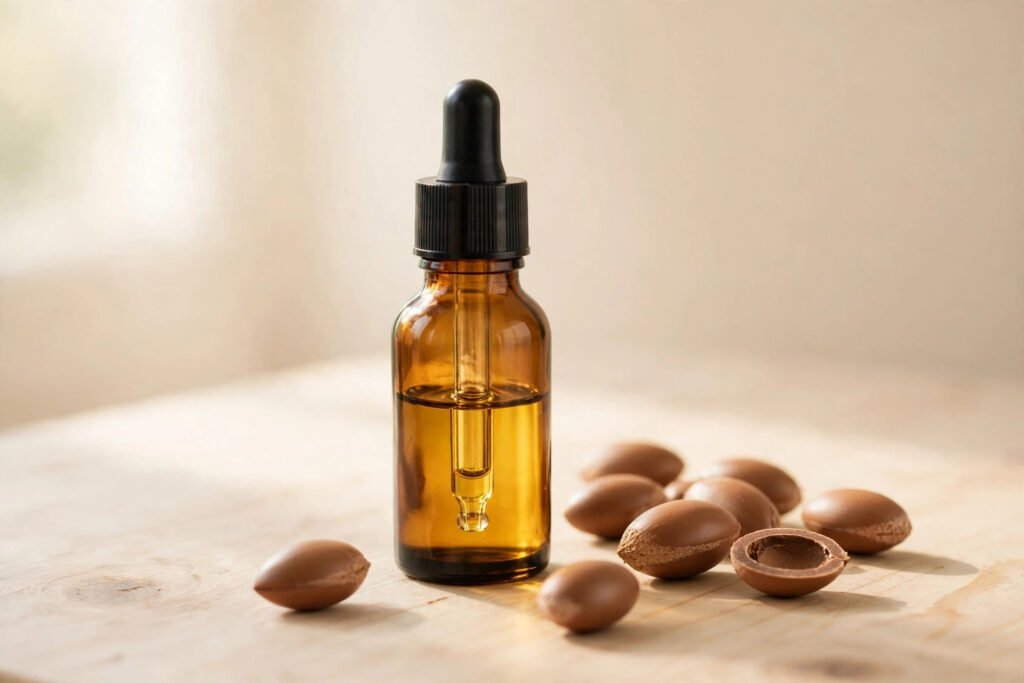
Argan Oil Price in Pakistan 2026: 11.11 Buying Guide
By BaBaShop.pk Team | Updated: 9 November 2026
The argan oil price in Pakistan in November 2026 runs from Rs 835 for a small 10ml bottle to Rs 3,680 for a 45ml imported bottle. Most shoppers pay between Rs 999 and Rs 2,750 for a usable bottle.
That range looks wide. It is wide for a reason. A 10ml bottle and a 200ml bottle are not the same purchase, even when the sticker prices look close. The only fair way to compare them is the price per 100ml, and that is exactly what this guide does.
We checked 10 real listings on Pakistani stores on 9 November 2026. Every price below is a live listed price from a named seller. Nothing here is guessed, and nothing is a “typical” price copied from an old article.
⚠️ One honest note: BaBa Shop does not sell argan oil. This guide is market research, not a product page. If you want oils and seeds we do stock, our Seeds & Nutrition range is the place to look.
In this guide
- The short answer
- Quick verdict: which bottle should you buy?
- What is argan oil?
- Argan oil price in Pakistan: 10 verified bottles compared
- Why argan oil costs what it costs
- How to spot pure argan oil — and fake or diluted oil
- What the research actually says
- How to use argan oil for hair
- How to use argan oil for skin
- Side effects and who should avoid argan oil
- Argan oil vs jojoba oil vs almond oil
- Shelf life and storage
- City-wise price note
- Buying before the 11.11 sale: 5 tips
- How we collected these prices
- Frequently asked questions
- Conclusion
✅ The short answer
- Rs 835 — the cheapest verified bottle: Olim Naturals Argan Oil, 10ml, on olim.pk.
- Rs 999 to Rs 1,199 — the fair range for a 30ml bottle of pure argan oil from a Pakistani brand (Al Jannat Rs 999, Opure Rs 1,199).
- Rs 2,100 to Rs 2,750 — the fair range for a 100ml bottle: OGX Rs 2,100, Derma.pk Moroccan Argan Oil Rs 2,250, Bioblas Rs 2,750.
- Rs 775 per 100ml — the lowest per-100ml rate we found: Hemani Argan Hair Oil, 200ml for Rs 1,550 — but note it is a blended hair oil, not pure argan oil.
- Rs 9,900 per 100ml — the highest per-100ml rate: Khalis Things, 10ml for Rs 990. Small bottles are trials, not value.
- Rs 2,000 to Rs 2,500 per 100ml is what good pure argan oil usually costs in Pakistan when you buy 100ml. Pay far less and check the label twice. Pay far more and you are paying for the brand, not the oil.
🏆 Quick verdict: which bottle should you buy?
Buy the bigger bottle. The 10ml bottles look cheap at Rs 835 to Rs 990, but they cost three to four times more per millilitre than a 100ml bottle. If you plan to use the oil daily, a 100ml bottle is the only size that makes sense.
Buy Hemani 200ml if…
Budget is your main concern. At Rs 1,550 for 200ml it works out at Rs 775 per 100ml — the lowest verified rate in our check. Just know what you are buying: it is an argan hair oil blend, not single-ingredient pure argan oil. For everyday hair oiling, that is fine for most people. For pure-oil skin use, it is not the same thing.
Buy OGX or Derma.pk 100ml if…
You want a known name at a fair per-100ml rate. OGX Renewing Argan Oil of Morocco is Rs 2,100 for 100ml on Khayest.pk, and Derma.pk lists its Moroccan Argan Oil at Rs 2,250 for 100ml. Both sit in the fair band for 100ml. Check stock before you order — the OGX listing showed limited availability when we checked.
Buy Opure or Al Jannat 30ml if…
You are trying argan oil for the first time. A 30ml bottle costs Rs 999 to Rs 1,199, lasts about a month of light use, and lets you test whether your skin and hair like it before you spend Rs 2,000 or more. Opure states cold-pressed on its listing, which is a point in its favour.
Skip the 10ml bottles if…
You will use the oil every day. Olim’s 10ml bottle costs Rs 835 — more than half the price of a 200ml Hemani bottle, for one-twentieth of the oil. Small bottles only make sense as a first trial.
🌿 What is argan oil?
Argan oil is pressed from the kernels of the argan tree, Argania spinosa. The tree grows almost only in south-west Morocco. In Urdu it is usually just called argan oil (ارگن آئل). There is no common desi name, because the tree does not grow in Pakistan.
The oil has a mild, nutty smell and a light golden colour. Cosmetic argan oil comes from unroasted kernels. Culinary argan oil comes from roasted kernels and tastes nutty — it is a different product, and this guide is about the cosmetic kind you put on hair and skin.
Why does it cost so much more than coconut or mustard oil? The work is slow. The fruit is picked by hand, the pulp is removed, the hard nut is cracked open — often still by hand — and the kernels inside are cold-pressed. It takes a large quantity of nuts to make a small amount of oil. Add import duty, shipping from Morocco, and bottling in Pakistan, and the price climbs before the bottle ever reaches a shelf.
What is inside the bottle?
Argan oil is about 80% unsaturated fatty acids. The two main ones are oleic acid (roughly 43–49%) and linoleic acid (roughly 29–36%), with smaller amounts of palmitic and stearic acids. It also contains vitamin E (tocopherols) and plant sterols. Those numbers come from laboratory analysis of retail argan oil samples, published in the International Journal of Molecular Sciences in 2025 (Słomczyńska and colleagues, doi: 10.3390/ijms26115322).
That composition is why the oil feels light rather than heavy. It sinks in fast and does not sit greasy on the skin the way coconut oil can. It is also why sellers talk about it for dry skin and frizzy hair — the fatty acids support the skin barrier and coat the hair shaft.
None of that makes it a medicine. It is a cosmetic oil with modest evidence behind it. The honest evidence is in the research section below.
💰 Argan oil price in Pakistan: 10 verified bottles compared
Prices checked on 9 November 2026 from the sellers’ own listings. Prices can change, especially during the 11.11 sale — always re-check the listing before you pay.
| Brand / product | Size | Price | Per 100ml | Type | Where to buy |
|---|---|---|---|---|---|
| Olim Naturals Argan Oil | 10ml | Rs 835 | Rs 8,350 | Pure, cold-pressed | olim.pk |
| Khalis Things Argan Oil | 10ml | Rs 990 (was Rs 1,690) | Rs 9,900 | Pure Moroccan | khalisthings.com |
| Al Jannat Pure Argan Oil | 30ml | Rs 999 | Rs 3,330 | Pure | aljannat.pk |
| Opure Argan Oil | 30ml | Rs 1,199 (regular Rs 1,799) | Rs 3,997 | Pure, cold-pressed | opure.pk |
| Purus Argan Oil of Morocco Plus | Size not stated | Rs 2,002 | — | Serum blend | purus.com.pk |
| OGX Renewing Argan Oil of Morocco | 100ml | Rs 2,100 | Rs 2,100 | Hair oil blend | khayest.pk |
| Derma.pk Moroccan Argan Oil | 100ml | Rs 2,250 | Rs 2,250 | Pure, preservative-free | derma.pk |
| The Nature’s Store Argan Oil | Size not stated | Rs 2,300 | — | Pure | thenaturesstore.com |
| Bioblas Botanic Oils Argan Oil | 100ml | Rs 2,750 | Rs 2,750 | Pure (Turkish brand) | auraglow.pk |
| Hemani Argan Hair Oil | 200ml | Rs 1,550 | Rs 775 — lowest per 100ml | Hair oil blend | snapdeal.com.pk |
Two honest notes on the table. First, Al Jannat’s own page also shows a “Rs 750” promotional line, while its listed product price is Rs 999 — we used the listed price, and you may find the lower figure at checkout. Second, Purus and The Nature’s Store do not state a bottle size on their listings, so we could not work out a per-100ml rate for them. A seller that hides the size is asking you to trust the sticker price alone. Ask before you buy.
One more data point outside the table: So Pure Moroccan Argan Oil, 45ml, is listed at Rs 3,680 on Hamariweb’s shop — that is Rs 8,178 per 100ml, one of the highest rates we saw. It shows how much the per-100ml figure matters: Rs 3,680 sounds like a mid-range bottle until you divide it by 45ml.
How long does a bottle last?
A 30ml bottle used as a few drops on hair ends and face lasts most people about 4 to 6 weeks. A 100ml bottle lasts about 3 to 4 months of daily light use. At Rs 2,100 for 100ml, that works out to roughly Rs 18 to Rs 23 a day. At Rs 990 for 10ml, the same daily use costs about Rs 90 a day — and the bottle runs out in a week or two. The small bottle is not a bargain. It is a sample with a high price tag.
💸 Why argan oil costs what it costs
Five things set the price. Once you know them, the range from Rs 835 to Rs 3,680 starts to make sense.
1. Cold-pressed vs refined
Cold-pressed oil is pressed without heat, so more of the vitamin E and plant compounds survive. It costs more to make and more to buy. Refined oil is heated and filtered. It looks clearer, smells of almost nothing, and keeps longer — but some of what made the oil valuable is lost in refining. If a listing does not say cold-pressed, assume it is not.
2. Moroccan origin and import cost
Real argan oil comes from Morocco. The kernels are imported, then bottled here, or the finished bottle is imported whole. Either way there is shipping, duty, and a middleman. A bottle that claims Moroccan origin at a very low price deserves a second look at the ingredients list.
3. Pure oil vs a blend
This is the biggest price trap in Pakistan. Many bottles with “argan” on the front are blends. The first ingredient may be mineral oil, sunflower oil, or silicone, with argan oil far down the list. Blends are cheaper to make and they are not dishonest by themselves — but they should cost less than pure oil, and the label should say so. In our table, Hemani, OGX, and Purus are blends or serums. Their prices are fair for what they are. The problem only starts when a blend is sold at a pure-oil price.
4. Bottle size and packaging
Small bottles carry the same bottling, labelling, and delivery cost as big ones, spread over less oil. That is why 10ml costs Rs 8,350 to Rs 9,900 per 100ml while 100ml costs Rs 2,100 to Rs 2,750 per 100ml. Dark glass also costs more than clear plastic — but it protects the oil from light, so it is money well spent.
5. Brand and seller markup
Imported names such as OGX and Bioblas carry brand and import markups. Local brands such as Olim, Opure, and Al Jannat bottle in Pakistan and skip some of that cost. A higher price does not always mean better oil. It often means a longer journey to your shelf.
🔍 How to spot pure argan oil — and fake or diluted oil
You cannot be sure from a photo. But these seven checks catch most bad bottles before you pay.
Check 1: Read the ingredients list
Pure argan oil has one ingredient: Argania spinosa kernel oil. If the list starts with mineral oil, paraffin, cyclomethicone, or sunflower oil, you are buying a blend. Blends are fine if the price matches. They are not fine at pure-oil prices.
Check 2: Look at the colour
Pure cosmetic argan oil is light golden yellow, close to honey. If it is almost colourless, it may be heavily refined. If it is dark red or brown, it may be mixed with something else. Purus makes the same point on its own product page: a bottle that looks dark red or brown is usually a sign it has been cut with something else.
Check 3: Smell it
Pure argan oil has a mild, nutty smell that fades quickly after you apply it. No smell at all can mean heavy refining. A strong perfume smell means fragrance has been added, and the oil is not pure.
Check 4: Feel the texture
Rub a drop between your fingers. Pure argan oil feels smooth and sinks in fast. It should not feel sticky or sit greasy on the skin for long. A sticky or heavy feel suggests dilution with a cheaper oil.
Check 5: Check the bottle
Real sellers use dark amber glass. Light breaks the oil down, so a clear plastic bottle is a warning sign. A dropper cap is normal for small bottles. A pump or a screw cap is normal for 100ml and above.
Check 6: Check the price against the per-100ml band
Pure argan oil in Pakistan rarely sells below about Rs 2,000 per 100ml in a 100ml bottle. A “pure Moroccan argan oil” at Rs 500 for 100ml is almost certainly diluted. The maths does not work at that price once import and bottling are counted.
Check 7: Buy from a seller you can return to
Buy from the brand’s own store or a known retailer — Daraz.pk, Naheed.pk, Al-Fatah, or the brand website. Check the return policy before you order. During the 11.11 sale, check the seller’s rating too. A deep discount from a new seller with no reviews is not a bargain. It is a risk.
📚 What the research actually says
Argan oil has a small but real evidence base. It is strongest for skin hydration and elasticity. It is weakest for hair growth, where most claims are tradition and anecdote rather than trials. Here is what we could verify.
Skin elasticity: the best study we have
In 2015, researchers at the University of Hassan II in Casablanca published a controlled trial in Clinical Interventions in Aging. Sixty postmenopausal women took part for 60 days. One group of 30 consumed dietary argan oil daily; the other group of 30 consumed olive oil. Both groups also applied cosmetic argan oil to one forearm.
The result: skin elasticity improved significantly with both oral and topical argan oil. Gross elasticity, net elasticity, and biological elasticity all rose, and the skin’s resonance running time — a measure of firmness — fell. The paper is Qiraouani Boucetta and colleagues, “The effect of dietary and/or cosmetic argan oil on postmenopausal skin elasticity”, Clinical Interventions in Aging, 2015;10:339–349, doi: 10.2147/CIA.S71684 (freely available on PubMed Central, PMCID: PMC4321565).
That is encouraging, not proof. It was one small study, in one group of women, over two months. It says argan oil may help ageing skin feel firmer. It does not say it erases wrinkles, and it says nothing about younger skin.
Skin hydration: a second study from the same team
The same researchers reported in 2014 that daily oral or topical argan oil improved skin hydration in postmenopausal women, with lower water loss through the skin and higher water content in the top layer. Again, a small study in one group. Useful as a signal, not as a promise.
What is in the oil: the composition study
A 2025 study in the International Journal of Molecular Sciences analysed seven retail cosmetic argan oils bought in Poland, Turkey, and Morocco, using gas chromatography. It confirmed the standard profile: oleic acid 43–49% and linoleic acid 29–36% of total fatty acids, with about 80% unsaturated fatty acids overall. The authors — Słomczyńska, Siudem, Białek and colleagues, 2025;26(11):5322, doi: 10.3390/ijms26115322 — used the fatty-acid profile as a marker of purity and origin. That is the same test a lab would use to tell pure argan oil from a diluted bottle.
The honest limit, in a dermatologist’s words
Dermatologist Dr Leslie S. Baumann, writing in The Hospitalist in 2019, put it plainly: argan oil is “reputed to impart antiacne, antisebum, antiaging, moisturizing, and wound-healing activity, but clinical evidence is sparse”, and “randomized controlled trials are needed to elucidate cutaneous benefits, if any, from this rare botanical.”
We agree with her. The oil is pleasant, light, and well tolerated by most skin. The small trials point in a good direction. But anyone selling you argan oil as a proven anti-ageing treatment, a hair-growth cure, or an acne treatment is going beyond what the research shows.
⚠️ What we have NOT tested: BaBa Shop has not tested any of the brands in this guide. We have no lab results for these bottles, no trial of our own, and no relationship with any of these sellers. The prices are their listed prices. The research above is published work by other people. Treat this guide as a map, not a guarantee.
💇 How to use argan oil for hair
Argan oil will not grow new hair. No oil does. What it can do is make the hair you have look smoother, feel softer, and break less at the ends. That is worth something, as long as you expect the right thing.
As a leave-in for frizz
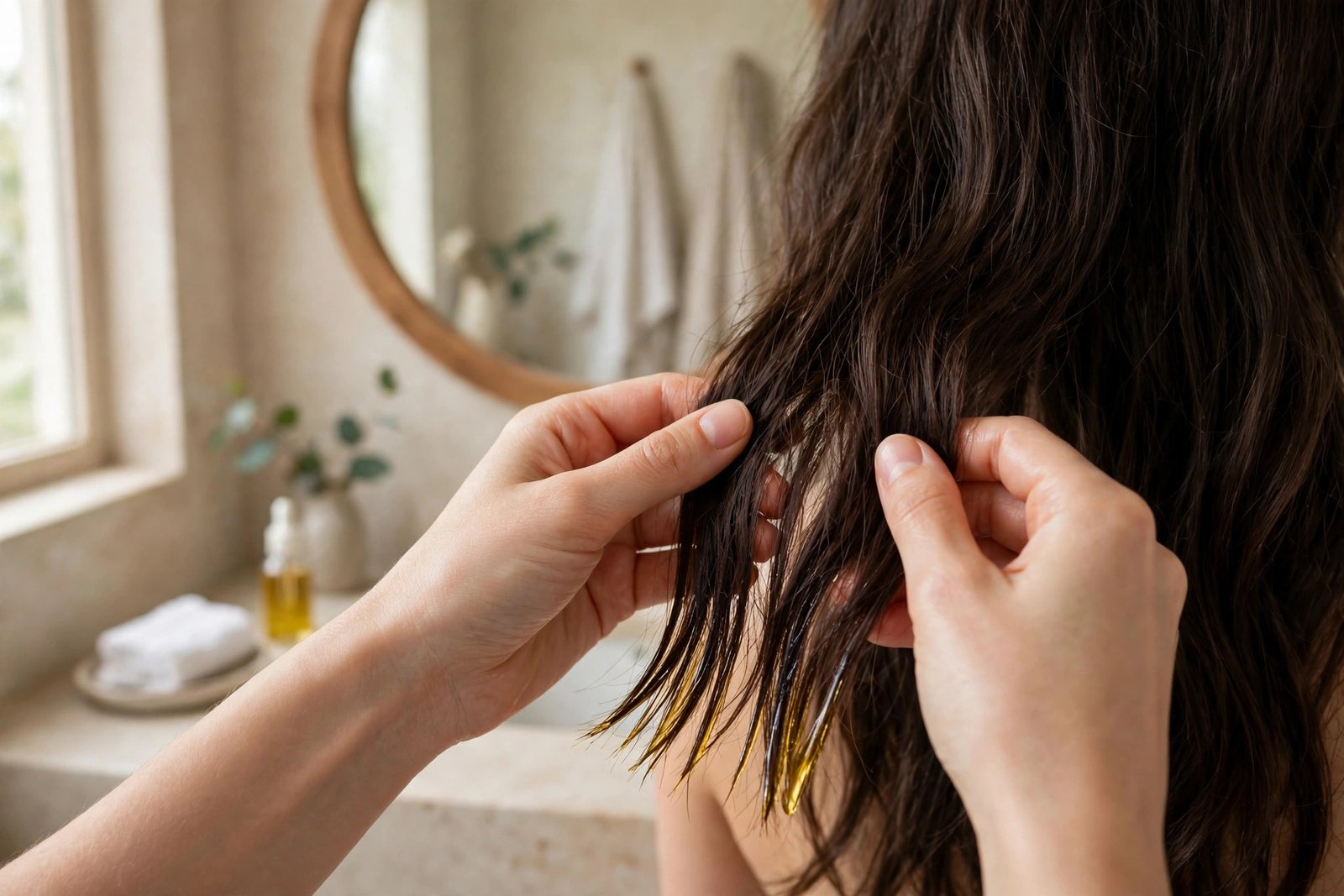
Warm 2 to 4 drops between your palms. Smooth them over the mid-lengths and ends of damp or dry hair. Do not start at the roots unless your hair is very thick and dry — the oil will make fine hair look flat. Fine hair needs 1 to 2 drops. Thick or curly hair can take the full 4 drops.
As a pre-wash treatment
Once a week, warm a larger amount — about a teaspoon for shoulder-length hair — and work it through the lengths. Leave it for at least 30 minutes, then shampoo as usual. You may need two washes to get it all out. This is the best use for very dry or chemically treated hair.
As a scalp oil
Massage a few drops into the scalp only if your scalp is dry. If your scalp is oily or you have dandruff, skip the scalp and stick to the lengths. Oil on an oily scalp does not help, and it can make flaking look worse.
What to expect, honestly
Shine and softness show up on the first use. Less breakage takes weeks of regular use, because it comes from the ends staying moisturised rather than snapping. If a seller promises visible hair growth in 7 days, that is a claim without evidence. Walk away.
🧴 How to use argan oil for skin
Argan oil is a light face and body oil, not a replacement for sunscreen or a prescribed treatment. Use it where it fits.
As a face oil
After washing, while the skin is still slightly damp, press 2 to 3 drops over the face. It works as a last step, over a moisturiser, or on its own for normal to dry skin. Give it a minute to sink in before makeup. If your skin is very oily, try it only at night, or skip it — even a light oil is still oil.
As a body oil
A few drops go a long way on elbows, knees, and hands. In winter, when Sargodha and Lahore get dry and cold, it helps rough patches feel softer. It is not a substitute for a proper moisturiser if your skin is very dry — it seals moisture in, but it does not add much water by itself.
Patch test first
Put a drop on the inside of your wrist or elbow. Wait 24 hours. If there is no redness, itching, or bumps, it is likely fine for your face. This matters more than any review. Skin is personal, and a product that suits one person can irritate another.
⚠️ Side effects and who should avoid argan oil
Argan oil is generally well tolerated. Serious reactions are uncommon. But “natural” does not mean “safe for everyone”.
Nut allergy
Argan oil comes from the kernels of a tree nut. If you have a tree-nut allergy, be careful. Allergic reactions to argan oil are rare, but they have been reported. Patch test first, and if you have a severe nut allergy, ask your doctor before using it on your skin.
Acne-prone skin
Argan oil is usually described as non-comedogenic, meaning it is unlikely to block pores. Some people with very oily or acne-prone skin still find it too heavy. Start with a tiny amount, on one part of the face, for a week. If breakouts increase, stop.
Sensitive skin and eczema
Most people with sensitive skin tolerate argan oil well. But if you have eczema, rosacea, or broken skin, patch test first. Do not apply any new oil over cracked or infected skin.
Pregnancy and breastfeeding
There is little research on topical argan oil in pregnancy. Pure oil is generally considered low risk, but blended serums contain other ingredients, so check the full list and ask your doctor if you are unsure. That is the advice on the Purus product page too, and it is sensible.
Eating argan oil
Culinary argan oil is a food in Morocco. Cosmetic argan oil is not food. Do not drink the bottle you bought for your hair. If you want the dietary kind, buy a food-grade bottle from a grocery seller, and keep it in the kitchen.
🔄 Argan oil vs jojoba oil vs almond oil: the local confusion
Shoppers in Pakistan often mix these three up. They are all light oils, they all come in small amber bottles, and they all promise soft skin and shiny hair. They are not the same oil, and they do not cost the same.
Jojoba oil
Jojoba is not really an oil at all. It is a liquid wax from the seeds of the jojoba plant, and its structure is close to the skin’s own sebum. That is why it sinks in fast and suits oily skin better than most oils. It is also very stable, so it keeps well. In Pakistan, jojoba oil usually costs less per 100ml than pure argan oil. If your main problem is oily skin, jojoba is often the better first try. Read our full jojoba oil price in Pakistan guide for the same kind of price check.
Almond oil
Almond oil is the everyday oil of Pakistani homes. It is heavier than argan oil, cheaper by a wide margin, and easy to find in any bazaar. It is good for body massage and for dry hair, and it has a long history of use here. It does not have argan oil’s light feel, and it can look greasy on fine hair. If budget matters most, almond oil gives you more oil for your money. Our almond price in Pakistan guide covers both the nuts and the oil.
Olive oil
Extra virgin olive oil is the kitchen oil that also works on skin and hair. It is heavier than argan oil and has a stronger smell. It is far cheaper per litre, and it is available everywhere. For a weekly hair oiling, olive oil does a good job at a fraction of the price. Where argan oil wins is the light feel and the lack of smell — it is the better leave-in. See our extra virgin olive oil price in Pakistan guide for the numbers.
Kalonji oil
Kalonji (black seed) oil is a different tradition again. It is used for scalp care and massage, and it has a strong smell and a much lower price than argan oil. People who want a scalp oil usually pick kalonji. People who want a light leave-in for shine usually pick argan. Our kalonji oil price in Pakistan guide compares its brands the same way.
Which one should you buy?
If you want light, fast-absorbing, and low smell: argan. If your skin is oily: jojoba. If your budget is tight: almond or olive. If your scalp needs attention: kalonji. There is no single best oil. There is only the best oil for your hair, your skin, and your budget.
🗄️ Shelf life and storage
Argan oil does not last forever. An unopened bottle keeps about 18 to 24 months from the pressing date. Once opened, use it within 12 months. Purus gives the same figure for its serum: about 12 months from first opening.
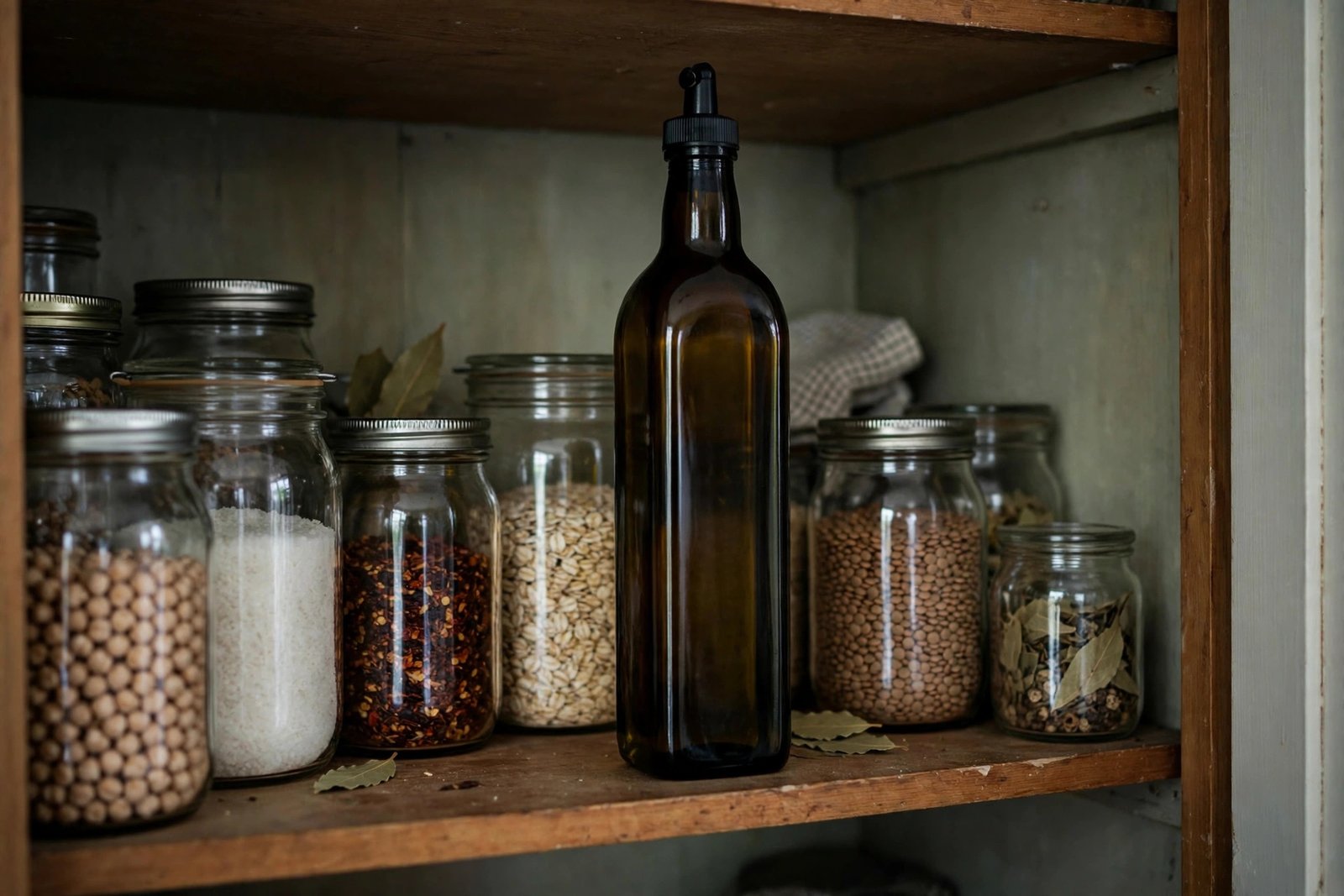
Heat, light, and air are the enemies. Keep the bottle in a cool, dark place — a cupboard, not a sunny windowsill or a hot bathroom shelf. Keep the cap on tight. In a Pakistani summer, a kitchen shelf near the stove is the worst place for it.
Signs the oil has gone off
The smell turns sharp or stale, like old cooking oil. The colour darkens. The texture feels sticky. If any of those happen, throw it away. Rancid oil can irritate the skin, and it is not worth the risk to finish the bottle. A small bottle you finish in two months is better than a big bottle that goes off in the cupboard.
🏙️ City-wise price note: Karachi, Lahore, Islamabad, Sargodha
Online prices are the same across Pakistan on the brand websites we checked — olim.pk, opure.pk, and khalisthings.com charge the same listed price whether you order from Karachi or Sargodha. The difference is delivery time and delivery charges, not the bottle price.
In physical shops, the pattern is familiar. Karachi’s Saddar and Tariq Road, Lahore’s Liberty and Akbari Mandi, and Islamabad’s F-10 and G-9 markets have the widest choice and the most competition, so imported bottles such as OGX and Bioblas are easier to find there, and bargaining is possible. In Sargodha, choice is narrower. You will find Hemani and Saeed Ghani blends in most general stores, but pure imported argan oil usually means ordering online.
Two practical points for Sargodha buyers. First, check the delivery charge before you order a single small bottle — a Rs 200 delivery fee on a Rs 835 bottle adds almost a quarter to the cost. Second, cash on delivery is available from most of the sellers in our table, so you can inspect the bottle before you pay. Use that. Check the seal, the colour, and the label before you hand over the money.
We could not verify separate in-store prices for each city, because shops do not publish them. The figures in this guide are online listed prices, which are the same for every city. Do not trust any article that gives you exact “Karachi price” and “Lahore price” figures without naming the shop — those numbers are usually invented.
🛒 Buying before the 11.11 sale: 5 tips
The 11.11 sale starts on 10 November 2026 at 8pm PKT. Argan oil is a good sale purchase, because it keeps for a year and the discounts are real. But sale season is also when the most fakes appear. Five rules will keep you safe.
1. Check the pre-sale price now
Note the price today from the table above. On 11.11, compare the sale price with today’s price, not with the crossed-out “regular” price on the listing. Some sellers raise the regular price first, then “discount” it back to the same figure.
2. Buy the 100ml, not the 10ml
Sale discounts are usually a percentage. A 10% discount on a 10ml bottle saves you Rs 83. The same discount on a 100ml bottle saves you Rs 210 to Rs 275, and the per-100ml rate is already far lower. If you are sure about the brand, the big bottle is where the saving lives.
3. Order from the brand store or a known retailer
During a sale, unknown sellers appear with very low prices. Stick to the sellers in our table, or to Daraz.pk, Naheed.pk, and Al-Fatah. Check the seller rating and the number of reviews before you order.
4. Keep the receipt and the box
If the oil smells wrong or the seal is broken, you need the order number and the packaging to claim a return. Take a photo of the bottle as soon as it arrives. It takes ten seconds and it settles most disputes.
5. Do not stock up for a year
Argan oil keeps about 12 months once opened. Buying three bottles in a sale sounds clever until the third bottle goes rancid in the cupboard. One 100ml bottle, or two at most, is enough.
📋 How we collected these prices
We searched Pakistani stores and brand websites on 9 November 2026 and recorded the listed price, size, and seller for each bottle. We used the price shown on the product page itself — the structured product data where available — not a price quoted in another article.
We left out brands whose price we could not verify on a live listing. Saeed Ghani, Conatural, and Herbiotics are often named in other guides, but we could not confirm a current listed price for their argan oil on 9 November 2026, so they are not in the table. A guide that lists a price it did not check is guessing, and we do not guess prices.
Prices change. Sale prices change fastest of all. Re-check the listing on the day you buy. If a price in this guide has moved, the per-100ml column still tells you how to judge the new figure.
🔎 Transparency note
BaBa Shop does not sell argan oil, and we earn nothing if you buy any bottle in this guide. We have no partnership with Olim, Opure, Al Jannat, Khalis Things, Purus, OGX, Derma.pk, The Nature’s Store, Bioblas, Hemani, or any other seller named here. The links to sellers are for price checking, not affiliate sales.
Our own shop sells seeds and nutrition products, home essentials, and covers from Sargodha, with cash on delivery across Pakistan. If you want to see what we do stock, the Seeds & Nutrition range is the honest place to start. If you came here for argan oil, use this guide, buy from a seller you trust, and come back for the next price check.
❓ Frequently asked questions
What is the price of argan oil in Pakistan?
In November 2026, verified prices run from Rs 835 for a 10ml bottle (Olim Naturals) to Rs 3,680 for a 45ml imported bottle (So Pure). A fair price for a 30ml bottle of pure argan oil is Rs 999 to Rs 1,199, and for a 100ml bottle it is Rs 2,100 to Rs 2,750. Always compare the price per 100ml, not the sticker price.
Which argan oil brand is best in Pakistan?
There is no single best brand. For pure oil at a fair price, Opure (Rs 1,199 for 30ml, cold-pressed) and Derma.pk (Rs 2,250 for 100ml) are good starting points. For a known imported name, OGX (Rs 2,100 for 100ml) is widely available. For the lowest cost per millilitre, Hemani Argan Hair Oil (Rs 1,550 for 200ml) wins — but it is a blend, not pure oil. Pick by your budget and by whether you want pure oil or a blend.
Is argan oil good for hair growth?
There is no clinical evidence that argan oil grows new hair. What it does well is reduce breakage and add shine, which makes existing hair look fuller and hold its length better. Claims of fast hair growth in days or weeks are not supported by research.
Can I use argan oil on my face every day?
Most people can. Use 2 to 3 drops on clean, slightly damp skin, once a day to start. If your skin is very oily or acne-prone, test it on one area for a week first. Patch test on your wrist before the first use, and stop if you get redness or breakouts.
How do I know if argan oil is pure?
Check four things: the ingredients list should say only Argania spinosa kernel oil; the colour should be light golden yellow; the smell should be mild and nutty, not perfumed; and the texture should sink in fast without feeling sticky. A price far below Rs 2,000 per 100ml for a “pure” 100ml bottle is also a warning sign.
What is the difference between argan oil and jojoba oil?
Argan oil is a true oil rich in oleic and linoleic acids, light and fast-absorbing. Jojoba is a liquid wax close to the skin’s own sebum, and it suits oily skin better. Argan usually costs more per 100ml. If your skin is oily, try jojoba first — see our jojoba oil price in Pakistan guide.
Does argan oil expire?
Yes. An unopened bottle keeps about 18 to 24 months. Once opened, use it within 12 months. Keep it in a cool, dark place with the cap tight. If it smells sharp or stale, or the colour darkens, throw it away.
Where can I buy original argan oil in Pakistan?
Buy from the brand’s own website or a known retailer: Daraz.pk, Naheed.pk, Al-Fatah, or the sellers named in this guide (olim.pk, opure.pk, khalisthings.com, derma.pk, thenaturesstore.com). Check the seller rating, the return policy, and the seal on the bottle when it arrives. Cash on delivery lets you inspect the bottle before you pay.
✅ Conclusion
The argan oil price in Pakistan in 2026 is not one number. It is a range, and the range makes sense once you compare per 100ml and separate pure oil from blends. A 30ml bottle of pure argan oil should cost you Rs 999 to Rs 1,199. A 100ml bottle should cost Rs 2,100 to Rs 2,750. Anything far outside that band deserves a hard look at the label.
Our advice is simple. Try a 30ml bottle first if you have never used argan oil. If your skin and hair like it, move to a 100ml bottle — the per-100ml cost drops by a third or more. Buy from a seller you can return to, check the seal when the bottle arrives, and keep it in a dark cupboard.
And keep your expectations honest. Argan oil is a pleasant, light oil with modest evidence for skin hydration and elasticity. It is not a hair-growth cure, and it is not a wrinkle eraser. Bought at the right price, from the right seller, it is a good bottle to own. Bought blind in a sale, it is an easy way to waste Rs 1,000 on coloured sunflower oil.
If you want to talk through which oil fits your hair or skin, message BaBa Shop on WhatsApp at 0302-4096495. We do not sell argan oil, but we do sell the seeds and oils we know well, and we will tell you plainly when something is not right for you.
💬 Questions? Talk to BaBa Shop on WhatsApp: 0302-4096495
We do not sell argan oil — but our Seeds & Nutrition range has the seeds and oils we do stock, with cash on delivery across Pakistan. Browse the shop →
About the author: Written by the BaBaShop.pk Team — BaBa Shop, Sargodha. The same trust our family shop built over years, now online with cash on delivery across Pakistan.
Sources: Qiraouani Boucetta K et al., Clinical Interventions in Aging, 2015;10:339–349, doi: 10.2147/CIA.S71684 (PMC4321565) · Słomczyńska P et al., International Journal of Molecular Sciences, 2025;26(11):5322, doi: 10.3390/ijms26115322 (PMC12155338) · Retail prices: Opure, Olim, Derma.pk (checked 9 November 2026).
Tags: argan oil price in pakistan, argan oil, buying guide, 11.11 sale, argan oil for hair


1 comment