Acacia Honey Price in Pakistan 2026: 11.11 Buying Guide
By BaBaShop.pk Team | Updated: 9 November 2026
The acacia honey price in Pakistan starts at Rs 500 for a 250g jar and goes up to Rs 3,999 for a two-jar bundle, based on live prices we checked on 9 November 2026.
That is a wide range. A small jar can cost less than a cup of chai at a dhaba, while a premium lab-tested jar can cost more than a kilo of desi ghee. So which jar is worth your money?
This guide gives you a straight answer. We checked real prices from ten real sellers, compared acacia honey with sidr, mustard and clover honey, and listed the purity tests that actually work — and the myths that do not.
💡 Quick answer — acacia honey price in Pakistan (9 November 2026)
- Rs 500 — cheapest verified jar: NatureZone Acacia Honey, 250g (Rs 200 per 100g)
- Rs 800–Rs 1,400 — typical half-kilo to kilo range for local brands (NatureZone 500g Rs 800; 1kg Rs 1,400)
- Rs 1,399–Rs 1,999 — mid-range jars: EatSmart 470g at Rs 1,399; The Organic Store 1kg at Rs 1,899
- Rs 3,999 — priciest verified option: Bagh Honey lab-tested bundle, two 950g jars (currently sold out)
- Rs 140–Rs 160 per 100g — the best value band; anything far below Rs 100 per 100g deserves a second look
- 11.11 tip: compare the per-100g price, not the headline price — a “discount” on a small jar is often still dearer than a full-price kilo jar
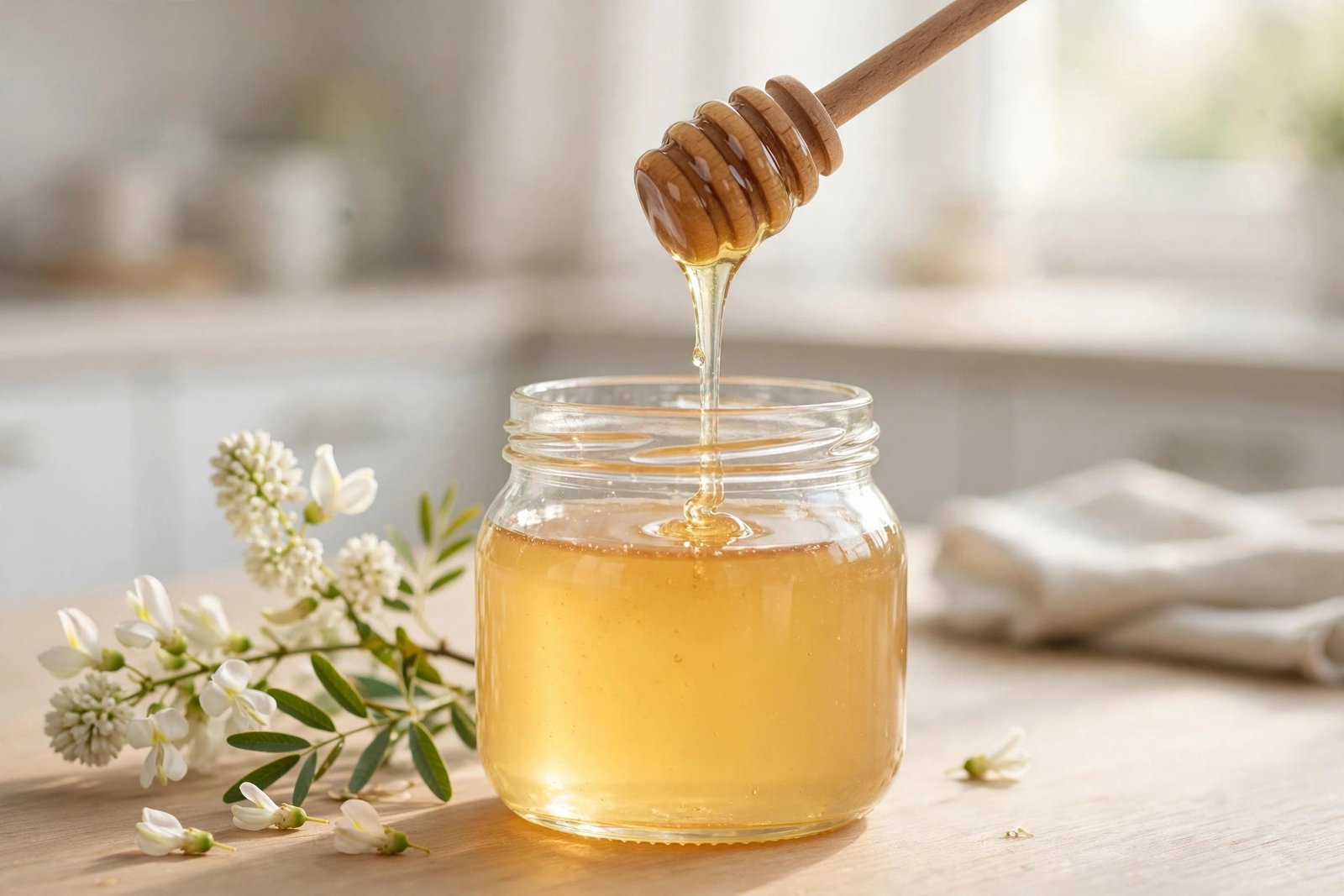
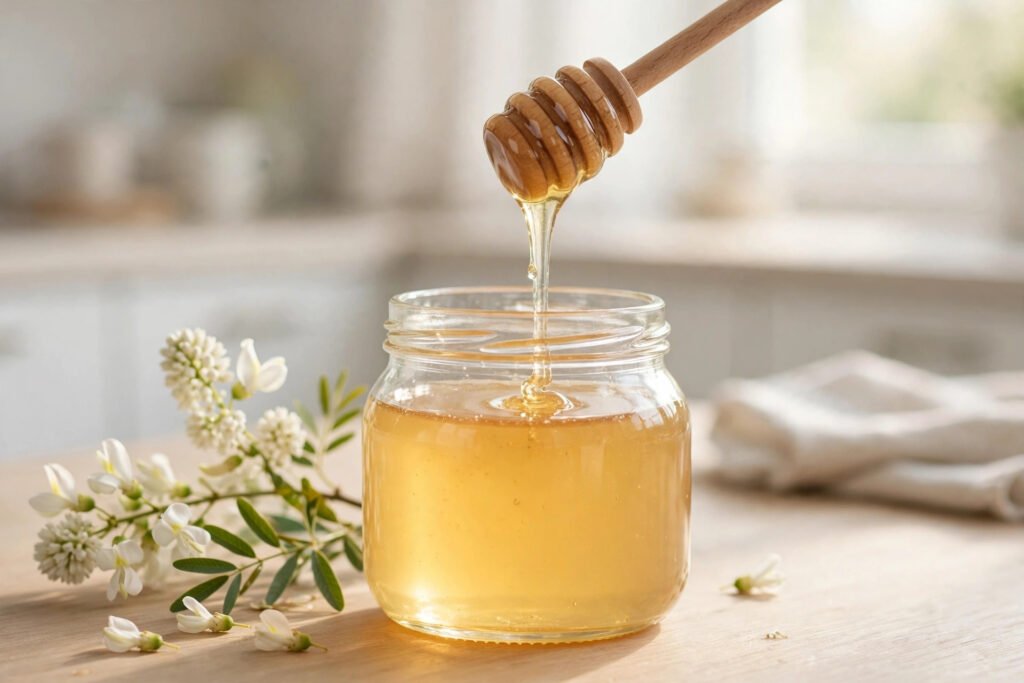
Acacia honey is pale gold, mild and slow to crystallise — the easy everyday honey.
📑 In this guide
- What is acacia honey?
- Acacia honey price in Pakistan — full comparison table
- What decides the price?
- Acacia vs sidr vs mustard vs clover honey
- How to spot pure vs fake honey
- Buying checklist: 10 checks before you pay
- How to use acacia honey
- Side effects and who should avoid it
- Shelf life and storage
- City-wise prices: Karachi, Lahore, Islamabad, Sargodha
- Acacia vs sidr vs “desi honey” — clearing the confusion
- 11.11 buying tips
- Methodology and transparency
- FAQs
- Conclusion
🍯 What is acacia honey?
Acacia honey is honey made by bees from the nectar of acacia tree blossoms. In Pakistan it is sold under the local names kikar honey, phalai ka shehad and palosa honey (palosa is the Pashto name).
It looks different from most honeys on the shelf. It is pale gold, almost clear, and it stays liquid for a long time. Its taste is mild and floral. It does not overpower tea, yogurt or toast the way a strong dark honey can.
That mild taste is the reason many families pick it as their everyday honey. Children who refuse strong-tasting honey often accept acacia honey without a fuss. It also works well in cooking, because it sweetens without changing the flavour of the dish.
Where does Pakistani acacia honey come from?
Most local acacia honey comes from apiaries in the Pothohar plateau and the Hazara foothills, where acacia-type trees bloom in spring. Pakeeza Honey, for example, lists its sourcing region as Pothohar and Hazara foothill apiaries, with a spring harvest window.
The botanical detail matters. True acacia honey in Pakistan usually comes from Acacia modesta (phalai) or related acacia species, while the famous European acacia honey comes from Robinia pseudoacacia (black locust). Both are sold as “acacia honey”. A label that names the floral source and the harvest region is a good sign. A label that says nothing at all is not.
Nutrition: what is actually in it?
Honey is mostly natural sugar. Per 100g, honey gives about 304 kcal, 82g of carbohydrate and 82g of sugars, according to USDA FoodData Central figures (the same figures are printed on several Pakistani honey labels, including Rahat Organics).
That means one tablespoon (about 21g) gives roughly 64 kcal. Acacia honey is not a low-calorie food. It is a sweetener with trace amounts of antioxidants and minerals — useful, but not a health food in the way fruit or nuts are.
One number does set acacia honey apart. In the international glycaemic index (GI) tables compiled by Foster-Powell and colleagues in 2002, acacia honey tested at a GI of 32, one of the lowest values measured for any honey. Most other honeys tested between 45 and 74.
A lower GI means blood sugar rises more slowly than it does with table sugar (GI around 65). That sounds good. But keep the scale in mind. A low GI does not make honey sugar-free, calorie-free or safe in large amounts. One teaspoon has a glycaemic load of only 1.8, but three tablespoons in a glass of doodh patti still add up.
📖 Expert view: “The healing property of honey is due to the fact that it offers antibacterial activity, maintains a moist wound condition, and its high viscosity helps to provide a protective barrier to prevent infection.” — Mandal and Mandal, “Honey: its medicinal property and antibacterial activity”, Asian Pacific Journal of Tropical Biomedicine, 2011; 1(2): 154–160 (DOI: 10.1016/S2221-1691(11)60016-6; PMCID: PMC3609166).
The same review notes that the antibacterial effect of most honeys comes from the enzymatic production of hydrogen peroxide, and that medical-grade honeys have shown strong laboratory activity against antibiotic-resistant bacteria. Note the word laboratory. These are test-tube results, not proof that eating honey cures an infection.
💰 Acacia honey price in Pakistan — full comparison table
We checked live prices on 9 November 2026. Every price below was visible on the seller’s own website on that date. Prices can change, and delivery charges are extra unless stated.
| Brand / Product | Size | Price (Rs) | Per 100g (Rs) | Where to buy |
|---|---|---|---|---|
| NatureZone Acacia Honey (Palosa) | 250g | Rs 500 | Rs 200 | naturezone.pk |
| NatureZone Acacia Honey (Palosa) | 500g | Rs 800 | Rs 160 | naturezone.pk |
| NatureZone Acacia Honey (Palosa) | 1kg | Rs 1,400 | Rs 140 | naturezone.pk |
| Vital Cave Acacia (Palosa) Honey | 500g | Rs 799 | Rs 160 | ARY Sahulat Bazar |
| EatSmart Acacia Honey (Phalai) | 470g | Rs 1,399 | Rs 298 | eatsmart.pk |
| The Organic Store Acacia Honey | 1kg | Rs 1,899 | Rs 190 | theorganic.pk |
| EatSmart Acacia Honey with Saffron | 470g | Rs 1,999 | Rs 425 | eatsmart.pk |
| The Organic Store Acacia Honey | 2kg | Rs 2,999 | Rs 150 | theorganic.pk |
| Bagh Honey Raw Acacia Honey bundle | 2 × 950g | Rs 3,999 | Rs 210 | baghhoney.com |
| Buzzin Beez Honey Tasting Pack | 3 × 150g | Rs 1,749 | Rs 389 | buzzinbeez.com |
Two notes on this table. First, the Bagh Honey bundle was sold out when we checked, so treat Rs 3,999 as the listed price, not a jar you can buy today. Second, the Buzzin Beez pack holds three different honeys (beri/sidr, ajwain and acacia), so its per-100g figure covers the whole pack, not acacia alone. It is still useful if you want to taste acacia honey before buying a full jar.
Two more sellers quoted price ranges without showing which size costs what. Pakeeza Honey lists acacia honey at Rs 700 to Rs 2,500 across its sizes, and Alamraa Foods lists raw acacia honey at Rs 800 to Rs 2,600 for 250g to 2kg jars. We did not put them in the table because a range is not a price you can compare. Ask the seller for the exact price of the exact size before you order.
What the table tells you
The cheapest honest kilo costs about Rs 1,400. NatureZone’s 1kg jar at Rs 1,400 works out to Rs 140 per 100g. The Organic Store’s 2kg pack is close behind at Rs 150 per 100g.
Small jars cost far more per gram. A 250g jar at Rs 500 costs Rs 200 per 100g. The same honey in a 1kg jar costs Rs 140 per 100g. That is a 30% saving just by buying the bigger jar.
Saffron and “premium” labels double the price. EatSmart’s plain acacia honey is Rs 1,399 for 470g. The saffron version is Rs 1,999 for the same weight. That is Rs 600 for 1g of saffron. If you want saffron, buy it separately and compare.
Lab testing adds cost. Bagh Honey’s bundle is tested by the Honeybee Research Institute (HBRI) in Islamabad, and its per-100g price (Rs 210) sits above the cheapest jars. A test report is worth paying for if purity is your main worry.
Cost breakdown: what does a kilo actually cost you?
Take the cheapest verified kilo, Rs 1,400. A family that uses one tablespoon (21g) a day will finish it in about 47 days. That works out to roughly Rs 30 a day, or about Rs 900 a month.
At the dearest per-100g rate in our table (Rs 425 for the saffron jar), the same daily spoon costs about Rs 89 a day. Over a month, the gap between the cheapest and dearest jar is more than Rs 1,700 — for the same daily spoon of honey.
So the jar you pick matters more than it looks. Check the per-100g column every time.
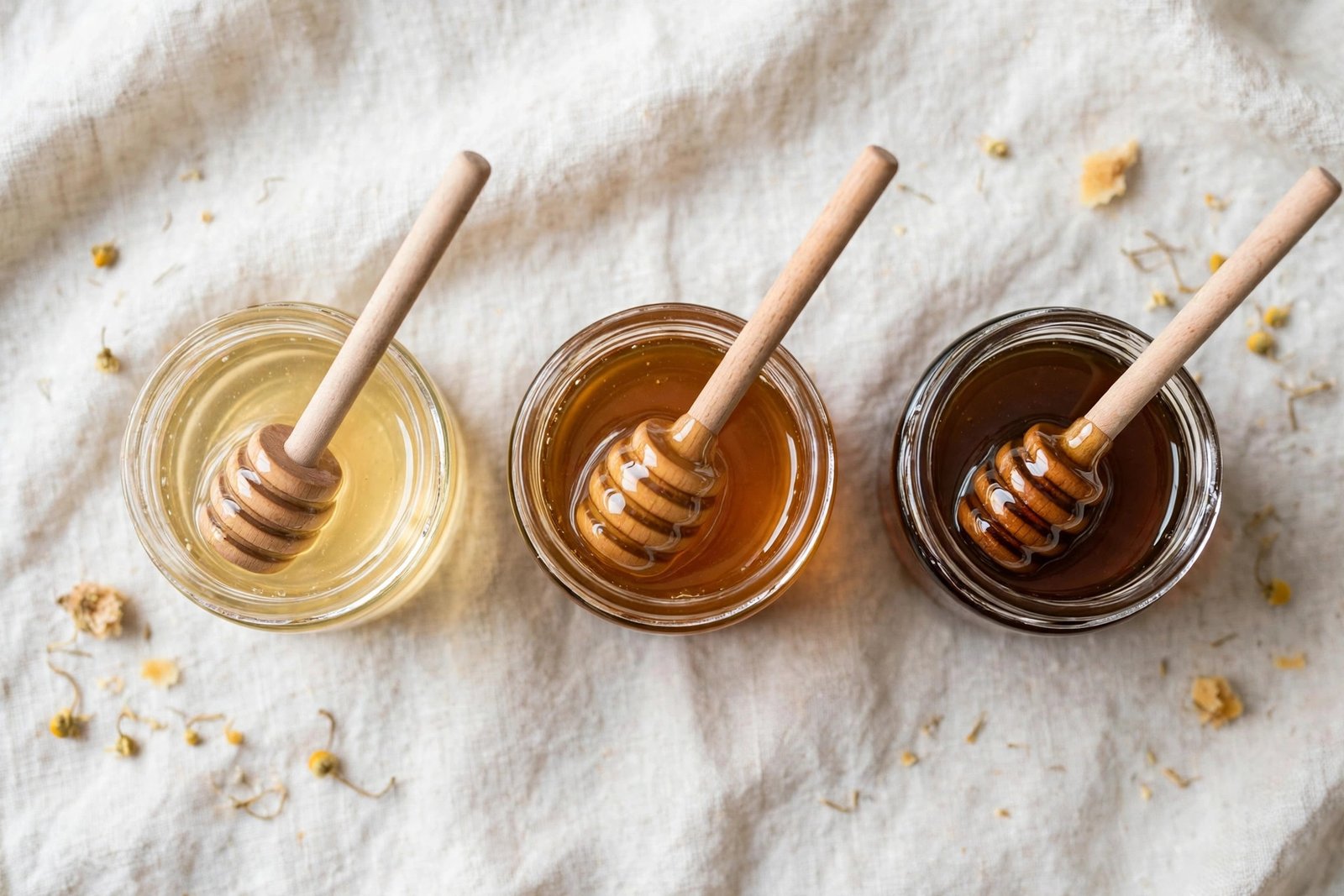
Acacia honey is the palest of the three — sidr and dark honeys are stronger and dearer.
⚖️ What decides the price?
Five things set the acacia honey price in Pakistan. Knowing them stops you from overpaying.
1. Raw vs processed
Raw honey is not heated above hive temperature and not finely filtered. It keeps more pollen, enzymes and aroma. It also costs more, because the beekeeper handles smaller batches and cannot blend away a weak harvest.
Processed honey is heated and filtered so it looks clear and stays liquid on a supermarket shelf. It is cheaper to make in bulk. Nothing on the label tells you the heating temperature, so “raw” on a label is a claim you have to trust — or verify with a lab report.
2. Local vs imported
Local acacia honey (phalai/palosa) comes from Pakistani apiaries. Imported acacia honey, usually European, carries shipping, duties and distributor margins. That is why imported jars often cost two or three times more than a local jar of the same size.
Imported does not mean better. It means costlier. Judge the jar, not the country on the label.
3. Floral purity
A jar labelled “monofloral acacia” should come mostly from acacia blossoms. Bees visit many flowers, so true monofloral honey needs careful hive placement during the acacia bloom. That care costs money.
Cheap “acacia honey” is often multifloral honey with an acacia label. If the price is far below Rs 140 per 100g, ask how the seller proves the floral source.
4. Testing and certification
A lab test from a recognised institute (such as HBRI Islamabad, or PCSIR approval as EatSmart states on its listings) costs the seller money. It also gives you something real to check: a batch number you can match to a report.
Uncertified honey is not automatically fake. Many small beekeepers sell good honey without a lab report. But when a seller charges a premium price, a test report is the least you should get for it.
5. Packaging and pack size
Glass jars cost more than plastic. Gift boxes cost more than plain jars. Small jars cost more per gram than big jars. None of these change the honey inside.
On 11.11, watch for “discounts” on gift packs. A 30% discount on a gift box can still cost more per 100g than a plain kilo jar at full price.
🔍 Acacia vs sidr vs mustard vs clover honey
| Honey | Colour | Taste | Typical 1kg price* | Best for |
|---|---|---|---|---|
| Acacia (phalai/palosa) | Pale gold, almost clear | Mild, floral, light | Rs 1,400–Rs 1,999 | Daily use, tea, children, cooking |
| Sidr (beri) | Golden amber to dark | Rich, strong, slightly herbal | Rs 4,800–Rs 6,000 | Gifting, traditional use |
| Mustard (sarson) | Yellow, thick | Sharp, pungent | Rs 800–Rs 1,500 | Cooking, pickles, traditional remedies |
| Clover | Light amber | Mild, sweet, clean | Rs 1,500–Rs 2,500 | Daily use, baking |
*Sidr prices from Khan Dry Fruits listings checked the same week (250g Rs 1,500; 1kg Rs 6,000); mustard and clover figures are typical market ranges, not verified jar prices — confirm before buying.
Acacia honey crystallises slowly. That is normal for a high-fructose honey, and it is one reason people like it: the jar stays pourable for months. Sidr honey crystallises faster and tastes much stronger. Mustard honey has a sharp edge that some people love in cooking and others dislike in tea.
If you want one everyday honey, acacia is the easy pick. If you want a gift or a traditional remedy jar, sidr is the usual choice — and it costs three to four times more per kilo.
✅ How to spot pure vs fake honey
Fake honey is real sugar syrup, or real honey mixed with sugar syrup. It is the oldest trick in the honey trade. Here is what works, what partly works, and what is a myth.
Tests that actually help
Read the label first. A real label names the floral source, the region, the packer and a batch or harvest date. “Pure honey” with no region, no batch and no contact details tells you nothing.
Ask for a lab report. The single best check. Ask for the HBRI or PCSIR report for the batch number on your jar. A seller who has one will show it. A seller who stalls probably does not have one.
Check the price. Real acacia honey costs the beekeeper real money. A kilo at Rs 500 is almost certainly not pure acacia honey. Our table shows honest kilos start near Rs 1,400.
Taste it. Real acacia honey has a mild floral note and a clean finish. Sugar syrup tastes flat and one-note sweet. This test needs experience, but after two or three real jars you will notice the difference.
Watch crystallisation. Real raw honey crystallises over time, usually within months. Acacia honey is slow to crystallise because it is high in fructose, so a liquid jar is not proof of fakery — but a jar that never changes at all over a year deserves a question.
Tests that only partly work
The water test. Drop honey in water. Real honey sinks in a lump; syrup spreads fast. This works roughly, but thick syrup can pass it too.
The thumb test. Put a drop on your thumb. Real honey stays put; thin syrup runs off. Again, thick syrup can pass.
The flame test. Dip a matchstick in honey and strike it. Real honey lets the match light; watery honey does not. This tests water content, not purity. A well-made syrup can pass.
Myths — do not rely on these
“Ants will not touch pure honey.” False. Ants eat real honey happily.
“Pure honey never freezes.” False. Honey thickens and crystallises in the cold. That is normal.
“A dog will not eat fake honey.” False, and not a test anyone should run.
“The paper test proves purity.” Honey on blotting paper leaves no wet ring if it is thick — but so does thick syrup.
Bottom line: no home test proves purity on its own. Combine the label, the price, the seller’s test report and your own taste. If a seller cannot show a report and the price looks too good, walk away.
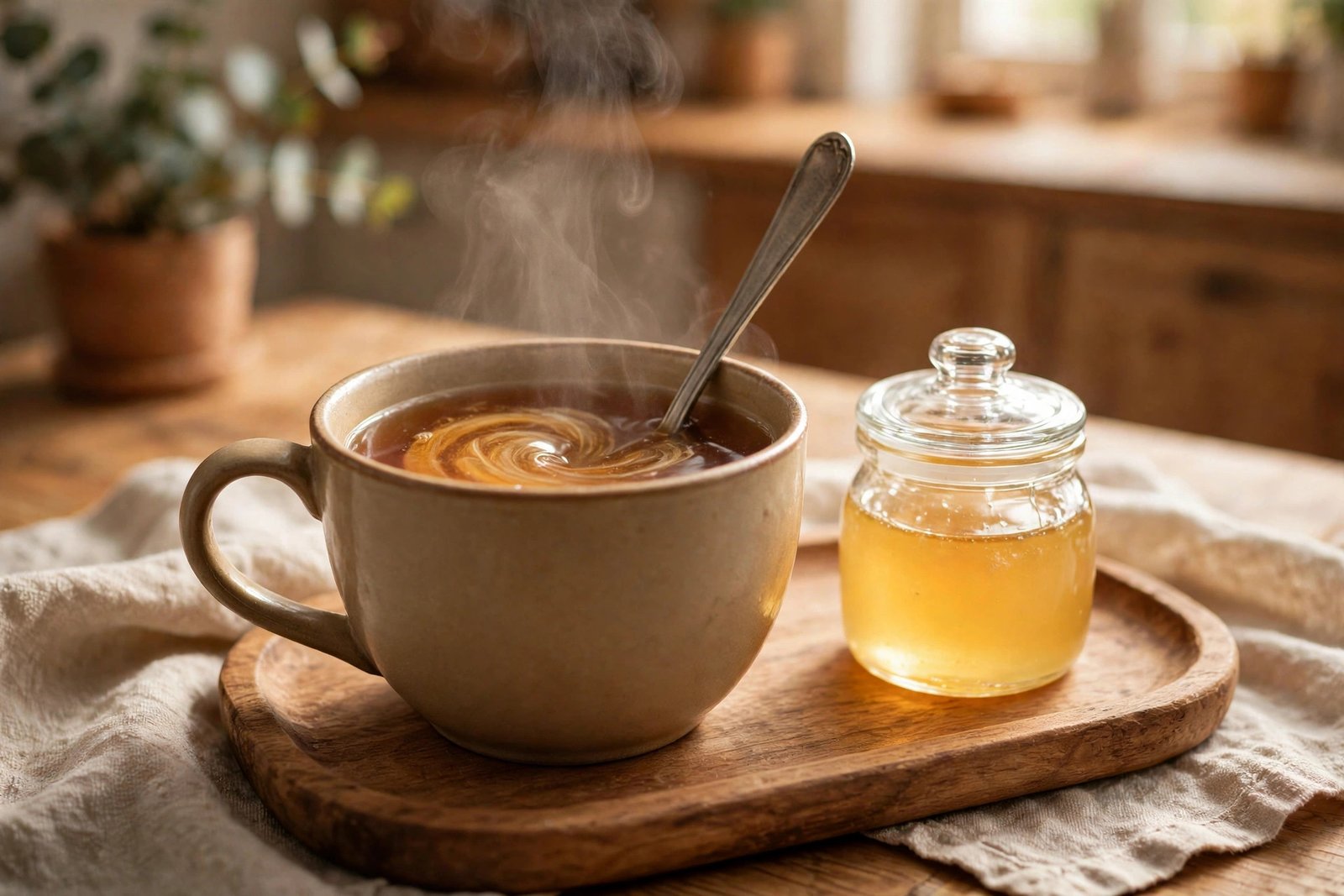
Stir acacia honey into warm — not boiling — tea so the aroma survives.
🛒 Buying checklist: 10 checks before you pay
- Per-100g price. Work it out. Aim for Rs 140–Rs 200 per 100g for plain acacia honey.
- Size. Buy 500g first if you are trying a new brand. Move to 1kg once you trust it.
- Label detail. Floral source, region, packer, batch number, harvest date. Missing details are a warning.
- Lab report. Ask for it by batch number. HBRI or PCSIR backing is a plus.
- Jar and seal. Glass is better than thin plastic. The seal should be intact, with no leaks.
- Colour and clarity. Acacia honey should be pale gold and clear, not cloudy brown or watery.
- Seller reputation. Read recent buyer reviews. Look for reviews that mention taste and crystallisation, not just “good product”.
- Delivery cost. A Rs 1,400 jar with Rs 300 delivery costs Rs 1,700. Compare the delivered price.
- Return policy. Can you return an opened jar if it tastes like syrup? Most sellers say no — so start small.
- Expiry and storage. Honey does not truly expire, but check the packing date. Old stock stored in heat loses aroma.
🍵 How to use acacia honey
In food and drink
Stir a teaspoon into warm (not boiling) tea, doodh or lemon water. Add it to yogurt, porridge or a fruit bowl. Use it in salad dressings, marinades and glazes where you want sweetness without a strong honey flavour.
One practical tip: do not boil honey. High heat damages the enzymes and aroma that make raw honey special. Add it after the tea has cooled a little.
On skin
Honey is used in home skin care as a face mask or a spot treatment, because it is sticky, moist and mildly antibacterial in the lab. Mandal and Mandal (2011) describe how honey “maintains a moist wound condition” and offers antibacterial activity.
That is lab evidence, not a prescription. Do not put honey on open wounds, burns or broken skin without a doctor’s advice. A patch test on a small area of skin is wise if you have sensitive skin or a bee-product allergy.
For coughs and sore throats
A spoon of honey in warm water with lemon is a common home remedy for a sore throat. Health agencies in several countries accept honey as a soothing option for coughs in adults and children over one year old.
Honey soothes. It does not cure a chest infection, flu or COVID. If a cough lasts more than a week, or comes with fever or breathing trouble, see a doctor.
Honest limits — what we have NOT tested
BaBaShop.pk has not tested any of the honeys in this guide in a lab. We have not tasted every jar. Our prices come from the sellers’ own websites, checked on 9 November 2026.
We also do not sell honey. This guide is market research to help you buy well elsewhere. If a claim in this article matters for your health, check it with your doctor or a qualified dietitian.
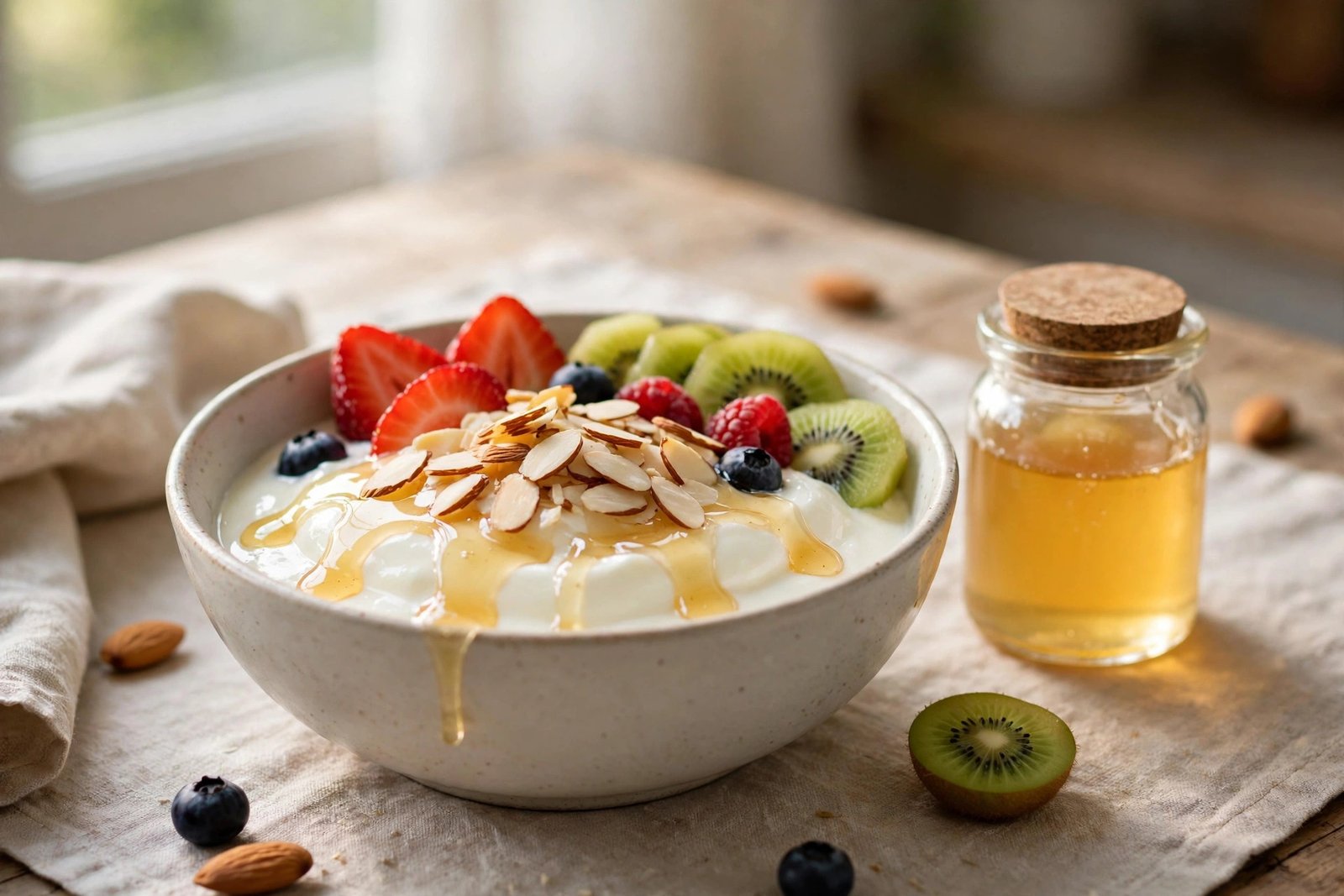
Acacia honey over yogurt with almonds — a light breakfast that lets the honey’s mild flavour lead.
⚠️ Side effects and who should avoid it
Honey is safe for most healthy adults in small amounts. But it is still sugar, and it has real risks for some people.
Infants under one year old — never give honey
Babies younger than one year should never be given honey. Honey can carry spores of Clostridium botulinum, the bacterium that causes infant botulism. A baby’s gut cannot yet handle those spores.
KidsHealth (medically reviewed by Larissa Hirsch, MD, February 2023) states it plainly: “Babies younger than 1 year old should not be given honey… Infant botulism can cause muscle weakness, with signs like poor sucking, a weak cry, constipation, and decreased muscle tone.”
This rule covers all honey — acacia, sidr, raw or processed. It also covers foods made with honey, such as honey biscuits, until after the first birthday.
People with diabetes
Acacia honey has a lower GI (32) than most honeys, but it still raises blood sugar. One tablespoon has about 17g of sugar. People with diabetes should treat honey like any other sugar: small amounts, counted in the daily total, and only as their doctor advises.
Honey does not cure diabetes. Any seller who says so is lying. No study shows that eating honey lowers blood sugar in people with diabetes.
Allergies
People allergic to bees, bee pollen or bee products can react to honey. Reactions range from a mild rash to, rarely, a serious allergic response. If you have a known bee allergy, ask your doctor before eating honey.
Weight and teeth
At 304 kcal per 100g, honey adds up fast. Two tablespoons a day add about 128 kcal — roughly the same as a small roti. Honey also sticks to teeth, so rinse or brush after eating it, especially for children.
Balanced view
Acacia honey has real positives: a mild taste, a low GI for a sweetener, slow crystallisation, and laboratory evidence of antibacterial activity. It also has real limits: it is sugar, it is not medicine, and it is not safe for babies. Both sides belong in any honest guide.
🏺 Shelf life and storage
Honey does not spoil the way milk does. Sealed honey can last for years. But it can lose aroma, darken and crystallise if stored badly.
Store it right:
- Keep the jar in a cool, dry place away from direct sunlight.
- Keep the lid tightly closed. Honey absorbs moisture from the air.
- Do not refrigerate it. Cold speeds up crystallisation.
- Use a clean, dry spoon every time. A wet spoon adds water and can start fermentation.
If it crystallises: place the jar in warm water (below 40°C) and stir gently. Do not microwave it and do not boil it. Crystallisation is natural, especially in winter. It is not a sign of fake honey.
If it smells sour or foams: the honey may have fermented from excess moisture. Do not eat it. Contact the seller.
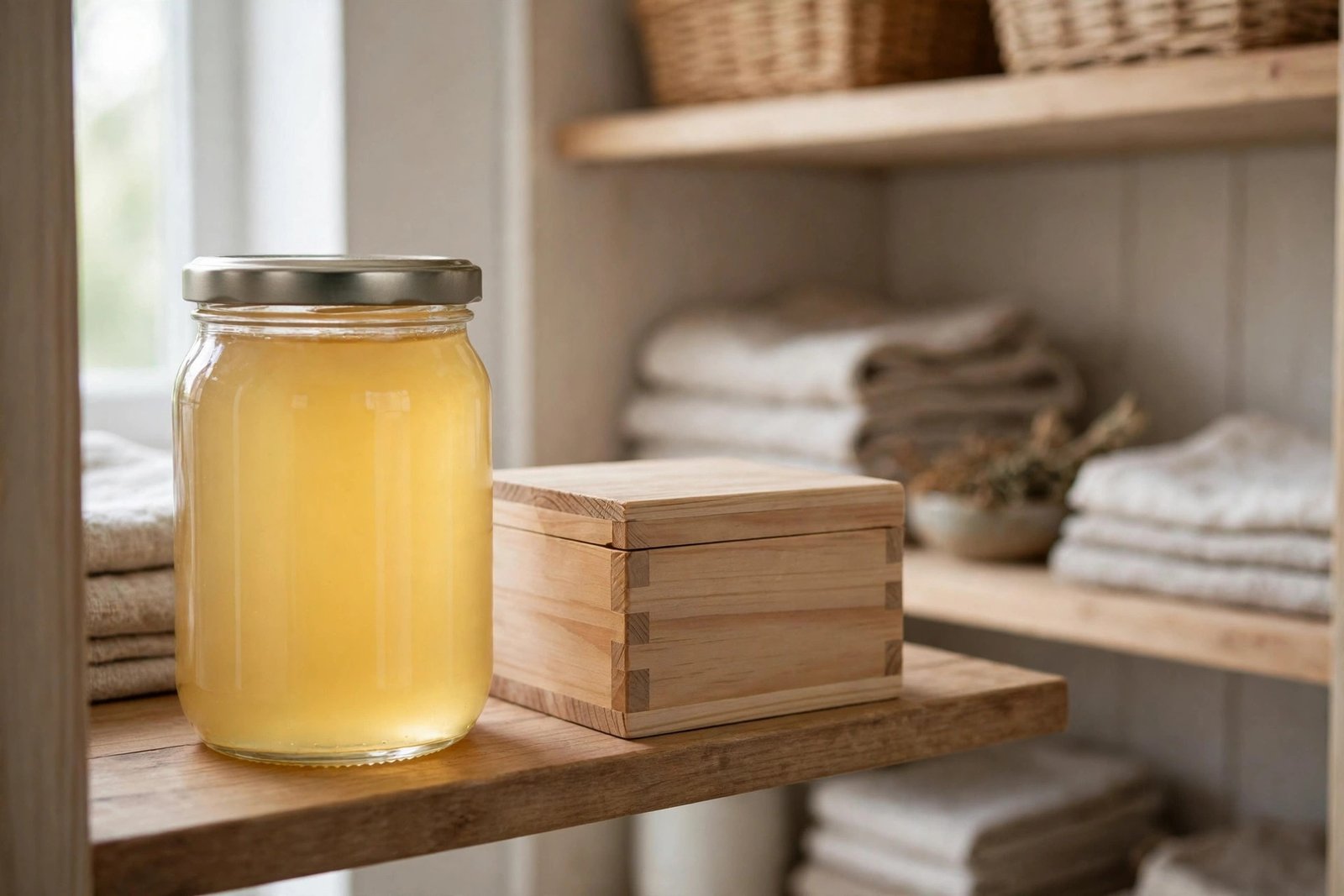
Sealed, cool and dry — that is all a jar of acacia honey needs.
🏙️ City-wise prices: Karachi, Lahore, Islamabad, Sargodha
Online honey prices are the same across Pakistan. A jar listed at Rs 1,400 on naturezone.pk costs Rs 1,400 whether you order it in Karachi, Lahore, Islamabad or Sargodha. What changes is delivery.
Delivery charges we saw ranged from free (on orders above Rs 5,000 at some stores) to Rs 100–Rs 300 per order. Buzzin Beez, for example, charges Rs 50 delivery in Karachi and Rs 100 elsewhere. Always add delivery to the jar price before you compare two sellers.
In physical shops, prices vary more. A honey jar in a Saddar or Anarkali shop may cost Rs 100–Rs 200 more than the same jar online, because the shop pays rent and keeps small stock. In Sargodha, local honey sellers near the main bazaars often sell phalai honey by weight, and the price depends on the season and the seller’s own stock.
Our advice is the same in every city: check the online price first, then decide if the shop price is fair. And on 11.11, check whether the “sale price” is actually lower than the price the same seller charged last week.
We could not verify separate city-wise shelf prices for acacia honey from published sources, so we have not invented any. The figures in this guide are the live online prices, which apply nationwide.
❓ Acacia vs sidr vs “desi honey” — clearing the confusion
Walk into any Pakistani bazaar and you will hear three names for honey. Here is what they actually mean.
Acacia / phalai / palosa / kikar honey. Honey from acacia-type blossoms. Pale, mild, slow to crystallise. This is the honey in this guide.
Sidr / beri honey. Honey from the sidr (beri) tree. Darker, stronger, much dearer — Rs 4,800 to Rs 6,000 a kilo. It is the premium gift honey in Pakistan.
“Desi honey”. This is not a floral type. It is a loose label that usually means multifloral honey from local hives, or sometimes just honey sold without a brand. A jar labelled only “desi honey” tells you nothing about which flowers the bees visited. Ask the seller for the floral source before you pay a premium for it.
“Organic honey”. In Pakistan there is no single official organic honey certificate that shoppers can check at a glance. Sellers use the word freely. Treat “organic” on a label as a marketing word unless the seller can show a certificate from a named certifying body. We have not called any honey in this guide “organic” as a fact, because we could not verify a certificate for any of them.
“Raw honey”. Raw should mean unheated and unfiltered. But there is no label police checking this claim in most shops. A lab report and a batch number are worth more than the word “raw” on a jar.
🎉 11.11 buying tips
The 11.11 sale starts on 10 November 2026 at 8pm PKT. Honey sellers on Daraz and brand stores will run discounts. Use the sale — but use it smartly.
- Screenshot the price today. Check the price now, then check it again during the sale. A real discount beats last week’s price. A fake discount only beats an inflated “was” price.
- Compare per 100g, not the discount percentage. A 40% discount on a 250g jar can still cost more per gram than a full-price 1kg jar.
- Buy the size you will finish. A 2kg pack is cheaper per gram, but honey stored badly for a year loses aroma. A 1kg jar is the sweet spot for most families.
- Check the delivery fee. Some sellers raise delivery charges during sales. Add it before you compare.
- Do not bulk-buy a brand you have never tried. Order one small jar first. If it tastes right, order the big jar next time.
- Skip gift packs unless you need a gift. The box costs money and the honey inside is the same.
📋 Methodology and transparency
How we checked prices
On 9 November 2026 we searched for acacia honey sold in Pakistan and opened each seller’s own product page. We recorded the price shown on the page, the pack size, and the delivery note where given.
We kept only prices we could see on the seller’s own site. Brands we could not verify with a live price — including Marhaba, Youngs and Langnese acacia honey — were left out, even though those brands are well known. Those brands sell general honey in Pakistan, but we could not verify an acacia-specific jar and price for them on 9 November 2026.
Two sellers (Pakeeza Honey and Alamraa Foods) showed price ranges without matching sizes to prices, so we reported their ranges in the text instead of the table. We did not guess which size costs what.
Transparency note
BaBaShop.pk does not sell honey. We do not stock acacia honey, sidr honey or any other honey. This guide is market research, written to help you buy well from other sellers.
We earn nothing from the links in this guide. The retailer links are there so you can check the price yourself. If a price has changed since 9 November 2026, the seller’s page is the correct price — not this article.
Related guides from BaBa Shop
If you are building a healthier pantry, these BaBa Shop guides may help:
- Almond price in Pakistan — our almond buying guide, with verified prices and grades
- Ajwa dates price in Pakistan — how to spot real Ajwa dates and what they should cost
- Best desi ghee in Pakistan — ghee brands compared, with purity checks
- Chia, flax and sunflower seeds compared — which seed suits your kitchen and your budget
And if you want to stock your pantry with seeds and nutrition staples, browse the Seeds & Nutrition range at BaBa Shop.
💬 FAQs
What is the price of acacia honey in Pakistan?
The acacia honey price in Pakistan starts at Rs 500 for 250g (NatureZone) and goes up to Rs 3,999 for a two-jar bundle (Bagh Honey, currently sold out). A typical 1kg jar of local acacia honey costs Rs 1,400 to Rs 1,999. The best value we verified was Rs 140 per 100g for a 1kg jar.
Which brand of acacia honey is best in Pakistan?
There is no single “best” brand. NatureZone offers the lowest verified per-100g price (Rs 140). Bagh Honey offers HBRI lab testing. EatSmart offers PCSIR-approved listings. Pick by what matters to you: lowest price, a test report, or a brand you already trust.
Is acacia honey good for diabetes?
Acacia honey has a low glycaemic index (32 in the 2002 international GI tables), but it is still sugar — about 82g of sugar per 100g. People with diabetes should use it only in small amounts and only as their doctor advises. It does not cure or treat diabetes.
Can babies eat acacia honey?
No. No honey of any kind should be given to a baby under one year old, because of the risk of infant botulism. This is the advice of KidsHealth and every major health authority.
How can I tell if acacia honey is pure?
Check the label for floral source, region and batch number. Ask the seller for a lab test report for that batch. Compare the per-100g price with verified sellers — a kilo far below Rs 1,400 is a warning sign. No single home test (water, thumb, flame, ants) proves purity on its own.
Why is acacia honey so light in colour?
Acacia nectar makes a naturally pale, almost clear honey. The light colour is normal. A dark “acacia honey” may be mixed with other floral honeys, or mislabelled.
Does acacia honey expire?
Honey does not spoil like milk, but it can lose aroma and crystallise over time. Store it sealed in a cool, dry place away from sunlight. If it crystallises, warm the jar gently in water below 40°C. If it smells sour or foams, do not eat it.
Is phalai honey the same as acacia honey?
Yes. Phalai (also written phalai or palosa) is the local name for acacia-type honey in Pakistan. Kikar honey is the same family. Sidr (beri) honey is a different honey from a different tree, and it costs much more.
🎯 Conclusion
The acacia honey price in Pakistan in November 2026 runs from Rs 500 for a small 250g jar to Rs 3,999 for a lab-tested bundle, with honest 1kg jars at Rs 1,400 to Rs 1,999.
The smart buy is simple. Pick a seller who names the floral source and the region. Check the per-100g price and aim for Rs 140 to Rs 200. Start with a small jar from a new brand. Ask for a lab report if you are paying a premium.
Acacia honey is a mild, everyday honey with a low GI for a sweetener and real laboratory evidence behind its antibacterial properties. It is not a medicine, not a diabetes cure, and never for babies under one.
This 11.11, let the price table do the work. Screenshot today’s prices, compare per 100g during the sale, and buy the jar — not the discount banner.
📲 Need help choosing?
Message BaBa Shop on WhatsApp at 0302-4096495 and we will point you to the right guide.
For seeds, nuts and pantry staples, browse our Seeds & Nutrition range.
🔗 Sources and price checks (9 November 2026)
- NatureZone — Acacia Honey (Palosa), 250g Rs 500 / 500g Rs 800 / 1kg Rs 1,400 — naturezone.pk
- The Organic Store — Acacia Honey, 1kg Rs 1,899 (was Rs 1,999) / 2kg Rs 2,999 / 3kg Rs 4,100 — theorganic.pk
- EatSmart — Acacia Honey 470g Rs 1,399; with Saffron 470g Rs 1,999 — eatsmart.pk
- Bagh Honey — Raw Acacia Honey bundle 2 × 950g Rs 3,999 (sold out), HBRI tested — baghhoney.com
- Vital Cave Acacia (Palosa) Honey 500g Rs 799 — ARY Sahulat Bazar listing (December 2025) — arysahulatbazar.pk
- Buzzin Beez — Honey Tasting Pack 3 × 150g Rs 1,749 — buzzinbeez.com
- Pakeeza Honey — Acacia Honey range Rs 700–Rs 2,500 (sizes not matched to prices on page) — pakeezahoney.com
- Alamraa Foods — Raw Acacia Honey Rs 800–Rs 2,600, sizes 250g–2kg (size-price mapping not shown) — alamraafoods.com
- Mandal MD, Mandal S. “Honey: its medicinal property and antibacterial activity.” Asian Pacific Journal of Tropical Biomedicine 2011; 1(2): 154–160. DOI: 10.1016/S2221-1691(11)60016-6 — PMC3609166
- Foster-Powell K et al. International tables of glycemic index and glycemic load values, 2002 (acacia honey GI 32) — rawhoneyguide.com
- KidsHealth — “Why Should Babies Not Have Honey?”, medically reviewed by Larissa Hirsch, MD, February 2023 — kidshealth.org
- USDA FoodData Central — honey nutrition per 100g: 304 kcal, 82g carbohydrate, 82g sugars.