
How to Catch Rats in the House Without Poison: A Complete, Safe Guide

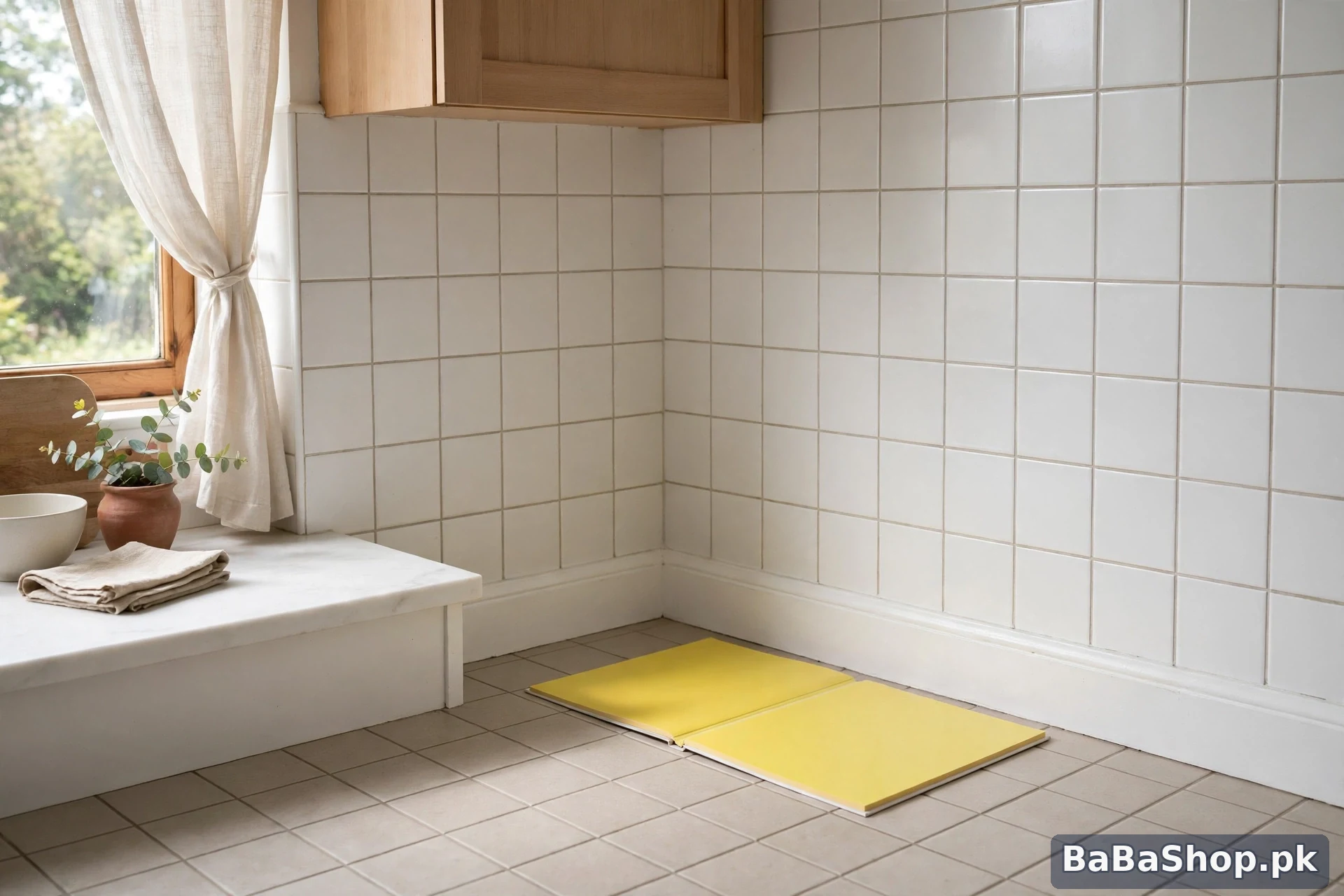
If you are trying to learn how to catch rats in house without poison, you are probably worried about one thing: the safety of your family. Rat poison (zeher) works, but it is a chemical that stays dangerous long after you put it down. The good news is that you do not need poison to solve a rat problem. With the right steps — finding their paths, cutting off their food, sealing their entry points and using a good rat glue pad — most homes in Pakistan can become rat-free safely. This guide takes you through the complete process, step by step.
Why More Pakistani Homes Are Avoiding Rat Poison
There are honest, practical reasons families are moving away from zeher:
- Children and pets are at risk. Poison pellets and powders can look like sweets or food crumbs to a small child, and a cat or dog that eats a poisoned rat can be poisoned itself.
- Dead rats in hidden places. A poisoned rat often crawls into a wall cavity, false ceiling or store room corner and dies there. The smell can last for weeks, and you cannot reach the body to remove it.
- Poison spreads. Rats carry poison crumbs around the house on their feet and fur, sometimes into kitchen areas.
A glue pad contains no poison and no chemicals at all — it is simply a strong adhesive board. The rat steps on it and stays stuck. Nothing toxic is left anywhere in your home.
Step 1: Confirm Where the Rats Are Moving
Rats are creatures of habit. They travel the same routes every night, almost always along walls, behind furniture and through corners — never across the middle of an open room. Look for these signs:
- Small dark droppings near walls, in kitchen cabinets or in the store room
- Gnaw marks on atta bags, soap, wood or wire insulation
- Scratching sounds in the ceiling or walls after midnight
- Dark, greasy smear marks along the skirting where their bodies rub daily
Spend two or three nights noting where you see droppings and damage. This “map” tells you exactly where to place your traps later.
Step 2: Cut Off Their Food and Water
A rat stays where it finds easy food. Before trapping, remove the attraction:
- Store atta, chawal, daal and sugar in sealed plastic or metal containers — never in open bags.
- Do not leave cooked food uncovered overnight. Clear the dastarkhwan area and wash dishes before sleeping.
- Fix dripping taps and keep the kitchen sink area dry. Rats need water daily.
- Empty the dustbin every night, and keep it covered.
This step alone pushes many rats to move out — and it makes the bait on your trap far more attractive, because there is no free food competing with it.
Step 3: Seal the Entry Points
In many Pakistani homes, rats enter through a handful of predictable gaps: the space under the main door, holes around water and gas pipes, broken drain covers (jaali), and gaps where the wall meets the roof. In the monsoon season, flooded street drains push even more rats indoors looking for dry shelter.
Walk around your home with a torch and block what you find. Use cement for larger holes, steel wool packed tightly for pipe gaps, and metal mesh for drains. A rat can squeeze through a surprisingly small hole, so be thorough — sealing entries is what stops new rats from replacing the ones you catch.
Step 4: Use a Glue Pad — the Poison-Free Chuha Pakarne Wala Trap
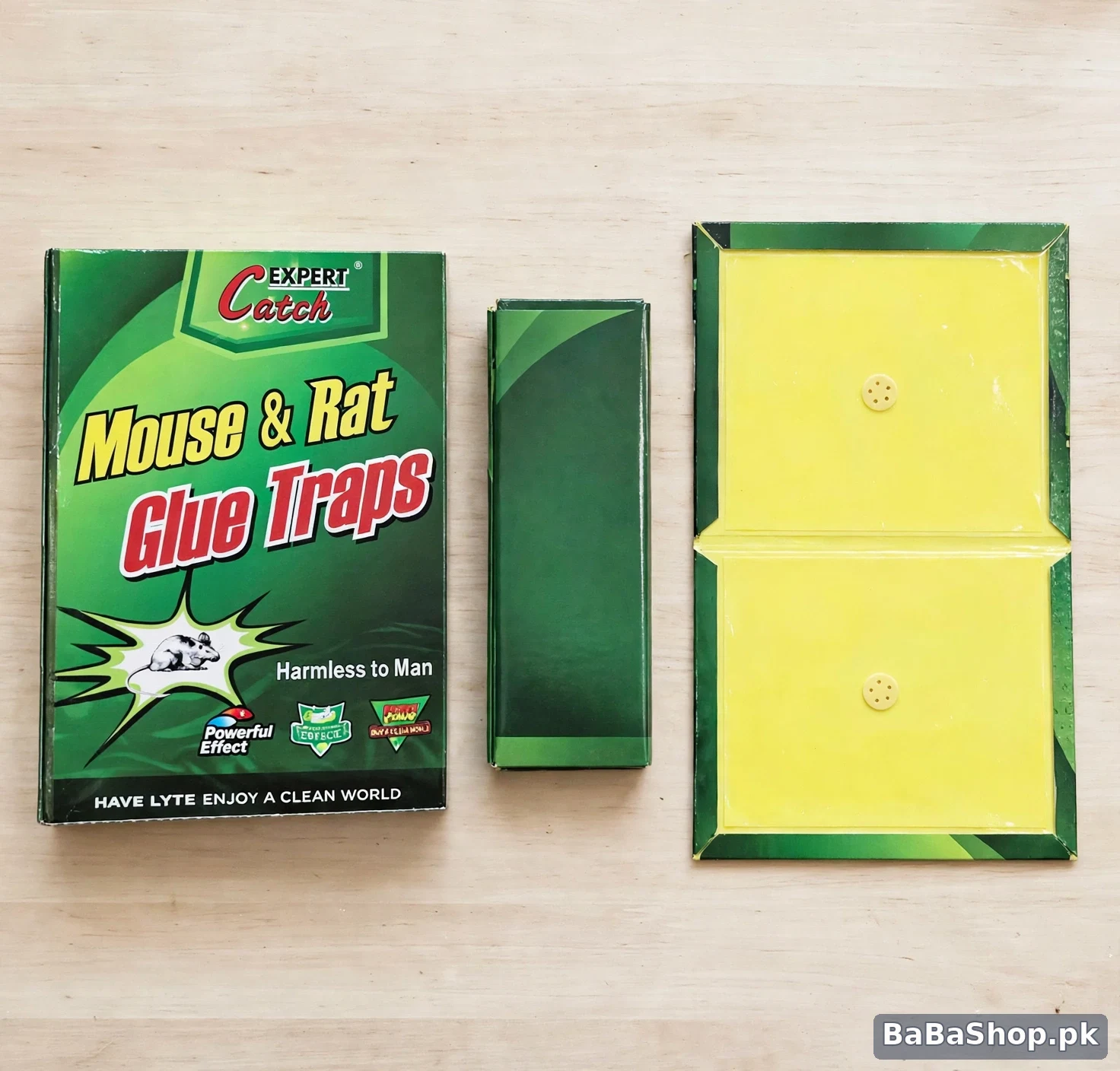
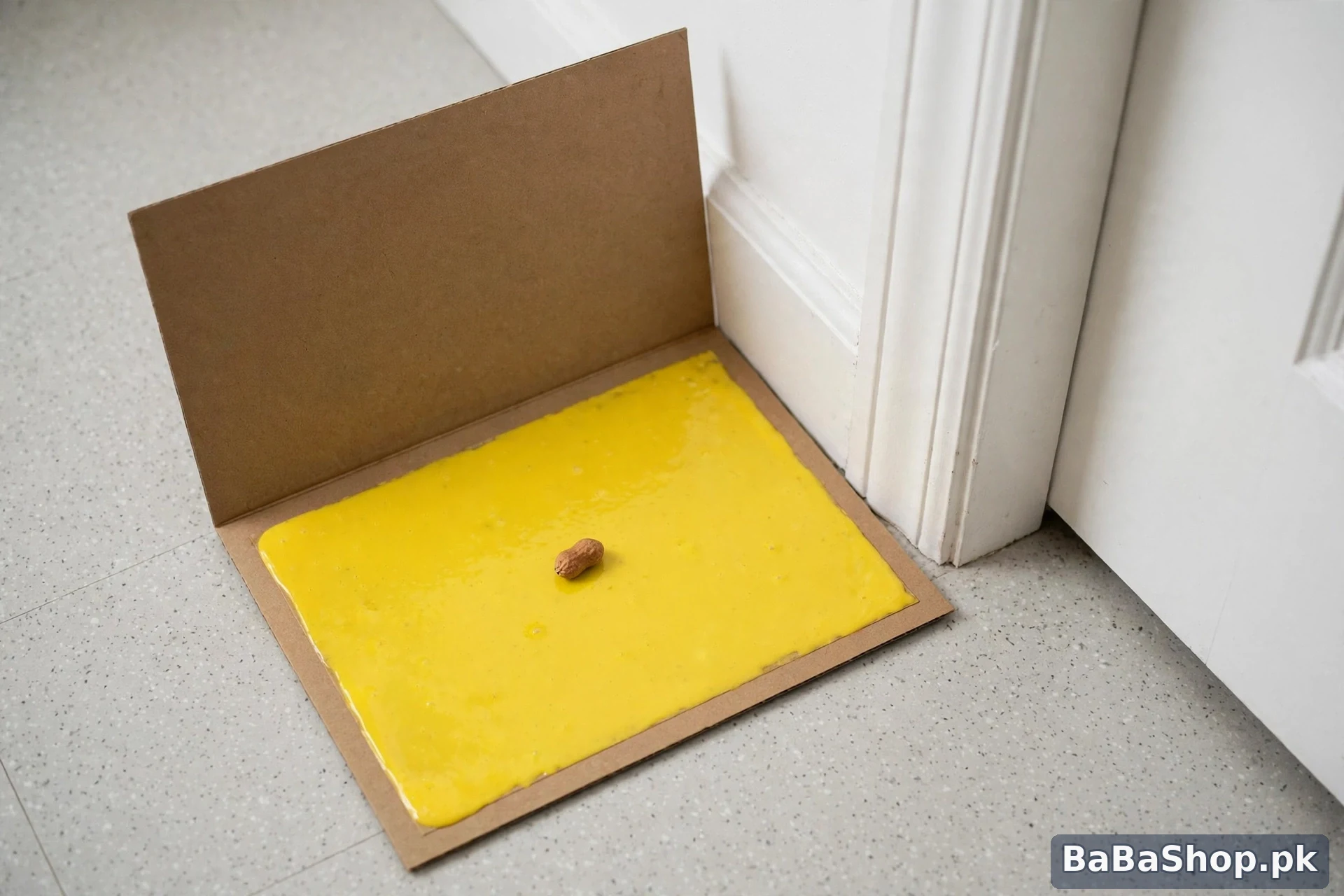
Once you know the rats’ routes, place a glue board flat along the wall on that route, sticky side up, where the rat is forced to step on it. The Magic Pad glue trap is a fold-open board with extra-strong glue made exactly for this: no spring, no setting, no poison. A tiny piece of peanut, biscuit or fried roti in the centre makes it even more effective.
One honest warning: placement decides everything. A pad in the wrong spot catches nothing. Read our detailed guide on how to use a glue trap for rats correctly for the exact placement and bait method, including the mistakes that let rats escape.
Step 5: What About Snap Traps and Cage Traps?
To be fair, other poison-free options exist. Cage traps catch rats alive and can work for one or two rats, but you must then release the animal far away — and many people understandably do not want to handle that. Snap traps are powerful but can injure curious children’s fingers, and rats often learn to steal the bait without triggering them. For most homes, glue pads are the simplest, safest and cheapest starting point. Still not sure? Our comparison of glue trap vs rat poison breaks down safety, cost and results honestly.
Safety Rules When Using Glue Pads
- Place pads where children and pets do not walk — behind the fridge, under the stove, inside the store room corner.
- If a pet does step on a pad, do not pull. A little cooking oil worked into the glue releases it gently; then wash with soap.
- Check pads every morning. Fold a used pad glue-side in, seal it in a bag and throw it in the outside bin. Wash your hands afterwards.
Conclusion
Catching rats without poison is not about one magic trick — it is a small system: remove their food, seal their doors, and trap them on the routes they cannot avoid. Do these together and most homes see results within a few nights. If you want to start tonight, you can order the Magic Pad pack from BaBaShop.pk — a pack of 3 pads is Rs 899, 4 pads Rs 999 and 5 pads Rs 1,099, with Cash on Delivery all over Pakistan (delivery approx. Rs 200). You can also order on WhatsApp at 0092-302-4096495.
Frequently Asked Questions
Q: How long does it take to catch a rat on a glue pad?
A: If the pad is on the rat’s regular route, catches usually happen within the first one to three nights. If nothing is caught in four nights, the placement is wrong — move the pad to another wall or corner.
Q: Is a glue trap really poison-free?
A: Yes. The pad contains only adhesive on a board — no chemicals and no poison. That is why it can be used in kitchens and homes with children, as long as it is placed out of their reach.
Q: Can one pad catch more than one rat?
A: A pad can hold more than one mouse, but for rats we recommend replacing the pad after a catch, because a used pad loses some stickiness and cleanliness.
Q: Will glue pads work for big rats?
A: Yes, for normal house rats. Use the full open board (not folded small), place it firmly against the wall, and for heavy infestation use two pads side by side on the same route.
Q: What should I do after catching a rat?
A: Fold the pad over, place it in a plastic bag, tie it shut and dispose of it in an outside bin. Never handle it with bare hands — use gloves or a stick, and wash your hands with soap.

Related Posts
Blog
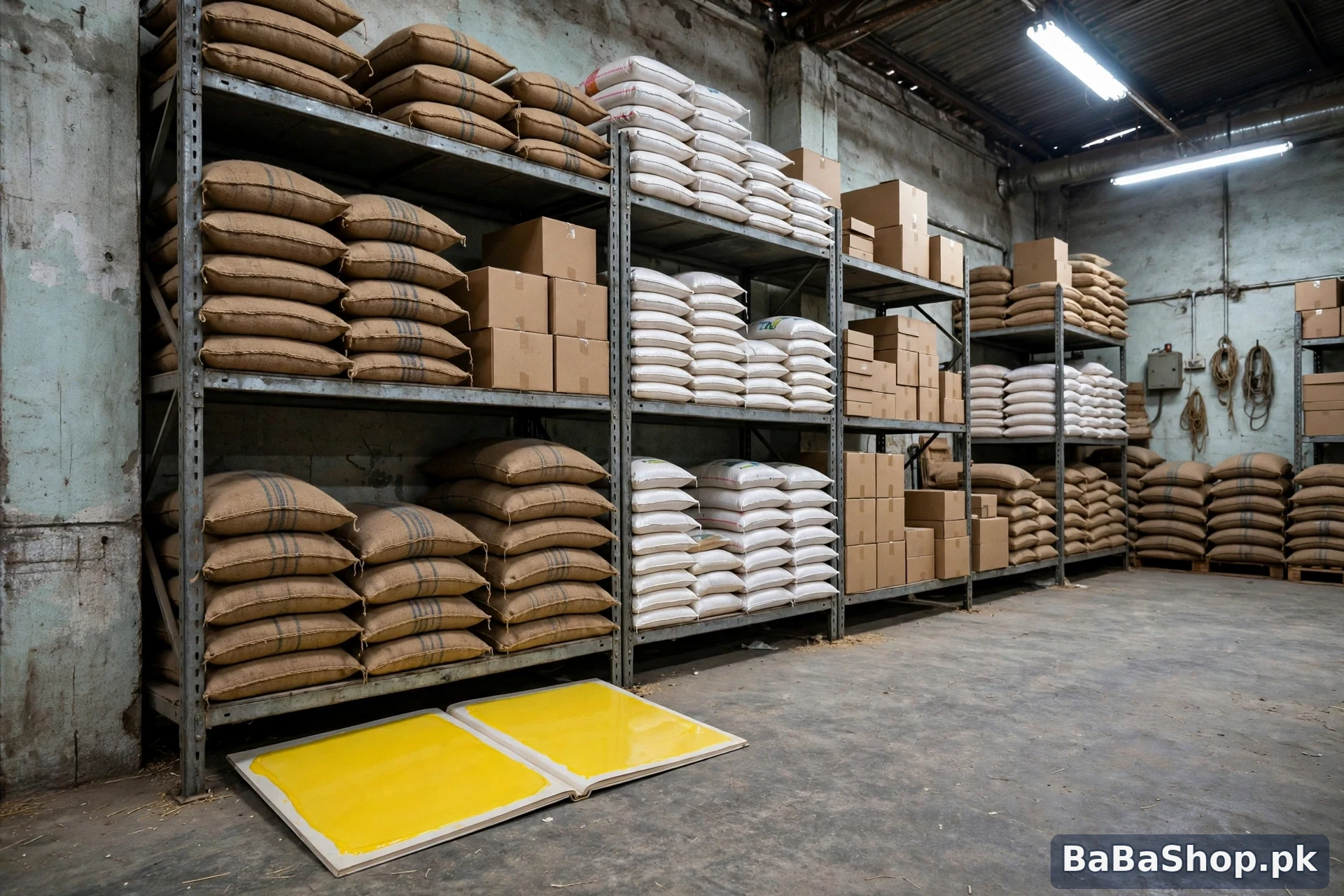
Rats in the Kitchen or Godown? A Practical Guide for Pakistani Homes, Shops and Warehouses
Learning how to get rid of rats in kitchen and godown…
Blog
Glue Trap vs Rat Poison (Zeher): Which Is Safer for a Home With Kids and Pets?
When a rat appears in the house, the first decision is…
Blog
Home Remedies to Get Rid of Rats: What Actually Works, What Doesn’t — and the Poison-Free Fix
Pakistan ke taqreeban har ghar mein ye masla kabhi na kabhi…
Blog
How to Use a Rat Glue Pad Correctly: Placement, Bait and the Mistakes That Let Rats Escape
Knowing how to use glue trap for rats correctly is the…
[…] centre, checked every morning. Combine this method with the food and sealing steps in our guide on how to catch rats in the house without poison and results come fast. For larger spaces, see also our guide on getting rid of rats in the kitchen […]
[…] with kids and pets it is the only choice we can honestly recommend. Read our complete method in how to catch rats in the house without poison and our honest review of gharelu tareeqay for rats. To try the poison-free option, order the Magic […]