Rats in the Kitchen or Godown? A Practical Guide for Pakistani Homes, Shops and Warehouses
Learning how to get rid of rats in kitchen and godown spaces matters more than anywhere else in the building, because these are the two places rats damage most: your family’s food in the kitchen, and your money — stock — in the godown. A rat problem in a bedroom is a nuisance; the same problem in a karyana shop’s godam can mean thousands of rupees of atta, chawal and daal destroyed in a few weeks. This practical guide covers both settings, with steps that work in Pakistani homes, shops and warehouses.
Why Kitchens and Godowns Attract Rats First
Rats follow three things: food smell, water and safe hiding places. A kitchen gives them crumbs, grease, open atta and a warm spot behind the fridge. A godown gives them sacks to nest inside, undisturbed corners and endless food. Their activity also follows the seasons. In winter, rats move indoors for warmth and shelter. In the monsoon, street water and flooded naalay push whole rat populations into dry buildings — which is why godam mein choohay suddenly appear in August and September even in well-kept shops.
Signs You Have a Rat Problem in Food Areas
- Droppings along walls, on shelves or near sack stacks
- Sacks and packets with gnawed corners; spilled grain in trails
- Greasy rub marks at floor level along racks and skirting
- A sharp, musky smell in a closed store room
- Scratching or movement sounds after the shop closes or the house sleeps
The Kitchen Action Plan
- Seal the food. Move atta, rice, daal and sugar into hard plastic or metal containers with tight lids. Kitchen mein choohay almost always start from open bags and overnight leftovers.
- Nightly clean-up. Wipe the stove (grease attracts them), wash dishes, dry the sink and floor, and empty the dustbin. A clean, dry kitchen gives rats no reason to stay.
- Seal the entries. Check under the sink where pipes pass through the wall, the door gap, and the drain cover. Pack gaps with steel wool and cement, and fit a proper jaali on drains.
- Trap on the routes. Place glue pads behind the fridge and stove, and beside the cabinet where droppings appear — never on food-preparation surfaces. Correct placement is everything; follow our step-by-step on how to use a glue trap for rats.
The Godown and Shop Action Plan
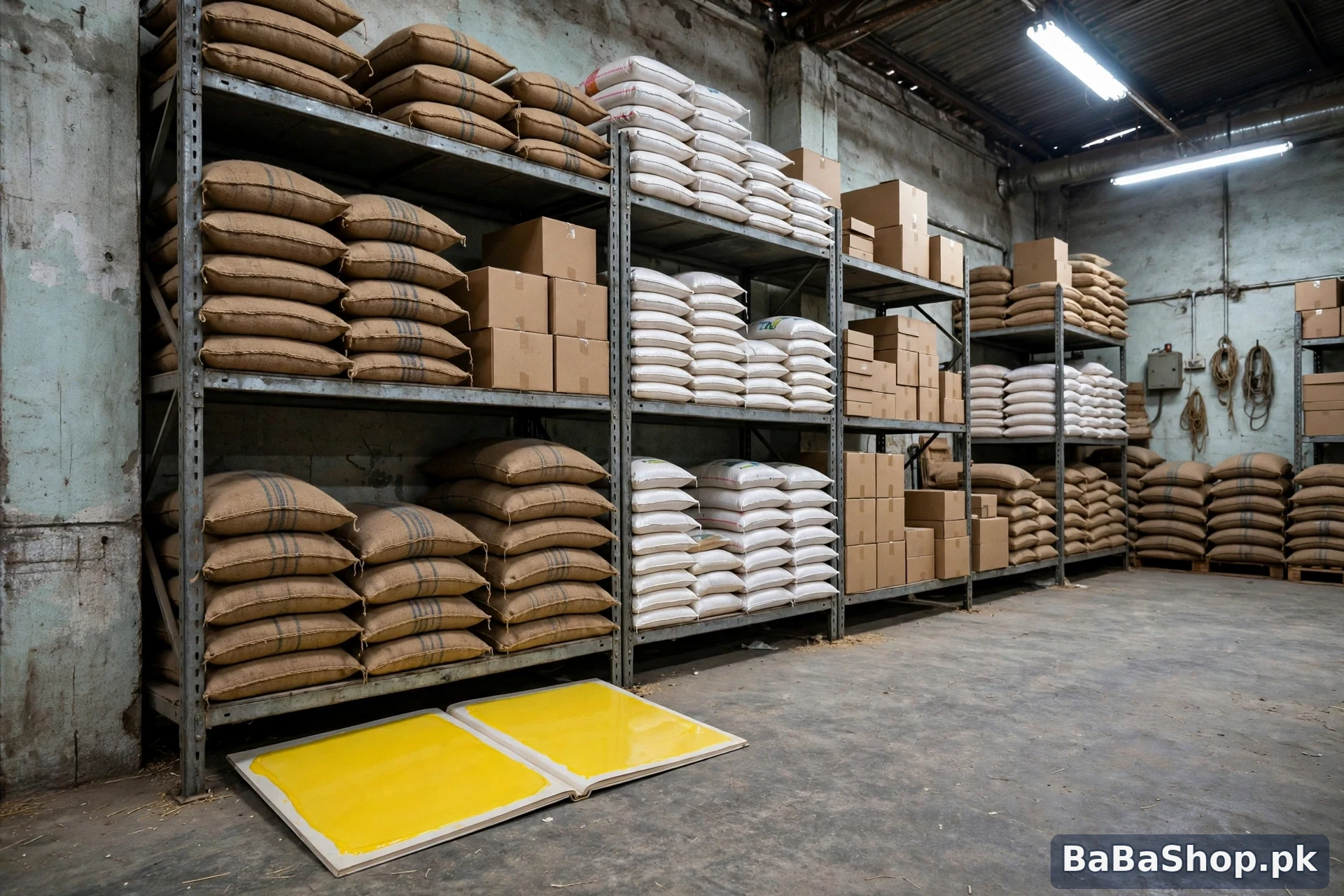
- Raise the stock. Keep sacks on pallets or racks, never directly on the floor, and leave a small gap between the rack and the wall. That gap is your inspection lane — and your trapping lane.
- Rotate and inspect. Move old stock first (FIFO). Check sack bottoms weekly for gnaw marks, and remove any damaged or spilled goods immediately — spilled grain is an open invitation.
- Seal the building. Godown shutters often leave a finger-wide gap at the bottom; fit brush strips or a metal plate. Cover ventilators with metal mesh and repair any hole where pipes or cables enter.
- Trap the perimeter. Place glue pads along the walls behind racks, near the shutter corners and beside any hole you have sealed (rats keep testing old routes for days). For a big godown, use several pads in a line along the busiest wall. Our Magic Pad rat glue pad packs make this affordable: 3 pads for Rs 899, 4 pads for Rs 999 and 5 pads for Rs 1,099, delivered with Cash on Delivery anywhere in Pakistan (delivery approx. Rs 200). A karyana owner can cover the main routes of a medium godown with a single pack of 5.
- Keep a simple record. Note the date, the spot and what each pad caught. Within two weeks you will see exactly which routes are busiest and whether the problem is shrinking.
Why Poison Is a Bad Idea Around Food Stock
This deserves a clear warning. Scattering zeher in a kitchen or godown risks poison crumbs mixing with stored food, and a poisoned rat dying inside a sack stack can contaminate stock you then cannot sell or eat. Glue pads contain no chemicals, and the rat is removed with the pad — nothing is left behind in your food area. Our detailed glue trap vs rat poison comparison explains the safety side fully. For gentler home methods that support this plan, also see our honest review of gharelu tareeqay for getting rid of rats.
Conclusion
Kitchen and godown rat control is a routine, not a one-day battle: seal the food, seal the building, trap the wall routes, and review weekly. Homes usually clear within one to two weeks; a stocked godown needs the perimeter routine maintained all season, especially through monsoon and winter. Start with the highest-value step — a line of pads on the busiest routes — and order the Magic Pad pack today, or reach us on WhatsApp at 0092-302-4096495 for advice on how many pads your space needs.
Frequently Asked Questions
Q: How many glue pads does a godown need?
A: For a small godown, start with 5 pads along the busiest walls and corners. For large warehouses, place pads every few metres along the perimeter behind racks, and add more where catches happen.
Q: Can I put a glue pad near food sacks?
A: Yes — on the floor along the wall or rack, not on top of sacks or food surfaces. The pad has no chemicals, but it should never touch the food itself.
Q: Why do rats appear in my kitchen every winter?
A: Cold pushes rats indoors towards warmth and food. The fridge motor area and stove corner are their favourite warm routes — which is why pads there catch well in winter.
Q: My shop has tried poison but rats keep coming back. Why?
A: Poison kills some rats but does not close entry points or remove food attraction, so new rats replace them. Sealing plus trapping on routes breaks the cycle.
Q: How often should I check godown pads?
A: Every morning when the shop opens. Replace any pad that has caught a rat, and move quiet pads to busier routes after four or five nights.

Learning how to get rid of rats in kitchen and godown spaces matters more than anywhere else in the building, because these are the two places rats damage most: your family’s food in the kitchen, and your money — stock — in the godown. A rat problem in a bedroom is a nuisance; the same problem in a karyana shop’s godam can mean thousands of rupees of atta, chawal and daal destroyed in a few weeks. This practical guide covers both settings, with steps that work in Pakistani homes, shops and warehouses.
Why Kitchens and Godowns Attract Rats First
Rats follow three things: food smell, water and safe hiding places. A kitchen gives them crumbs, grease, open atta and a warm spot behind the fridge. A godown gives them sacks to nest inside, undisturbed corners and endless food. Their activity also follows the seasons. In winter, rats move indoors for warmth and shelter. In the monsoon, street water and flooded naalay push whole rat populations into dry buildings — which is why godam mein choohay suddenly appear in August and September even in well-kept shops.
Signs You Have a Rat Problem in Food Areas
The Kitchen Action Plan
The Godown and Shop Action Plan
Why Poison Is a Bad Idea Around Food Stock
This deserves a clear warning. Scattering zeher in a kitchen or godown risks poison crumbs mixing with stored food, and a poisoned rat dying inside a sack stack can contaminate stock you then cannot sell or eat. Glue pads contain no chemicals, and the rat is removed with the pad — nothing is left behind in your food area. Our detailed glue trap vs rat poison comparison explains the safety side fully. For gentler home methods that support this plan, also see our honest review of gharelu tareeqay for getting rid of rats.
Conclusion
Kitchen and godown rat control is a routine, not a one-day battle: seal the food, seal the building, trap the wall routes, and review weekly. Homes usually clear within one to two weeks; a stocked godown needs the perimeter routine maintained all season, especially through monsoon and winter. Start with the highest-value step — a line of pads on the busiest routes — and order the Magic Pad pack today, or reach us on WhatsApp at 0092-302-4096495 for advice on how many pads your space needs.
Frequently Asked Questions
Q: How many glue pads does a godown need?
A: For a small godown, start with 5 pads along the busiest walls and corners. For large warehouses, place pads every few metres along the perimeter behind racks, and add more where catches happen.
Q: Can I put a glue pad near food sacks?
A: Yes — on the floor along the wall or rack, not on top of sacks or food surfaces. The pad has no chemicals, but it should never touch the food itself.
Q: Why do rats appear in my kitchen every winter?
A: Cold pushes rats indoors towards warmth and food. The fridge motor area and stove corner are their favourite warm routes — which is why pads there catch well in winter.
Q: My shop has tried poison but rats keep coming back. Why?
A: Poison kills some rats but does not close entry points or remove food attraction, so new rats replace them. Sealing plus trapping on routes breaks the cycle.
Q: How often should I check godown pads?
A: Every morning when the shop opens. Replace any pad that has caught a rat, and move quiet pads to busier routes after four or five nights.
Learning how to get rid of rats in kitchen and godown…
When a rat appears in the house, the first decision is…
Pakistan ke taqreeban har ghar mein ye masla kabhi na kabhi…
Knowing how to use glue trap for rats correctly is the…