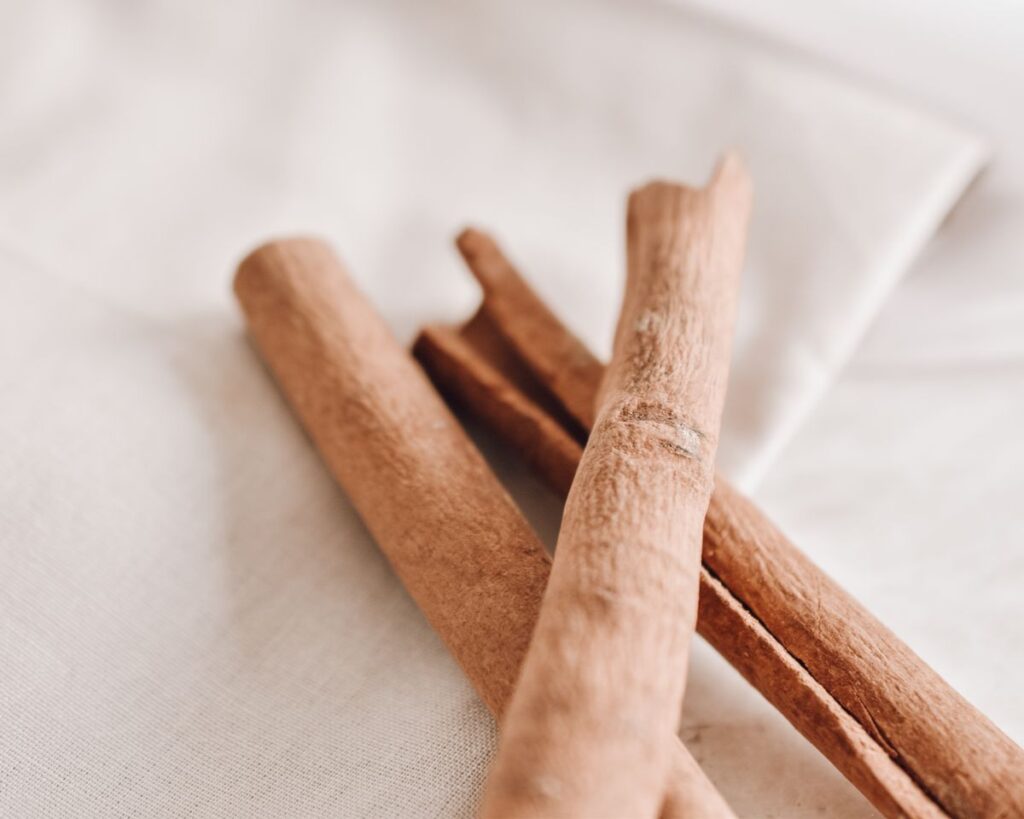
You ask the pansari for dar chini, and he hands you a thick, dark, hard roll of bark. It smells strong, it tastes sharp, and it costs very little. Most of us grew up thinking that is cinnamon. It is only half the story.
That hard, dark bark is usually cassia, the common cheaper cinnamon sold in almost every Pakistani bazaar as dar chini. The thing people search for as ceylon cinnamon in Pakistan is a different spice: true cinnamon, Cinnamomum verum, from Sri Lanka — lighter, thinner, sweeter, and much more expensive. Buy cassia at a Ceylon price, and you have overpaid by three to five times.
This guide gives you the ceylon cinnamon price in Pakistan with real, checked prices. We looked at live seller pages on 24 November 2026 — NatureZone, Organic Pearls, Chiltan Pure, Something Organic, New Pansari and iHerb Pakistan — and recorded 16 verified Ceylon price rows, with a per-100g column for fair comparison. Cassia prices are listed separately, clearly labelled.
One honest note: BaBaShop does not sell cinnamon of any kind. This is a price and buying guide, not a product page. Where we could not verify a price, a pack size, or a claim, we say so plainly instead of guessing.
Quick answer: ceylon cinnamon price in Pakistan 2026
- Rs 400 is the lowest verified price for real Ceylon — NatureZone’s 50g pack, or Rs 800 per 100g.
- Rs 800 per 100g is the best per-100g value we verified — NatureZone’s 50g pack; its 100g pack is Rs 850 per 100g.
- Rs 1,440 per 100g is what Organic Pearls charges for its Sri Lankan Ceylon quills — Rs 1,300 for 90g, or Rs 3,600 for 250g.
- Rs 1,828 per 100g is the cheapest imported option we verified — Frontier Co-op organic Ceylon powder, 453g, at Rs 8,281 on iHerb Pakistan.
- Rs 158 to Rs 280 per 100g is what cassia costs — which is why a “Ceylon” pack at Rs 250 per 100g should make you suspicious, not happy.
What this guide covers
- What is Ceylon cinnamon? True cinnamon explained
- Ceylon vs cassia: the 7-point difference
- Ceylon cinnamon price in Pakistan: verified table
- Ceylon cinnamon sticks: sticks vs powder
- Cassia prices in Pakistan: the labelled comparison
- Ceylon cinnamon in Pakistan: read the per-100g column
- Best Ceylon cinnamon in Pakistan: our honest pick
- Ceylon cinnamon price: what decides the price
- How to spot real Ceylon: the 10-point check
- Health and coumarin: what the research actually says
- Who should buy it — and who should not
- Safety and side effects
- How to use Ceylon cinnamon every day
- City-wise prices: Lahore, Karachi, Islamabad
- Cost breakdown: what a month really costs
- 12.12 buying checklist
- Methodology: how we checked these prices
- FAQs
- Conclusion
What is Ceylon cinnamon? True cinnamon explained
Ceylon cinnamon is the dried inner bark of Cinnamomum verum (also Cinnamomum zeylanicum), a tree native to Sri Lanka — the island once called Ceylon. Workers peel the thin inner bark from young branches, roll it into delicate, papery quills, and dry it. The result is a light tan stick, soft enough to crumble between your fingers, with a sweet, mild, almost citrusy fragrance. In Urdu it is سیلون دار چینی; in English it is “true cinnamon”.
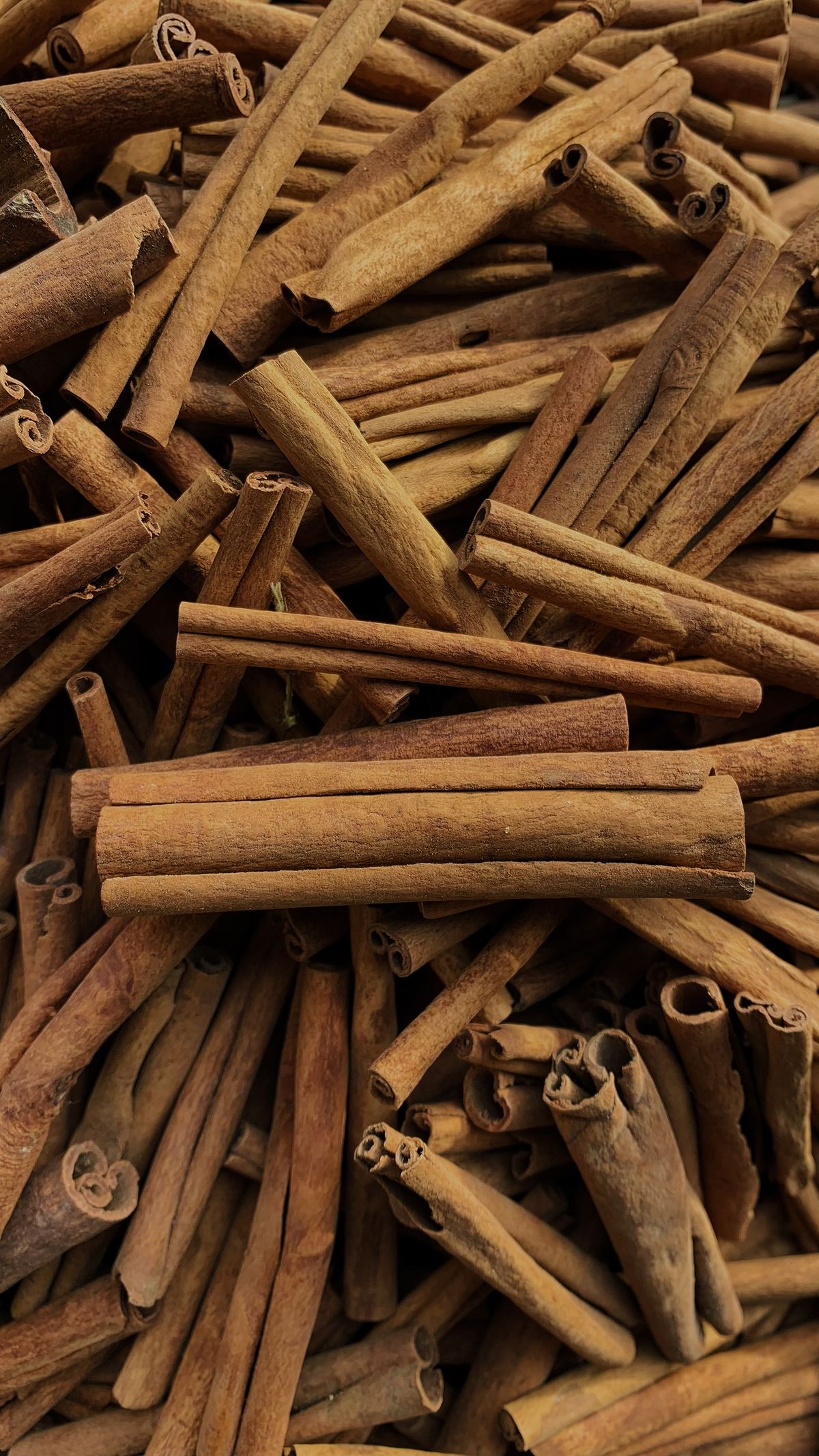
Cassia is different. It comes from other trees in the same family — Cinnamomum cassia (Chinese), C. burmannii (Indonesian) and C. loureiroi (Vietnamese or Saigon). Its bark is thick, dark reddish-brown, hard as wood, and rolled into a single tight curl, with a stronger, sharper flavour than Ceylon’s. It is what almost every Pakistani kitchen has in the masala dabba, because it is what the bazaar sells as dar chini, usually without ever saying the word cassia.
Nothing here is a complaint about cassia. It is a fine cooking spice — the bold flavour in biryani, nihari, garam masala and doodh patti — at a fraction of Ceylon’s price. The problem is only the label: when a seller charges Ceylon prices for cassia bark, somebody is being misled.
Why Ceylon costs so much more: Pakistan imports nearly all its Ceylon from Sri Lanka, so the price carries shipping, import duty and a weak rupee; the thin bark must be peeled by hand and rolled into quills; and buyers worldwide want Ceylon because it is very low in coumarin (explained in the health section below).
Sticks, quills, powder — what is the difference?
- Sticks or quills: the rolled bark, sold whole. You simmer them in chai, kahwa, milk or rice, then take them out. Most of this guide’s price table is sticks.
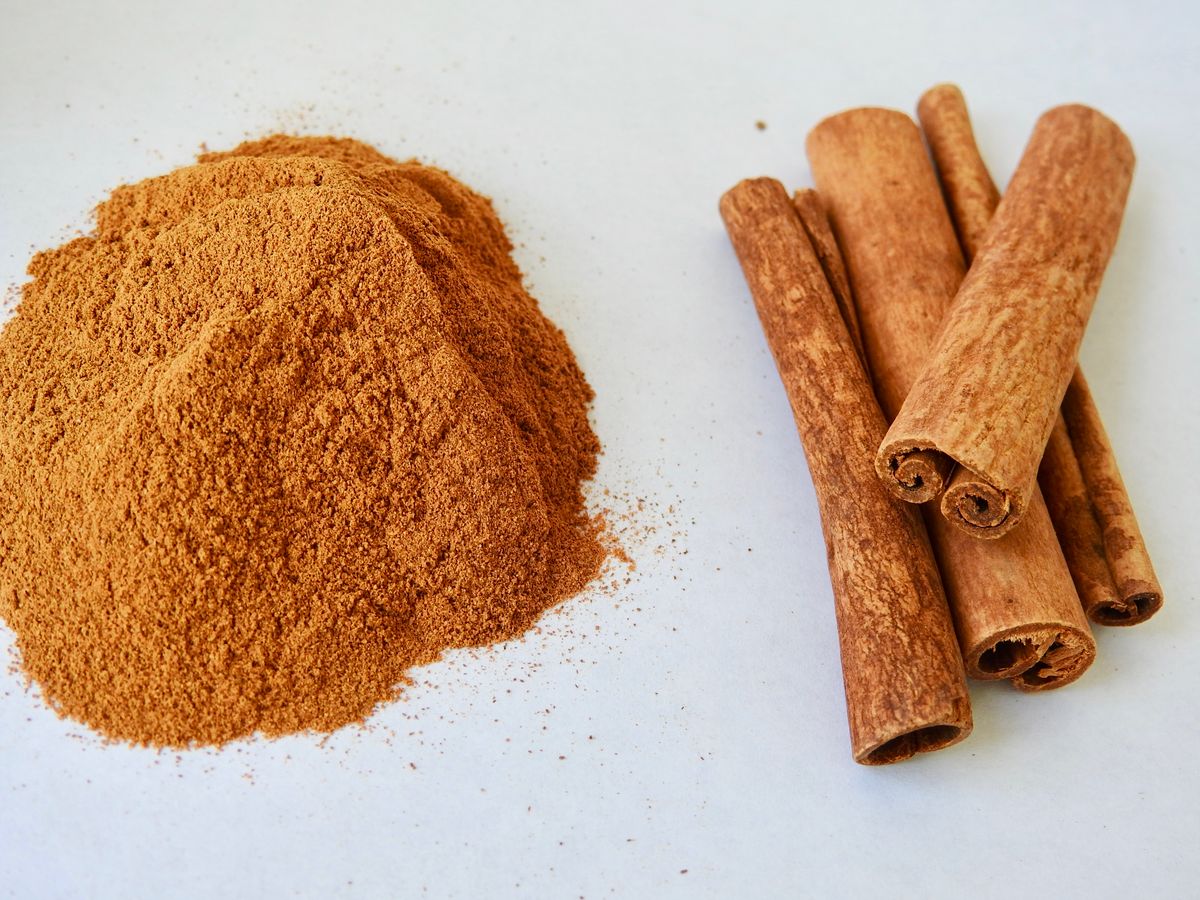
- Powder: the same bark, ground. It mixes straight into baking, smoothies, oatmeal and dahi, but it is much easier to fake — buy it only from a seller you trust.
- Loose bazaar dar chini: sold by weight in herb markets. It is almost always cassia, not Ceylon. We could not verify a current loose Ceylon price, so we left it out rather than guessing.
There is no such thing as “Ceylon cinnamon” grown in Pakistan — the tree needs Sri Lanka’s climate. Genuine Ceylon here is always imported, and an honest seller says so: Organic Pearls, for example, states “From Sri Lanka” on its Ceylon page.
Ceylon vs cassia: the 7-point difference
If you remember nothing else from this guide, remember this table. It is the whole Ceylon-versus-cassia story in seven lines, and it is the test you use in the shop.
| Check | Ceylon (“true” cinnamon) | Cassia (common dar chini) |
|---|---|---|
| Botanical name | Cinnamomum verum (also C. zeylanicum) | C. cassia, C. burmannii, C. loureiroi |
| Origin | Sri Lanka, mainly | China, Indonesia, Vietnam |
| Colour | Light tan, pale brown | Dark reddish-brown |
| Stick shape | Thin, soft, many papery layers rolled together — like a rolled cigarette; crumbles easily | Thick, hard, woody — a single tight curl; hard to break |
| Flavour | Mild, sweet, delicate, slightly citrusy | Strong, sharp, pungent, almost spicy-hot |
| Coumarin | Very low — about 0.004% by weight, roughly 250 times less than cassia (Healthline) | High — about 1% by weight; a teaspoon can exceed the daily safe limit (EFSA) |
| Price in Pakistan | Rs 800–Rs 5,521 per 100g in our verified table | Rs 158–Rs 280 per 100g in our labelled comparison table |
The roll test is the one you can do in the shop, in five seconds. Pick up a stick: if it is thin, light, and you can crush the end into papery flakes, it looks like Ceylon. If it is thick, heavy, dark and hard to snap, it is cassia — whatever the shopkeeper calls it. The colour test helps too: Ceylon powder is pale tan, cassia powder darker and redder. But powder is the easiest form to fake, so the stick test matters more.
The one-line rule: if the price is under Rs 400 per 100g and the label says “Ceylon”, stop and check. Real Ceylon in Pakistan starts at about Rs 800 per 100g in our verified table. A “Ceylon” pack at cassia prices is almost certainly cassia in a Ceylon label.
Ceylon cinnamon price in Pakistan: the verified table
Every price below was taken from a live seller page checked on 24 November 2026. The per-100g column is our own arithmetic from the listed pack price and pack size. Rows 1 to 13 have a verified pack size, so their per-100g figure is exact. Rows 14 to 16 are verified prices whose pack size the page did not show — listed as “not stated”, not guessed.
| Seller | Product | Pack size | Price | Per 100g | Note |
|---|---|---|---|---|---|
| NatureZone | Ceylon Cinnamon (sticks) | 50g | Rs 400 | Rs 800 | Cheapest verified Ceylon pack and best per-100g rate. |
| NatureZone | Ceylon Cinnamon (sticks) | 100g | Rs 850 | Rs 850 | Same seller, bigger pack — slightly more per 100g than its own 50g pack, unusually. |
| Organic Pearls | Ceylon Cinnamon quills (Sri Lanka) | 90g | Rs 1,300 | Rs 1,444 | Cinnamomum verum, from Sri Lanka. COD available. |
| Organic Pearls | Ceylon Cinnamon quills (Sri Lanka) | 250g | Rs 3,600 | Rs 1,440 | Same product, bigger pack — barely cheaper per 100g, so buy the size you will actually use. |
| iHerb (Frontier Co-op) | Organic Fairtrade Ceylon Cinnamon powder | 158g | Rs 4,594 | Rs 2,908 | Imported, certified organic + Fairtrade. |
| iHerb (Simply Organic) | Ceylon Cinnamon powder | 59g | Rs 3,257 | Rs 5,521 | Small imported jar — the worst per-100g rate in this table. Only for a first taste, never for regular use. |
| iHerb (Frontier Co-op) | Organic Ceylon Cinnamon powder | 453g | Rs 8,281 | Rs 1,828 | Cheapest imported per-100g rate. A 1 lb pack that lasts a regular user many months. |
| iHerb (Frontier Co-op) | Organic 3″ Ceylon Cinnamon Sticks | 453g | Rs 13,016 | Rs 2,873 | Imported sticks, 1 lb pack. Same weight as the powder above, but Rs 4,735 more. |
| iHerb (Frontier Co-op) | Organic Ceylon Cinnamon Sticks | 17g | Rs 2,412 | Rs 14,188 | A tiny 0.6 oz jar — proof that small packs punish you. |
| iHerb (Frontier Co-op) | Organic Fair Trade Ceylon Cinnamon Powder | 453g | Rs 9,211 | Rs 2,033 | Fair Trade certified 1 lb powder. |
| iHerb (Starwest Botanicals) | Organic Cinnamon Ceylon Powder | 454g | Rs 9,873 | Rs 2,177 | Imported 1 lb organic powder. |
| iHerb (Micro Ingredients) | Organic Ceylon Cinnamon Powder | 227g | Rs 3,331 | Rs 1,468 | Cheapest imported powder per 100g after Frontier’s 453g pack. |
| iHerb (MRM Nutrition) | Organic Ceylon Cinnamon Powder | 113g | Rs 3,747 | Rs 3,316 | Small imported jar. |
| Chiltan Pure | Ceylon Cinnamon Sticks | Not stated | Rs 499 | Not stated | Pack weight not shown, so no per-100g figure. Rated 4.9/5 from 34 reviews. |
| Something Organic | Ceylon Cinnamon Sticks, Premium Grade | 50g / 100g | Rs 349–Rs 1,699 | Not stated | Page lists 50g/100g and Sri Lanka + Vietnam origins, but does not map each price to a weight. |
| New Pansari | Cinnamon Ceylon (Darchini Srilanka) | 50g / 100g / 250g | Rs 400–Rs 2,100 | Not stated | Whole, ground and powder forms in 3 sizes; no per-variant price shown. |
Sources: naturezone.pk, organicpearls.pk, pk.iherb.com Ceylon cinnamon search, chiltanpure.com, somethingorganic.pk, newpansari.pk. All checked 24 November 2026. iHerb prices are shown before the 20% off code on the site and move with promos — confirm on the product page before you pay.
The honest range: Rs 400 to Rs 1,300 for a small local pack (50g–90g), and Rs 3,257 to Rs 13,016 for imported packs. Per 100g, local Ceylon runs from Rs 800 to Rs 1,444; imported Ceylon runs from Rs 1,468 to Rs 3,316 at realistic pack sizes.
What we left out, and why: Shoppingbag.pk lists an imported Organic Wise Ceylon powder at Rs 21,091 for 1 lb — but its own page says the price is “not confirmed”. Daraz showed no verifiable Ceylon listing, and we found no Ceylon product from Shan, National, Mehran, Saeed Ghani or Hemani. We would rather show 16 verified rows than 20 rows with guesses.
Ceylon cinnamon sticks: sticks vs powder
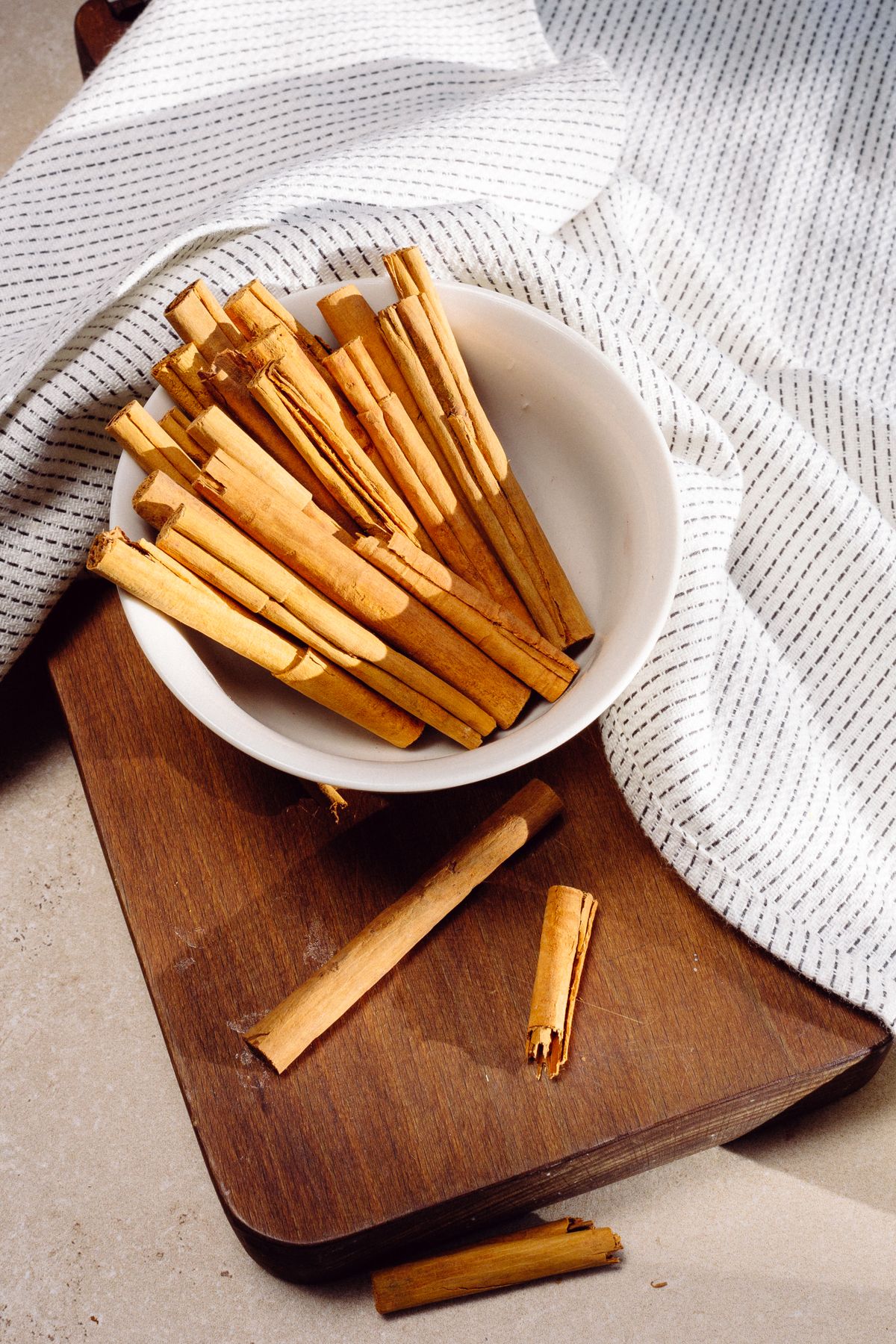
“Ceylon cinnamon sticks” gets 260 searches a month in Pakistan — the same volume as the main keyword. Sticks and powder are the same spice in two forms, but they are priced and faked very differently. Sticks are the safer buy: you can see the thin, papery layers, feel how soft they are, and smell the mild sweetness. Local sticks cost Rs 800 to Rs 1,444 per 100g (NatureZone and Organic Pearls); imported sticks cost Rs 2,873 per 100g in the 453g Frontier pack. Powder is the convenient buy, and the risky one: it stirs straight into chai and baking, but ground cinnamon is the easiest spice to adulterate, and no eye can tell once it is ground. Imported powder runs from Rs 1,468 to Rs 5,521 per 100g.
Buy sticks if you use cinnamon in chai, kahwa, milk or rice, if you are buying for the first time, or if you want to grind your own powder. Buy powder if you bake or stir it into food daily — from a brand whose sticks you have already seen, or a certified import. Never buy powder because it is cheap: cheap Ceylon powder is the single most suspicious product in this market. A practical tip: buy NatureZone’s 50g sticks at Rs 400 first, use them in chai for a week, and learn the smell and the softness.
Cassia prices in Pakistan: the labelled comparison
This table is not Ceylon. Every row here is cassia, or common cinnamon sold as dar chini without a species name — labelled as such, so the price gap is visible instead of hidden.
| Seller | Product (labelled cassia / common) | Pack size | Price | Per 100g | Note |
|---|---|---|---|---|---|
| Organic Pearls | Cinnamon (Sticks) — plain “dalchini”, not labelled Ceylon | 100g | Rs 240 | Rs 240 | Same seller’s Ceylon is Rs 1,444 per 100g — six times more. |
| Organic Pearls | Cinnamon (Sticks) — plain “dalchini” | 250g | Rs 490 | Rs 196 | Bigger pack, cheaper per 100g, as usual. |
| Organic Pearls | Cinnamon (Sticks) — plain “dalchini” | 1 kg | Rs 1,580 | Rs 158 | The cheapest per-100g cinnamon in either table — and it is cassia, not Ceylon. |
| Khan Dry Fruits | Cinnamon Sticks (Dar Chini) | 250g | Rs 700 | Rs 280 | Not labelled Ceylon. COD available in 47+ cities, per the seller. |
| Khan Dry Fruits | Cinnamon Sticks (Dar Chini) | 500g | Rs 1,330 | Rs 266 | 500g pack, same product. |
| Khan Dry Fruits | Cinnamon Sticks (Dar Chini) | 1 kg | Rs 2,520 | Rs 252 | 1 kg pack. Compare with Ceylon at Rs 800+ per 100g — cassia is a different market. |
Sources: organicpearls.pk (Rs 240 / 100g; Rs 490 / 250g; Rs 1,580 / 1 kg), khandryfruits.com (Rs 700 / 250g; Rs 1,330 / 500g; Rs 2,520 / 1 kg). All checked 24 November 2026. New Pansari’s own page notes most dar cheeni powder sold in Pakistan is cassia. Shan, National and Mehran cinnamon powders are sold in supermarkets, but we could not verify a current price for a specific pack, so no row is included for them.
Now the gap is plain. Cassia costs Rs 158 to Rs 280 per 100g; Ceylon costs Rs 800 to Rs 1,444 per 100g locally — roughly three to six times more, gram for gram. If someone offers you “Ceylon” at Rs 250 per 100g, they are offering you cassia at a Ceylon price.
Ceylon cinnamon in Pakistan: read the per-100g column
The pack price is the number sellers want you to see. The per-100g price tells you the truth — and with cinnamon the gap is bigger than with almost any other spice, because packs range from 17g to 453g. Frontier Co-op’s powder in the 158g pack is Rs 4,594 (Rs 2,908 per 100g); the same brand’s 453g pack is Rs 8,281 (Rs 1,828 per 100g) — 37% cheaper per 100g. At Organic Pearls the saving is barely there (90g at Rs 1,444, 250g at Rs 1,440 per 100g), so buy the size you will finish before it goes stale.
The worst trap is the tiny pack. Frontier’s 17g jar costs Rs 2,412 — less than the 453g pack’s Rs 13,016, so it looks cheap. Per 100g it is Rs 14,188, nearly five times the big pack’s rate. Simply Organic’s 59g jar is the same story: Rs 3,257 looks modest, but it is Rs 5,521 per 100g. Small jars exist for tasting, not for buying.
Three ways shoppers overpay: buying the smallest jar every time; paying the Ceylon price for cassia; and ignoring delivery — iHerb prices are shown before its 20% off code, and delivery and duties sit on top.
Money-saving tip: trying Ceylon for the first time? Buy the smallest local pack — NatureZone’s 50g at Rs 400. If you use it daily and like it, switch to a 250g or 453g pack — Organic Pearls’ 250g at Rs 3,600, or Frontier’s 453g powder at Rs 8,281 on iHerb — and your per-day cost drops below Rs 50. Never start with a tiny imported jar.
Best Ceylon cinnamon in Pakistan: our honest pick
There is no single “best” Ceylon cinnamon — it depends on your budget and how much you use. Here is our honest shortlist, based only on verified prices and seller information. We have not lab-tested any of these products.
| If you want… | Pick | Why | Price |
|---|---|---|---|
| The lowest cost per 100g | NatureZone 50g sticks | Rs 800 per 100g — the best verified Ceylon rate in Pakistan. Buy it to test the taste first. | Rs 400 |
| A trusted local brand, mid-price | Organic Pearls 90g quills | Cinnamomum verum from Sri Lanka; COD available. Clearest origin labelling we found. | Rs 1,300 |
| Best value in a big pack | Frontier Co-op 453g powder (iHerb) | Rs 1,828 per 100g, the cheapest imported rate. Certified organic. | Rs 8,281 |
| Certified organic, smaller import | Micro Ingredients 227g powder (iHerb) | Rs 1,468 per 100g — cheaper than Frontier’s big pack, in a manageable size. | Rs 3,331 |
What about buyer reviews? Chiltan Pure shows 4.9 out of 5 from 34 reviews — the only review count we could verify. We will not invent review scores. When you shortlist a seller, read its own reviews before paying.
Ceylon cinnamon price: what decides the price
Six things move the price more than the brand name does.
1. Species: Ceylon or cassia
This is the biggest factor, by far. Cassia costs Rs 158–280 per 100g; Ceylon costs Rs 800–1,444 per 100g locally. The species alone explains a three- to six-fold price gap. Any price comparison that does not name the species is not a comparison at all.
2. Origin and import cost
Real Ceylon comes from Sri Lanka, and every gram in Pakistan has crossed a border. Shipping, import duty and the exchange rate sit inside the price. That is why imported iHerb packs cost Rs 1,468–3,316 per 100g, while local sellers — who import in bulk and pack here — sell the same species for Rs 800–1,444 per 100g.
3. Form, grade, pack size and certification
Sticks are cheaper to produce and harder to fake; powder usually costs more per 100g, because grinding and packing add cost. Ceylon quills are graded by thickness — Alba is the finest — but most Pakistani sellers do not state a grade, so we could not verify any grade claim; a premium “for Alba grade” without the grade on the pack is just marketing. The per-100g price falls sharply as the pack grows, but do not buy 453g if you use one stick a week — ground cinnamon loses its aroma over months. A real organic or Fairtrade certification costs the seller money every year (Frontier Co-op’s certified packs cost Rs 1,828–2,908 per 100g); an uncertified “organic” claim costs nothing, and no local seller we checked showed a certificate number or logo. Treat local “organic” as the seller’s own claim.
How to spot real Ceylon: the 10-point check
Use this list every time you buy — it catches most fake Ceylon.
- Roll test: a real Ceylon quill is thin, soft and made of many papery layers. A thick, hard, single-curl stick is cassia.
- Break test: Ceylon crumbles between your fingers. Cassia needs real force to snap, and breaks like wood.
- Colour: Ceylon is light tan; cassia is dark reddish-brown. Ceylon powder is pale tan; cassia powder is darker and redder.
- Smell: Ceylon smells mild, sweet and slightly citrusy. Cassia smells strong and sharp.
- Label: the pack should say Cinnamomum verum or Ceylon cinnamon, and name Sri Lanka. “Dar chini” alone means nothing.
- Price: work out the per-100g price before you pay. Real Ceylon starts at about Rs 800 per 100g; under Rs 400, it is almost certainly cassia.
- Pack: sealed, airtight pouch or jar, with a batch number and a packing date. Loose, unlabelled bark cannot be verified at all.
- Seller answers: ask the seller, in writing, “Is this Cinnamomum verum from Sri Lanka?” An honest seller answers directly.
- Powder rule: buy sticks from a trusted seller and grind them yourself — or buy powder only from a brand whose sticks you have seen.
- COD: prefer cash on delivery, so you can check the sticks, colour and seal before paying.
Health and coumarin: what the research actually says
Ceylon cinnamon is famous for one reason above all others: it is very low in coumarin. Sellers routinely overstate what the health evidence shows, so here are the numbers.
Coumarin: the real difference between Ceylon and cassia
Coumarin is a natural compound in cinnamon bark. In large doses over a long time, it can injure the liver in susceptible people. Healthline’s Ceylon vs Cassia review puts it plainly: cassia contains about 1% coumarin by weight, while Ceylon contains only about 0.004% — roughly 250 times less. The EFSA tolerable daily intake is 0.1 mg per kilogram of body weight, about 7 mg a day for a 70 kg adult. A teaspoon of ground cassia (about 2.5g) can carry 5 to 30 mg — at or over the daily limit before breakfast. A teaspoon of Ceylon carries a small fraction of a milligram.
Germany’s Federal Institute for Risk Assessment (BfR) advises against eating large quantities of cassia over long periods, and the US National Center for Complementary and Integrative Health (NCCIH) notes that prolonged cassia use “could be an issue for sensitive people, such as those with liver disease”.
Blood sugar: the evidence is mixed, not settled
The claim you will hear most often is that cinnamon lowers blood sugar. Some trials found modest reductions in fasting blood sugar in people with type 2 diabetes, but results have been conflicting, and Cleveland Clinic’s review concludes there is “not enough evidence to prove it works”. Most trials that reported a benefit used cassia, not Ceylon. Cinnamon is a food spice, not a diabetes treatment — nobody should stop or change diabetes medicine because of a spice jar.
What else is claimed — and what is actually known
Antioxidants: cinnamon contains cinnamaldehyde and polyphenols with antioxidant activity in lab studies — but “antioxidant-rich” is not the same as “prevents disease”. Heart health: the evidence on blood pressure and cholesterol markers is early and mixed. Weight loss: the evidence in people is thin — cinnamon does not burn fat. Traditional use: in Pakistani and Unani tradition, dar chini has been used for generations in chai, kahwa and home remedies. That is real history, but not clinical proof.
Health note: we are not doctors, and this guide makes no medical claims. The coumarin figures come from Healthline’s review and the EFSA intake figure; the blood-sugar summary follows Cleveland Clinic’s review and the NCCIH position. If you take medicine for diabetes, blood pressure, thyroid or blood thinning, or you have a liver condition, ask your doctor before using cinnamon daily in supplement amounts.
Who should buy it — and who should not
Buy Ceylon cinnamon if you:
- Use cinnamon every day — in chai, kahwa, coffee, oatmeal or baking — and want the low-coumarin species for daily use.
- Love the mild, sweet flavour in desserts, custards, stewed fruit and baking, where cassia’s sharpness overpowers the dish.
- Cook for someone with a liver condition and want to keep coumarin as low as possible — after asking their doctor, not instead of asking.
Do NOT buy it — or think twice — if you:
- Only need cinnamon for biryani, nihari, curries and garam masala. Cassia is the right spice there: bolder, cheaper, and what those dishes were built around. Paying six times more for Ceylon in a nihari is money thrown away.
- Are buying it to treat or cure diabetes, high cholesterol, weight gain or any illness. It is a food spice, not a medicine, and the human evidence does not support treatment claims.
- Are pregnant and considering large or concentrated amounts — discuss supplements with your doctor first.
- Take diabetes medicine or blood thinners. Cinnamon may add to blood-sugar lowering and has a mild antiplatelet effect.
- Expect the flavour of bazaar dar chini. Ceylon is milder and sweeter — if you want the strong, sharp taste you grew up with, buy cassia, honestly labelled, at a cassia price.
Safety and side effects
Cinnamon has been eaten for centuries, and in normal culinary amounts it is generally considered safe. The cautions below are about amount, species and supplements, not ordinary cooking.
- Coumarin and the liver: the main risk is cassia, not Ceylon. Large, daily amounts of cassia over weeks can raise liver enzymes in susceptible people; Ceylon’s coumarin is so low that this risk is negligible at culinary doses.
- Allergy: rare, but possible — mouth irritation, skin rash, or difficulty breathing means stop at once and seek medical help.
- Mouth sores: cinnamon oil and very concentrated powder can irritate the mouth. Do not hold ground cinnamon in your mouth, and do not try the “cinnamon challenge” — it is dangerous.
- Low blood sugar and blood thinners: cinnamon may lower blood sugar and has a mild antiplatelet effect. If you take diabetes medicine or blood thinners, tell your doctor you use it daily.
- Quality risk: loose, unlabelled powder can carry dust, other barks or fillers. A sealed pack with a batch date is the basic safety check.
How to use Ceylon cinnamon every day
Ceylon is a gentle spice. Cassia shouts; Ceylon whispers. Use it where the whisper is welcome.
Five easy ways Pakistani families use it
- Doodh patti and chai: simmer one thin quill in the milk while the tea brews, then take it out. One quill can be rinsed and reused two or three times.
- Kahwa: add a small piece of quill to green tea with a slice of lemon.
- Baking and desserts: stir half a teaspoon of Ceylon powder into cake batter, custard, kheer, stewed fruit or oatmeal — this is where Ceylon earns its price.
- Warm milk at night: a pinch of Ceylon powder in warm milk with a little honey. Keep it to a pinch, not a spoonful.
- Breakfast bowls: sprinkle a little over dahi, fruit, porridge or a banana smoothie.
How much is a normal daily amount?
There is no single official number. General guidance, including from The Herb Shop’s cinnamon guide, points to around half a teaspoon to one teaspoon of cassia a day as a reasonable upper limit for most healthy adults, mainly because of coumarin. Ceylon allows more flexibility — but not unlimited amounts. A teaspoon or two a day in food is normal; tablespoon doses and concentrated supplements belong in a conversation with your doctor.
Storage
Keep sticks and powder in a cool, dry place, away from sunlight and moisture. Always reseal the pouch or jar tightly, and never use a wet spoon. Whole sticks keep their aroma for about a year; ground powder loses its fragrance in about six months, so buy powder in small packs. If the powder smells flat, or the sticks have lost their sweet smell, throw them away.

City-wise prices: Lahore, Karachi, Islamabad
Online prices are the same across Pakistan — an Organic Pearls 90g pack costs Rs 1,300 whether you order from Karachi or Sargodha. What changes by city is delivery. Lahore is fastest and cheapest: Organic Pearls is based there and delivers in 24–48 hours with COD. Lahore’s Akbari Mandi sells dar chini by weight — but it is cassia, and we could not verify a loose Ceylon price there. Karachi takes 2–3 business days; Empress Market sells dar chini by weight, again cassia. Islamabad has the same online prices with 2–3 day delivery. Sargodha and smaller cities: online ordering with COD is the practical route.
Honest note: no seller publishes different prices by city. Do not trust any guide that quotes a different Ceylon price for each city without naming the shop and the pack.
Cost breakdown: what a month really costs
The pack price is not the real cost. The real cost is one teaspoon a day for a month — about 2.5g a day, 75g a month:
| Cinnamon (per-100g price) | Cost per day (2.5g) | Cost per month (75g) |
|---|---|---|
| NatureZone sticks (Rs 800 per 100g) | Rs 20 | Rs 600 |
| NatureZone sticks 100g (Rs 850 per 100g) | Rs 21 | Rs 638 |
| Organic Pearls 250g (Rs 1,440 per 100g) | Rs 36 | Rs 1,080 |
| Frontier Co-op 453g powder (Rs 1,828 per 100g) | Rs 46 | Rs 1,371 |
| MRM 113g powder (Rs 3,316 per 100g) | Rs 83 | Rs 2,487 |
| Simply Organic 59g powder (Rs 5,521 per 100g) | Rs 138 | Rs 4,141 |
| Cassia, for comparison (Rs 240 per 100g) | Rs 6 | Rs 180 |
Two lessons follow. At local Ceylon prices, a month of one teaspoon a day costs Rs 600 to Rs 1,080. But the imported small jars are where the money disappears: Simply Organic’s 59g jar costs Rs 4,141 a month at the same daily spoon, and you would need two jars to cover the month. Do not forget delivery: a Rs 400 pack with Rs 250 delivery costs Rs 650 landed. And if your only use is biryani and curries, cassia at Rs 180 a month does the job.
12.12 buying checklist
The 12.12 sale is on 12 December 2026. Cinnamon is a small-ticket item, so a sale will not save you thousands — but it can still save real money on a 250g or 453g pack.
- Shortlist now. Pick two options (NatureZone 50g at Rs 400, Organic Pearls 250g at Rs 3,600) and note their prices today.
- Watch the “was” price. If a seller raises the price before 12.12 and then “discounts” it back, you save nothing.
- Buy sticks, not powder, on sale. A sale is when old powder moves; sticks show their age, powder hides it.
- Check the species on the sale page. Sale banners say “cinnamon”, rarely “Ceylon”. Confirm Cinnamomum verum and Sri Lanka before you pay.
- Pay by COD, and check the packing date when it arrives. If the sticks are brittle, dark and smell of nothing, use the seller’s return policy.
Looking for seeds and nutrition for your kitchen?
BaBaShop does not sell cinnamon — but our chia seeds, flax seeds and other Seeds and Nutrition essentials are made for Pakistani kitchens, with cash on delivery across Pakistan.
Questions? WhatsApp us at 0302-4096495.
Related BaBaShop guides
- Moringa Powder Price in Pakistan — another Seeds and Nutrition guide, with the same per-100g maths.
- Kalonji Price in Pakistan — kalonji (nigella) seeds, a desi kitchen staple with real health questions.
- Saffron Price in Pakistan — another premium kitchen item where fakes cost buyers real money.
- Vital Green Tea Price in Pakistan — green tea for your kahwa and chai shelf, with the same honest price checks.
Methodology: how we checked these prices
We checked live seller pages on 24 November 2026 and recorded the price shown on the page that day. We did not phone sellers for quotes, and we did not copy prices from other buying guides. Per-100g figures are our own arithmetic from the listed pack price and pack size, rounded to the nearest rupee. Where a page showed a price range without mapping each price to a pack size, we listed the range and wrote “not stated” for per-100g, rather than guessing.
About the keyword itself: “ceylon cinnamon in pakistan” gets about 260 searches a month in Pakistan (KD 6, free Semrush Pakistan database, 23 November 2026 run) — below BaBaShop’s usual 1,000+ monthly volume rule. We publish it anyway as a low-volume niche guide, because the Ceylon-versus-cassia confusion costs Pakistani buyers real money. Family keywords used as headings: ceylon cinnamon sticks (260/month) and ceylon cinnamon price in pakistan (40/month).
What we could not verify: a Daraz Ceylon listing (no Daraz product page with a price was found); Ceylon products from Shan, National, Mehran, Saeed Ghani or Hemani (searched; none found); city-wise prices for the same pack (no seller publishes them); organic certification for local sellers (no certificate number or logo on the pages we checked); Ceylon grades such as Alba (no seller stated a grade); loose bazaar Ceylon prices; lab-tested coumarin values for any seller’s own product; and aggregated buyer reviews (only Chiltan Pure’s 34 reviews could be verified). We left all eight out rather than guessing.
What we have not tested: we have not tasted, lab-tested or used any of these products. We do not sell cinnamon, and the prices are the sellers’ own listed prices — not our recommendation of any one brand. No expert reviewed this draft — we cite Healthline, the NCCIH and the EFSA instead, rather than inventing a quote.
Sources for health claims: Healthline, “Ceylon vs. Cassia” (coumarin figures); Cleveland Clinic’s cinnamon review (blood-sugar evidence conflicting); the NCCIH position on cassia and liver sensitivity; the EFSA tolerable daily intake of 0.1 mg coumarin per kg of body weight. Product prices: the seller pages listed under the price tables, including NatureZone, Organic Pearls, Chiltan Pure and iHerb Pakistan.
About BaBaShop: BaBaShop.pk is an online store in Sargodha (Shop No: 85, General Bus Stand, Jinnah Colony). Delivery on our own products is weight-based at Rs 200 per 0.5 kg slab. Cash on delivery is available across Pakistan, and Raast online payment gets Rs 50 off. Those terms apply to BaBaShop products, not to the cinnamon sellers in this guide.
FAQs: ceylon cinnamon in Pakistan
1. What is the ceylon cinnamon price in Pakistan?
A small local pack costs Rs 400 to Rs 1,300 — NatureZone’s 50g sticks at Rs 400 is the lowest verified. Per 100g, local Ceylon runs Rs 800 to Rs 1,444; imported packs on iHerb cost Rs 3,257 to Rs 13,016. Cassia costs only Rs 158 to Rs 280 per 100g.
2. What is the difference between Ceylon cinnamon and cassia?
Ceylon (Cinnamomum verum, from Sri Lanka) is light tan, thin, soft and papery, with a mild sweet flavour and very low coumarin (about 0.004%). Cassia is dark reddish-brown, thick and hard, with a strong sharp flavour and about 1% coumarin — roughly 250 times more. Ceylon costs Rs 800–1,444 per 100g locally; cassia Rs 158–280. Most dar chini in Pakistani bazaars is cassia.
3. How can I spot real Ceylon cinnamon?
Do the roll test: a real Ceylon quill is thin, soft and made of many papery layers, and it crumbles between your fingers. Cassia is thick, hard and a single tight curl. Ceylon is light tan; cassia is dark reddish-brown. Check the label for Cinnamomum verum and Sri Lanka, and check the per-100g price — real Ceylon starts at about Rs 800 per 100g. Under Rs 400, it is almost certainly cassia.
4. Is Ceylon cinnamon better than cassia for daily use?
For daily use, yes — because of coumarin, not flavour. Cassia contains about 1% coumarin, and a teaspoon can exceed the EFSA daily safe limit. Ceylon contains about 0.004%, roughly 250 times less, so daily use is far safer for the liver. For biryani, nihari and curries, though, cassia is the right spice — and it costs a fraction of Ceylon.
5. Does Ceylon cinnamon lower blood sugar?
The evidence is mixed. Some trials found modest reductions in fasting blood sugar in people with type 2 diabetes, but results have been conflicting, and Cleveland Clinic’s review concludes there is not enough evidence to prove it works. Most trials used cassia, not Ceylon. Cinnamon is a food spice, not a diabetes treatment — never stop or change diabetes medicine because of a spice jar.
6. Where can I buy Ceylon cinnamon in Pakistan?
From the sellers in our verified table: NatureZone (50g Rs 400), Organic Pearls (90g Rs 1,300, COD available), Chiltan Pure (Rs 499), Something Organic and New Pansari (price ranges — ask for the pack weight), and iHerb Pakistan for certified organic imports. No verified Ceylon listing on Daraz, and no Ceylon product from Shan, National, Mehran, Saeed Ghani or Hemani.
7. Which is the best Ceylon cinnamon in Pakistan?
There is no single best brand — it depends on your budget. Lowest cost per 100g: NatureZone 50g at Rs 400. Trusted local brand: Organic Pearls 90g at Rs 1,300. Big imported pack: Frontier Co-op 453g powder on iHerb at Rs 8,281. Cheapest imported per-100g rate: Micro Ingredients 227g at Rs 3,331. We have not lab-tested any of these, so this is a price-and-information shortlist, not a tested recommendation.
8. Does BaBaShop sell Ceylon cinnamon?
No. BaBaShop does not sell cinnamon of any kind. This is a price and buying guide only. Our chia seeds and golden flax seeds are available with cash on delivery across Pakistan — see the link in the box above, or WhatsApp us at 0302-4096495.
Conclusion: ceylon cinnamon in Pakistan
The ceylon cinnamon price in Pakistan comes down to three numbers. A small local pack costs Rs 400 to Rs 1,300. Per 100g, local Ceylon costs Rs 800 to Rs 1,444, and a month of one teaspoon a day costs Rs 600 to Rs 1,080. Imported Ceylon costs Rs 1,468 to Rs 3,316 per 100g — and cassia costs just Rs 158 to Rs 280 per 100g.
Buy sticks first, so you can see and feel the thin, papery quills. Check the label for Cinnamomum verum and Sri Lanka, work out the per-100g price before you pay, and walk away from any “Ceylon” under Rs 400 per 100g. Use Ceylon where its mild sweetness shines — chai, kahwa, baking, kheer — and keep cassia for biryani and nihari. Ceylon is worth the premium for one measurable fact: about 250 times less coumarin than cassia.
Before the 12.12 sale, write down today’s prices for your two shortlisted packs — that one habit is worth more than any discount banner. And if you want seeds and nutrition from a shop that states its prices plainly, BaBaShop’s golden flax seeds are here: babashop.pk/product/golden-flax-seeds/.
Transparency note: BaBaShop does not sell cinnamon. All prices are market prices from the sellers’ own live pages, checked on 24 November 2026. Prices can change, and stock is not guaranteed — confirm on the seller’s page before you pay. This guide contains no affiliate links. The keyword “ceylon cinnamon in pakistan” gets about 260 searches a month (KD 6), below our usual 1,000+ volume rule — see the methodology section for why we published it anyway.
Written by BaBaShop.pk Team, BaBa Shop, Sargodha — Shop No: 85, General Bus Stand, Jinnah Colony, Sargodha. WhatsApp: 0302-4096495. Updated: 24 November 2026.