A shoe rack with cover solves the one problem every Pakistani home knows well. Shoes pile up near the door, dust settles on them within a day, and the hallway starts to look untidy no matter how often you clean it. A covered rack keeps the mess out of sight and the dust off your shoes, and it costs far less than a wooden cabinet.
This guide covers the shoe rack with cover price in Pakistan in full. We checked live prices on 22 November 2026 from real sellers, compared fabric, PVC and wooden covers, and worked out which size fits how many pairs. If you only want the short answer, the box below gives it to you in seconds.
Quick Answer: Shoe Rack with Cover Price in Pakistan 2026
- Rs 2,990 is the lowest verified price we found for a fabric-covered rack — a 5 to 7 layer dustproof rack on Daraz, discounted from Rs 5,999.
- Rs 2,999 to Rs 4,999 is the usual range for a non-woven fabric covered rack, from 3 layers (about 9 pairs) up to 7 layers (about 21 pairs).
- Rs 3,945 to Rs 4,545 buys a covered rack with lift-open translucent plastic panels, in 5, 6 or 7 layers.
- Rs 28,000 to Rs 72,000 is the range for a proper wooden shoe cabinet with doors, which is a different product for a different budget.
- Rs 250 to Rs 333 per pair is what most fabric-covered racks work out at, so a bigger rack is usually better value per pair.
Table of Contents
- What Is a Shoe Rack with Cover?
- Shoe Rack with Cover Prices in Pakistan: 10 Verified Options
- Price by Size: 3 Layer to 10 Layer
- Cover Types Compared: Fabric, PVC, Plastic and Wood
- Zip vs Flap vs Door: Which Opening Works Best?
- Frame Strength: What Holds the Rack Up
- How to Choose the Right Size for Your Family
- Measure Before You Buy: A 2-Minute Check
- Dust and Water Protection: What a Cover Really Does
- Assembly: What to Expect in the Box
- Cleaning and Care: Making the Cover Last
- City-Wise Prices: Lahore, Karachi and Islamabad
- Cost Breakdown: What You Actually Pay For
- Who Should Buy One — and Who Should Avoid It
- 7 Mistakes Buyers Make
- 12.12 Buying Tips: How to Save on a Covered Rack
- Related Guides
- FAQs: Shoe Rack with Cover
- Conclusion
What Is a Shoe Rack with Cover?
A shoe rack with cover is a tiered shoe rack with a protective cover over the front and sides. The cover is usually non-woven fabric, PVC sheet or clear plastic panels, and it closes with a zip, a flap or lift-up panels. Wooden shoe cabinets with doors are the premium version of the same idea.
The difference from an open rack is simple. An open rack shows every shoe and lets dust settle on them. A covered rack hides the shoes, keeps most dust off, and makes a hallway or bedroom look tidy even when the shoes inside are not neatly arranged. That is the whole point of the cover.
This guide is different from our general shoe rack price in Pakistan guide (post 4842), which covers open racks of all kinds. Here we only look at covered and dust-proof racks: fabric covers, zip fronts, plastic panels and wooden cabinets with doors.
Most covered racks sold online in Pakistan are DIY kits. A metal or plastic pipe frame, fabric shelves, and a fabric cover that zips shut. You assemble them at home in 15 to 30 minutes, with no tools beyond what comes in the box. Wooden cabinets are the exception. They arrive as furniture, cost ten times more, and last far longer.
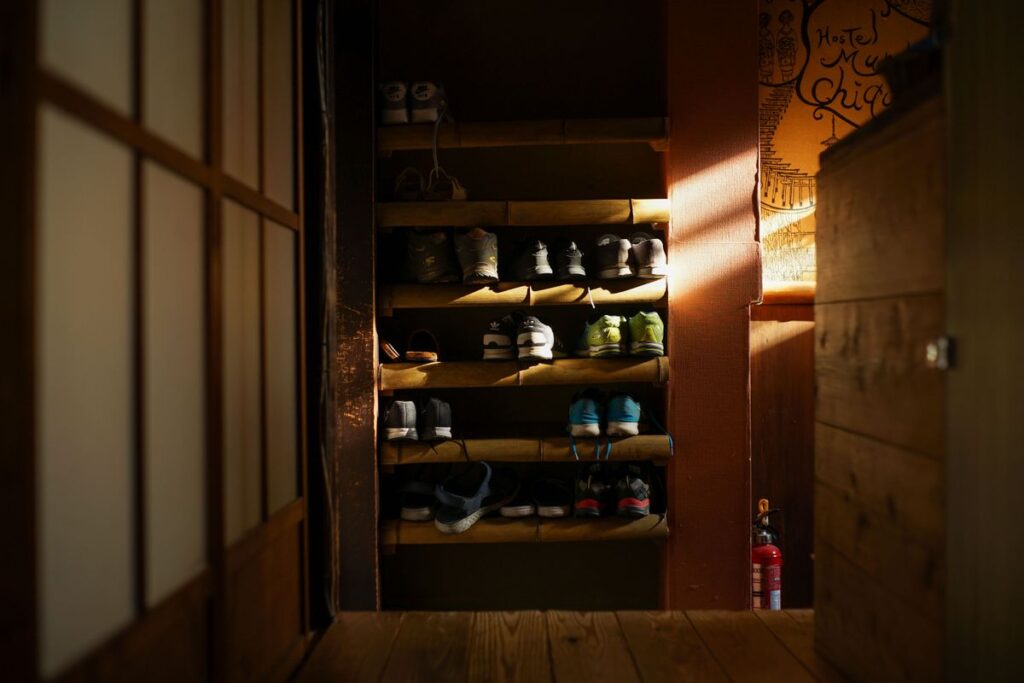
An open rack like this one shows every shoe and collects dust fast. A cover is what changes that. Photo: Pexels.
Why Pakistani Homes Choose a Covered Rack
Dust is the first reason. In most Pakistani cities, a pair of shoes left open near the door gathers a visible layer of dust in two or three days. A cover does not seal shoes airtight, but it cuts dust build-up sharply. Shoes stay cleaner between wears, and white sneakers stay white for longer.
The second reason is looks. A hallway with a covered rack looks neat from the door. Guests see a tidy fabric panel or a wooden cabinet, not a jumble of chappals, joggers and school shoes. For rented homes and small flats, that matters a lot.
The third reason is price. A fabric-covered rack costs about the same as two pairs of ordinary shoes. A wooden cabinet costs as much as a small piece of furniture. For many families, the covered rack is the sensible middle step.
There is also a practical reason people forget: protection from splashes. Near the main door, shoes can catch rain splashes in monsoon season or water from mopping. A cover stops most of that. It is not waterproof, and we explain that honestly in the dust and water section below, but it helps.
Covered Rack vs Open Rack vs Shoe Cabinet
An open rack is cheapest and easiest to use. You grab shoes and go. But it offers no dust protection and no privacy for messy shoes. A covered rack costs a little more and adds one small step — opening the zip or lifting a panel — in exchange for dust protection and a tidy look.
A shoe cabinet with doors is the best of both worlds in looks and protection, but it costs Rs 28,000 or more, needs floor space, and cannot be folded away. A fabric rack can be folded flat and moved to another room or another house. That flexibility matters for students, renters and families who move often.
Our honest view: if your budget is under Rs 5,000, buy a fabric-covered rack. If your budget is over Rs 25,000 and you own your home, look at a wooden cabinet. Spending Rs 10,000 to Rs 15,000 on a plastic rack rarely makes sense, because you get neither the low price of fabric nor the durability of wood.
Shoe Rack with Cover Prices in Pakistan: 10 Verified Options
Every price in this table was checked live on 22 November 2026 from the seller’s own product page. Prices change often, especially around sale events, so treat these as checked market prices on that date, not as a promise that the same price will be there tomorrow.
The per-pair column divides the price by the number of pairs the seller says the rack holds. Where the seller did not state a pair count, we left it blank rather than guessing. That is a deliberate choice. A guessed capacity would make the comparison look neat and be wrong.
| Seller | Product / Type | Layers | Pairs | Cover Material | Price (Rs) | Per Pair (Rs) |
|---|---|---|---|---|---|---|
| Bin Zahid Market | Covered Shoe Organizer Rack | 3 | 9 | Non-woven fabric | 2,999 | 333 |
| Bin Zahid Market | Covered Shoe Organizer Rack | 4 | 12 | Non-woven fabric | 3,499 | 292 |
| Bin Zahid Market | Covered Shoe Organizer Rack | 5 | 15 | Non-woven fabric | 3,999 | 267 |
| Bin Zahid Market | Covered Shoe Organizer Rack | 6 | 18 | Non-woven fabric | 4,499 | 250 |
| Bin Zahid Market | Covered Shoe Organizer Rack | 7 | 21 | Non-woven fabric | 4,999 | 238 |
| NoBrainer.pk | Dustproof Shoe Rack, lift-open panels | 5 | 15 | Translucent plastic panels | 3,945 | 263 |
| NoBrainer.pk | Dustproof Shoe Rack, lift-open panels | 7 | 21 | Translucent plastic panels | 4,545 | 216 |
| Habitt | Shoe Cabinet, 6-layer fabric cover | 6 | Not stated | Fabric cover, metal frame | 3,990 | Not stated |
| Daraz.pk | Dustproof stainless steel rack, 5–7 layer | 5–7 | 15–21 | Non-woven fabric, steel frame | 2,990 | 142–199 |
| Woodixa | RIVA Shoe Cabinet with doors, glass display | Cabinet | Not stated | Wooden doors, glass | 47,000 | Not stated |
The pattern is clear. Fabric-covered racks cluster between Rs 2,999 and Rs 4,999, and the price rises by about Rs 500 per extra layer. The per-pair cost falls as the rack gets bigger, from Rs 333 per pair on a 3-layer rack to Rs 238 on a 7-layer rack. If you have the floor space and the height, the bigger rack is better value.
Two notes on the table. The Daraz price of Rs 2,990 is a discounted marketplace price against a listed price of Rs 5,999, and Daraz prices vary by seller and by variant, so check the exact listing before ordering. The Habitt price of Rs 3,990 is a sale price, down from Rs 4,988. Both were live on 22 November 2026.
Prices we could not verify — left out on purpose. Two covered racks we found during research are not in the table because they were not buyable on 22 November 2026. WideTraders listed a foldable 5-tier dustproof shoe stand at Rs 4,150, but it showed as out of stock. Homducts listed an entryway rack with covered shelves and coat hooks at Rs 3,831, but it showed as sold out. We mention them here so you know they exist, but we did not present their prices as live buying options. We also did not include OLX listings, because used-rack prices on OLX change by seller and by city and cannot be checked as a fixed price.
What the Price Range Really Means
For most families, the real choice is between Rs 2,990 and Rs 4,999. That band covers every common fabric and plastic-panel rack. Below Rs 2,990, you are usually looking at a small 3-layer rack, a plastic open rack with a thin cover, or a marketplace deal that may not include delivery. Above Rs 5,000, you are paying for a brand name, a wooden cabinet, or a large multi-purpose unit with hooks and a bench.
Wooden cabinets start far higher. Woodixa lists the RIVA cabinet with doors and a glass display at Rs 47,000, the VERDE LUX at Rs 42,000 and the TERRA NOIR at Rs 38,000. PakTurk lists solid wood shoe racks from Rs 28,084 to Rs 35,376. These are custom or semi-custom furniture pieces for Rawalpindi and Islamabad, not flat-pack racks. They belong in a different budget conversation.
Delivery is a real part of the cost. Some sellers include free delivery, some charge Rs 200 to Rs 500, and furniture sellers charge far more for wooden cabinets. Always check the delivery charge before you compare two prices. A rack at Rs 3,499 with Rs 500 delivery costs more than a rack at Rs 3,990 with free delivery.
Price by Size: 3 Layer to 10 Layer
Covered racks are sold by layers. Each layer is one shelf, and each shelf usually holds 3 pairs of adult shoes placed side by side. That “3 pairs per layer” rule is the standard sellers use, and it held true across the listings we checked. Children’s shoes fit more per shelf; large men’s joggers or boots fit fewer.
| Size | Pairs (approx.) | Height (approx.) | Typical Price (Rs) | Best For |
|---|---|---|---|---|
| 3 layer | 9 pairs | About 60–70 cm | 2,999 | Single person, hostel room, small flat |
| 4 layer | 12 pairs | About 75–85 cm | 3,499 | Couple, small family |
| 5 layer | 15 pairs | About 90 cm (3 ft) | 2,990–3,999 | Family of 3–4, most popular size |
| 6 layer | 18 pairs | About 107 cm (3 ft 6 in) | 3,990–4,499 | Family of 4–5 |
| 7 layer | 21 pairs | About 124 cm (4 ft 1 in) | 4,545–4,999 | Large family, joint family home |
| 8–10 layer | 24–30 pairs | About 140–170 cm | 5,499 and above | Very large families, shops, hostels |
Heights in the table come from seller listings where stated. The NoBrainer listing, for example, gives 5 layers at 3 ft (91 cm), 6 layers at about 3 ft 6 in (107 cm) and 7 layers at 4 ft 1 in (124 cm). Where a seller did not state a height, we marked it as approximate. Measure your space before ordering, because a 7-layer rack is taller than many people expect.
The 5-layer rack is the sweet spot for most homes. It holds about 15 pairs, stands about waist to chest high, and costs under Rs 4,000. A family of four with two pairs each plus guests’ shoes fits comfortably. Go bigger only if you actually count more than 15 pairs in daily use.
Count your shoes before you buy. Walk to your door, count every pair the family uses in a normal week, then add two pairs for guests. That number, divided by three, tells you how many layers you need. Most people overestimate. A family that thinks it needs 7 layers often fits fine in 5.
Value tip: the jump from 5 layers to 7 layers costs about Rs 1,000 but adds 6 pairs of space. If you have the height in your hallway, buy one size bigger than you think you need. Shoes have a way of multiplying, and a rack that is full on day one will be overstuffed by Eid.
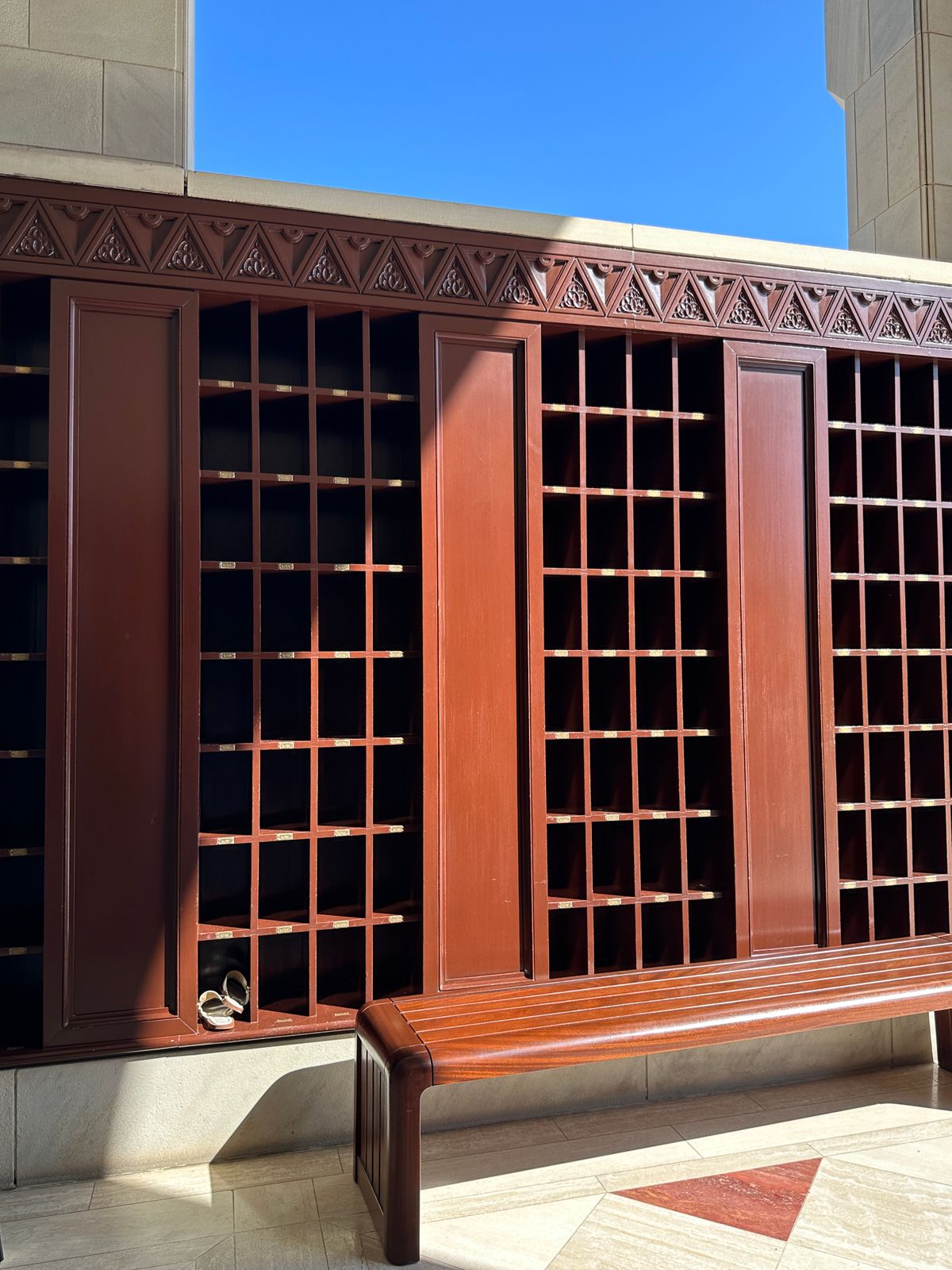
Very large families sometimes need cubby-style storage like this wall of compartments. For most homes, a 5 or 6 layer covered rack is enough. Photo: Pexels.
Cover Types Compared: Fabric, PVC, Plastic and Wood
The cover is the part that makes this product different, so it deserves the most attention. Four materials dominate the Pakistani market, and they behave very differently in daily use.
Non-Woven Fabric Cover
This is the most common cover on racks under Rs 5,000. Non-woven fabric is the same light, slightly papery material used in shopping bags and garment covers. It is light, cheap and easy to zip, and it comes in grey, black, brown and beige.
Its strengths are price and weight. A fabric-covered rack is light enough to move with one hand when empty, and the cover can be removed and washed or wiped. Its weakness is durability. Thin non-woven fabric tears at the zip corners after a year or two of daily use, and it offers no protection against a real splash of water. It stops dust, not rain.
Check the fabric thickness before buying. Sellers rarely state a GSM (grams per square metre) figure, so use the photos and the reviews instead. If buyers mention the cover tearing in the first month, believe them. A slightly heavier cover is worth Rs 300 or Rs 400 extra.
PVC Cover
PVC covers are clear or semi-clear plastic sheets, sometimes with a fabric frame. They let you see the shoes inside without opening anything, which is handy when you are in a rush. They also wipe clean with a damp cloth, which fabric does not.
The trade-off is stiffness and smell. Cheap PVC can feel stiff in winter and may carry a plastic smell for the first few days. It can also go cloudy or yellow with age, especially near a sunny window. Keep a PVC-covered rack out of direct sunlight and the cover will last longer.
Translucent Plastic Panels
This is the newer design, seen on the NoBrainer rack in our price table. Each layer has its own rigid plastic panel that lifts open. You open only the layer you need, instead of unzipping the whole front. Dust protection is good, and the panels are sturdier than fabric.
The catch is that the top layer is often open, with no panel, so the shoes you use every day sit exposed. That is a design choice, not a defect, but know it before you buy. Panels can also crack if the rack is knocked over, so this type suits a stable spot against a wall, not a busy passage where children run past.
Wooden Cabinet with Doors
A wooden shoe cabinet is furniture, not a flat-pack rack. Doors may be solid wood, MDF with laminate, or wood with a glass panel. Dust protection is the best of all four types, the look is the tidiest, and the cabinet can last a decade or more.
The price is the barrier. At Rs 28,000 to Rs 72,000, a wooden cabinet costs ten to twenty times a fabric rack. It also needs proper floor space, cannot be folded away, and may need a carpenter or the seller’s team to install it. For owners furnishing a new home, it is worth it. For renters, it usually is not.
| Cover Type | Price Range (Rs) | Dust Protection | Water Resistance | Durability | See-Through? |
|---|---|---|---|---|---|
| Non-woven fabric | 2,990–4,999 | Good | Low — dust only | 1–2 years | No |
| PVC sheet | 3,500–6,000 | Good | Moderate — splashes | 2–3 years | Yes, partly |
| Plastic lift panels | 3,945–4,545 | Good | Low — dust only | 2–3 years | Yes, partly |
| Wooden doors | 28,000–72,000 | Best | Good — with finish | 10+ years | Only with glass |
Durability figures in this table are honest estimates for normal family use, not seller claims. A fabric cover used gently in a bedroom can last three years. The same cover yanked open by children every morning may tear in six months. How your family uses the rack matters as much as what it is made of.
Zip vs Flap vs Door: Which Opening Works Best?
How the cover opens decides how pleasant the rack is to use every day. There are three common designs, and each suits a different household.
Zip Front
A full-length zip runs down the front of most fabric covers. You unzip, take shoes out, zip again. It seals best against dust, because the whole front closes. It is also the part most likely to fail. Zips snag on fabric, teeth separate, and the slider wears out.
Test the zip the day the rack arrives. Run it up and down five times. If it catches or sticks, return or exchange the rack while you still can. A zip that struggles on day one will not improve with age. Keep the zip clean — dust in the teeth is what makes it stick.
Flap Front
A flap cover lifts from the bottom or rolls up and fastens with Velcro or ties. It is simpler than a zip and has no teeth to break. The downside is the seal. A flap leaves small gaps at the sides, so a little more dust gets in. In a dusty street-facing room, that matters. In a bedroom, it does not.
Flaps suit homes with elderly users or small children, because there is nothing to snag and nothing to force. If the Velcro weakens after a year, a tailor can stitch a replacement strip for very little money.
Lift Panels and Doors
Lift panels, one per layer, let you open a single shelf without exposing the rest. Doors on a wooden cabinet close with a magnet or a handle and seal best of all. Both are the most convenient designs in daily use, and both cost more than a zip or a flap.
For a busy family hallway, lift panels are the most practical mid-price choice. For a drawing room or a new home, doors win on looks. For a tight budget, a zip cover is fine — just treat the zip gently and it will last.
Frame Strength: What Holds the Rack Up
The cover gets the attention, but the frame decides whether the rack survives a year. Most fabric racks use one of three frame types.
Stainless steel pipe frames are the best of the budget options. They resist rust, hold their shape under weight, and do not bend when the rack is full. The Daraz listing in our table uses a stainless steel frame, which is part of why it is popular. Look for the words “stainless steel” in the listing, and check buyer photos for rust spots.
Powder-coated metal frames are also good. The coating protects against rust, and the frame is usually sturdy. The risk is a thin coating that chips at the joints, letting rust start underneath. If you live in a humid area or near the sea in Karachi, this matters more.
Plastic pipe frames are the cheapest and the weakest. They are fine for light shoes and children’s footwear, but they sag under heavy men’s boots and can crack in cold weather. If a listing does not say what the frame is made of, assume plastic and price it accordingly.
Safety warning: a tall 7-layer rack full of shoes is top-heavy. If you have small children who pull at things, push the rack against a wall and keep heavy shoes on the bottom layers. A falling rack can injure a child and damage the shoes. Wooden cabinets should be fixed to the wall if the seller provides brackets. Never let children climb a shoe rack.
How Much Weight Can a Shelf Hold?
Sellers rarely publish a weight limit per shelf, so we will not invent one. What we can say from buyer experience is this: three pairs of ordinary shoes per shelf is safe on a steel frame. Three pairs of heavy boots, or four pairs crammed onto one shelf, will sag a fabric shelf over time. Spread heavy footwear across shelves, and keep the heaviest pairs at the bottom.
If a shelf starts to sag, the fix is simple. Take one pair off that shelf. A sagging shelf is a warning, not a defect to ignore. Continued overloading bends the frame pipes, and a bent frame never stands straight again.
How to Choose the Right Size for Your Family
Size is the decision most buyers get wrong, in both directions. Too small, and shoes end up on the floor beside the rack within a month. Too big, and the rack dominates a small hallway and half its shelves stay empty.
Count Pairs, Not People
Start by counting pairs, not people. A person with two pairs needs less space than a person with six. In many Pakistani homes, one person owns school shoes, office shoes, joggers, chappals and sandals. That is five pairs for one person before guests arrive.
Walk through the house and count. Check the door, the bedroom, the cupboard and the balcony. Add pairs that live in boxes or under beds. The total surprises most families. Write it down. Then divide by three to get layers, and round up, not down.
Think About Shoe Types
Not all pairs are equal. Flat chappals and khussas stack neatly and take little height. Joggers and boots are tall and wide. High heels need more shelf height so the heel does not catch the shelf above. If your family wears mostly joggers and boots, add one extra layer to your count.
Children’s shoes are small and light, so a shelf can hold four pairs of children’s shoes instead of three. But children grow fast, and their shoes grow with them. Buy for next year, not just for today.
Leave Room for Guests
Pakistani homes host guests often, and guests’ shoes need a place too. If your rack is full before guests arrive, their shoes end up in a pile by the door — exactly the mess you bought the rack to avoid. Keep one shelf, or at least half a shelf, free for guests.
If you cannot spare a shelf, keep a shoe organizer or a small mat by the door for guest shoes. It is a small habit that keeps the entrance tidy.
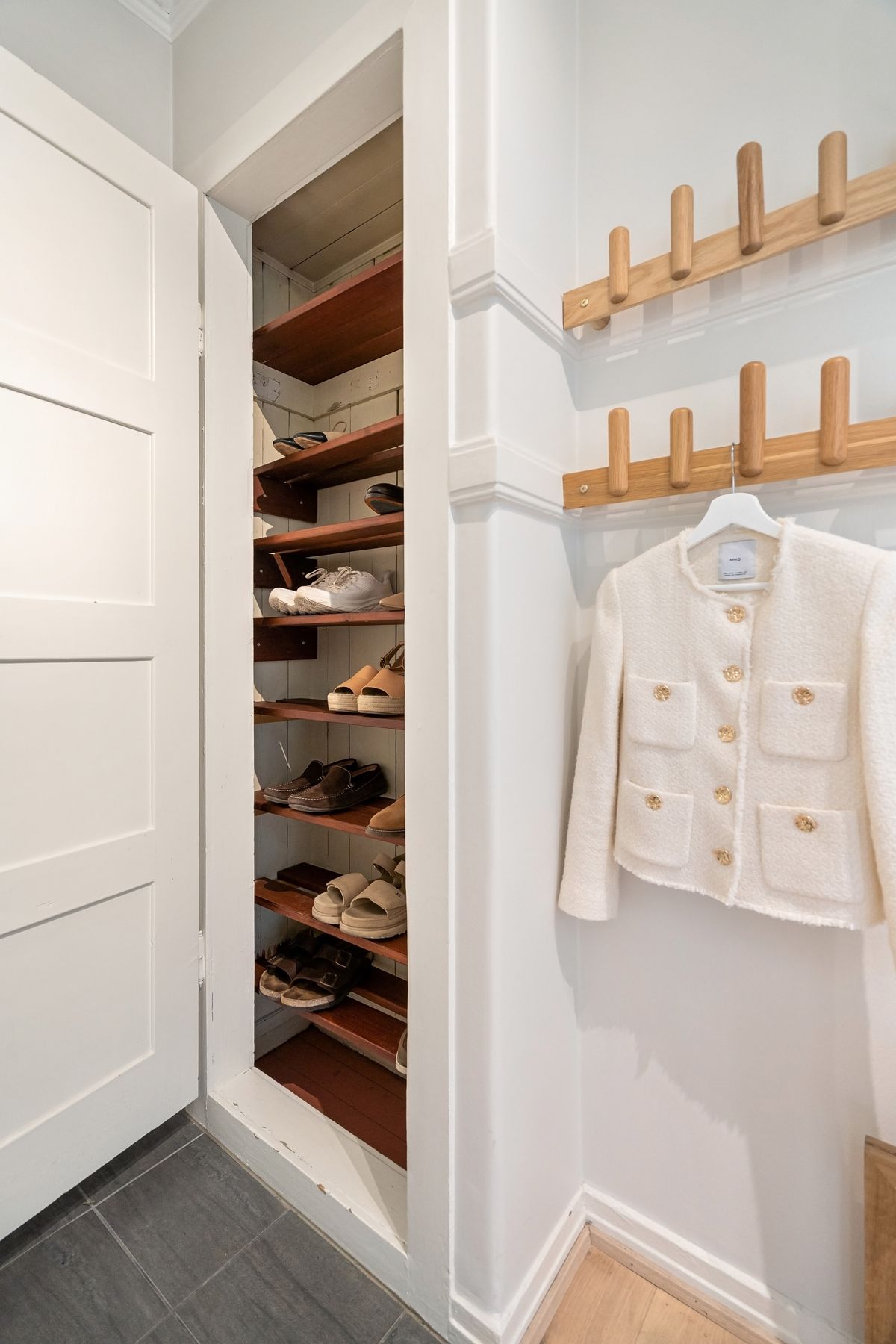
A built-in closet with a door is the fitted version of a covered rack — same idea, built into the wall. Photo: Pexels.
Measure Before You Buy: A 2-Minute Check
Measure twice, order once. It takes two minutes and saves a return. You need three numbers: width, height and depth.
Width is the wall space the rack will stand against. Most fabric racks are about 60 cm wide, which fits a standard hallway. Check the listing for the exact width, then measure your wall with a tape or even a phone charger cable laid along the floor. Leave 5 cm free on each side so the cover does not rub the wall.
Height is the number people forget. A 7-layer rack stands about 124 cm tall. That is fine in a hallway with a clear wall, but it can block a window sill or a switchboard. Measure from the floor to the lowest obstacle above the rack’s spot.
Depth is usually 30 cm for fabric racks. That is about the length of a men’s shoe. Boots and large joggers may stick out slightly at the front, which pushes against the cover. If your family wears size 11 or above, check the depth in the listing before ordering.
Quick measuring checklist: width of the wall space, height to the nearest shelf or switch, depth from the wall, and the width of the doorway the box must pass through. A flat-pack box is large. If your door is narrow, open the box in the hallway, not in the bedroom.
Where to Put a Covered Rack
The entrance hallway is the natural spot, near the door where shoes come off. A bedroom corner works too, especially for shoes you do not wear daily. A balcony is a poor choice. Sun fades fabric covers, rain finds its way in, and dust is worse outside than inside.
Keep the rack away from direct sunlight, even indoors. A sunny window will fade a dark fabric cover in a few months and make PVC covers go yellow. A shaded wall is better than a bright one.
Leave a small gap between the rack and the wall. Air needs to move behind the rack, or damp can build up in humid weather. A gap of two or three centimetres is enough.
Dust and Water Protection: What a Cover Really Does
This is where honest advice matters most, because sellers often promise more than a cover can deliver. Here is what a cover actually does.
A fabric cover keeps most dust off. In a normal home, shoes inside a covered rack stay visibly cleaner for a week or more, while shoes on an open rack need dusting every two or three days. The cover is not airtight, so fine dust still gets in slowly through the zip and the seams. Expect less dust, not zero dust.
A fabric cover is not waterproof. The NoBrainer listing says this plainly: the cover keeps dust off but is not waterproof, so keep the rack away from direct water. Treat any seller who calls a fabric rack “waterproof” with suspicion. Rain, a leaking roof or a mopped floor with standing water will soak through non-woven fabric.
PVC and plastic panels handle splashes better. A splash from mopping will run off a PVC cover. Standing water will still find its way in at the edges. Wooden cabinets with a proper finish handle water best, but even they should not stand in a wet spot.
The Smell Question
A covered rack can trap smells. Shoes that go in damp or sweaty stay damp inside a closed cover, and the smell builds up. This is the most common complaint about covered racks, and it is easy to prevent.
Let shoes air for 15 minutes before putting them in the rack. Put a small open box of baking soda (meetha soda) on the bottom shelf — it absorbs odour cheaply. Keep one pair of everyday shoes on the open top layer, if your rack has one, so they air between uses. And open the cover fully once a week to let fresh air through.
If shoes smell strongly even after airing, the problem is the shoes, not the rack. Washable shoes should be washed. Leather shoes should be aired in sunlight for an hour. No rack, covered or open, fixes smelly shoes on its own.
Assembly: What to Expect in the Box
Most fabric-covered racks arrive as a flat-pack DIY kit. The box holds metal or plastic pipes, plastic corner joints, fabric shelves, and the cover. Assembly takes 15 to 30 minutes for one person, and no tools are usually needed.
Read the instructions before you start. Lay out all the pipes and count them against the parts list. Missing parts are the most common problem with these kits, and it is far easier to report a missing pipe before assembly than after you have built half a rack.
Build the frame first, then slide the fabric shelves on, then fit the cover last. Do not force the pipes into the joints. If a pipe will not fit, check that you have the right length in the right place. Forcing a joint cracks it, and a cracked joint will not hold weight.
Wooden cabinets are different. Some arrive assembled, some need a carpenter. Ask the seller before ordering whether assembly is included, and what it costs if it is not. A Rs 47,000 cabinet with a Rs 3,000 assembly charge is still a Rs 50,000 purchase.
Assembly tip: build the rack where it will stand. A 7-layer rack is tall and awkward to carry through a doorway once built. If you must move it, empty it first and carry it with two people.
Cleaning and Care: Making the Cover Last
A covered rack needs little care, but the little it needs matters. Dust the cover once a week with a dry cloth. Wipe PVC panels with a damp cloth. Wipe the shelves every two weeks, because dust and small stones collect there and scratch shoe soles.
Non-woven fabric covers can usually be removed and hand-washed in mild soapy water. Let the cover dry fully in shade before putting it back. Never machine-wash a fabric cover unless the seller says you can — the stitching at the zip often fails in a machine.
Check the zip monthly. Brush dust out of the teeth with an old toothbrush. If the zip starts to stick, rub a candle or a bar of soap along the teeth. That old tailor’s trick works on rack zips too.
Keep the rack dry. If the cover gets wet, open it fully and let it dry before closing it again. A damp cover left closed grows a musty smell and can stain light-coloured shoes.
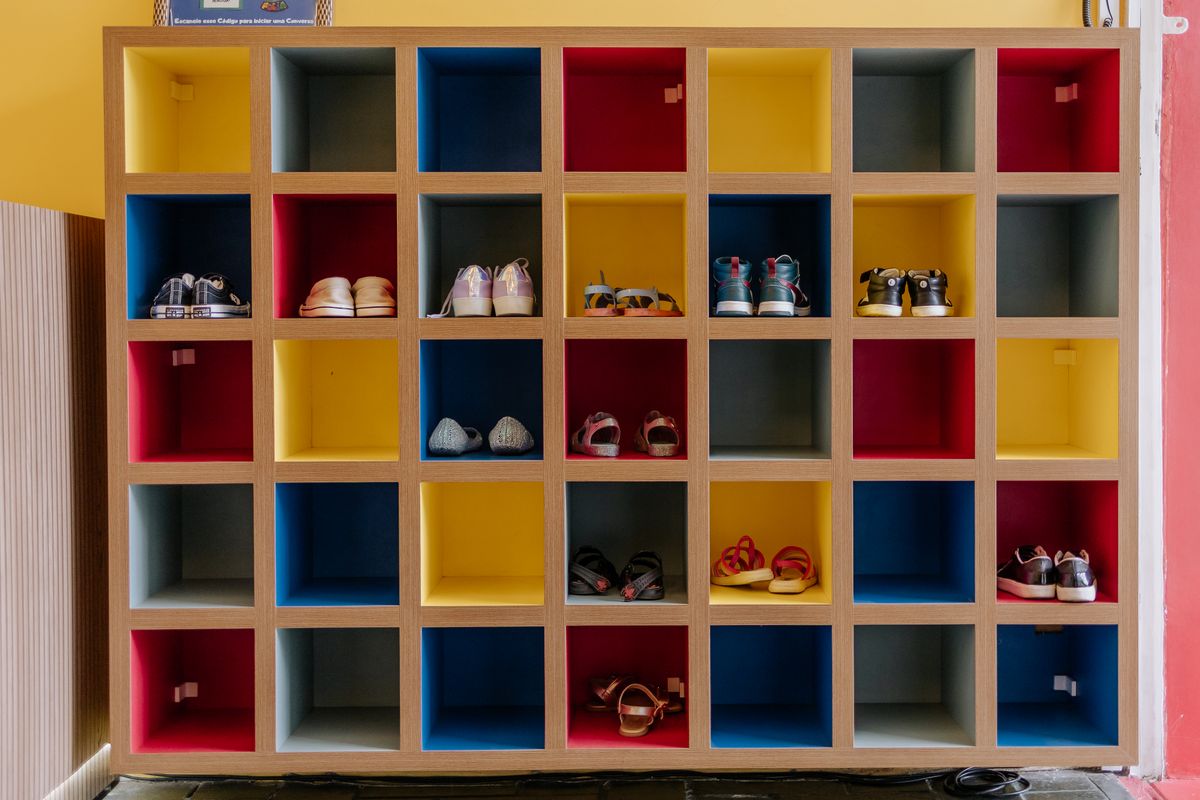
Cubby-style storage suits children’s shoes well, because each pair has its own compartment. Photo: Pexels.
City-Wise Prices: Lahore, Karachi and Islamabad
Online prices for covered racks are the same across Pakistan, because most sellers ship nationwide from one warehouse. A rack listed at Rs 3,999 costs Rs 3,999 whether you order it in Lahore, Karachi or Sargodha. What changes by city is delivery time, delivery charges, and what you can find in local markets.
In Lahore, local markets like Shah Alam Market and Akbari Mandi sell fabric racks and plastic racks in person, often Rs 200 to Rs 500 cheaper than the same rack online — but without a return policy and without delivery. Bargaining is normal there. Check the zip and the frame before paying, because market stock is sold as seen.
In Karachi, Saddar and Tariq Road shops carry a wide range of racks, and the humid sea air makes frame material matter more. A powder-coated or stainless steel frame is worth the extra money in Karachi, because a plain metal frame rusts faster near the coast. Ask the shopkeeper directly what the frame is made of.
In Islamabad and Rawalpindi, wooden shoe cabinets are easier to find than in other cities. Furniture makers in Rawalpindi, such as Woodixa, build cabinets to order, with prices from about Rs 38,000. Delivery and installation are usually arranged locally, which is simpler than ordering furniture from another city.
We could not verify separate city-wise prices for the same fabric rack from local shops, because local shops do not publish fixed prices online. The figures above are the honest position: online prices are national, local market prices vary by shop and by bargaining, and we will not present a bargained price as a fixed market rate.
Cost Breakdown: What You Actually Pay For
A Rs 3,999 fabric rack is not just a cover. Here is where the money goes, using a typical 5-layer rack as the example. These are our estimates based on the price structure of similar flat-pack products, not figures from any one seller.
| Cost Item | Approx. Share | Amount on a Rs 3,999 Rack (Rs) |
|---|---|---|
| Frame pipes and joints | About 30% | About 1,200 |
| Fabric cover and shelves | About 25% | About 1,000 |
| Packaging and box | About 5% | About 200 |
| Delivery to your door | About 10% | About 400 |
| Seller margin and marketplace fee | About 30% | About 1,200 |
Two things stand out. First, delivery is a real cost. When a seller offers free delivery, they have built it into the price. Second, the frame is the most expensive part of the rack, which is why a steel frame costs more than a plastic one. If two racks look the same but one costs Rs 500 more, the difference is usually the frame, not the cover.
The total cost of owning a covered rack is more than the purchase price. Add a small amount for care: a cloth for dusting, baking soda for odour, and perhaps a replacement cover after two years. A replacement fabric cover, if the seller stocks one, costs a few hundred rupees. That is still far cheaper than replacing the whole rack.
For a wooden cabinet, the cost breakdown is different. Materials and carpentry are most of the price, delivery and installation add several thousand rupees, and the cabinet should last ten years or more. Divide Rs 47,000 by ten years and the cost is about Rs 4,700 per year — close to buying a new fabric rack every year. The cabinet only wins if you actually keep it for a decade.
Who Should Buy One — and Who Should Avoid It
Who Should Buy a Shoe Rack with Cover
Families in dusty areas. If your street is unpaved or your home is near a main road, dust is a daily problem. A covered rack makes a visible difference within a week.
Renters and students. A fabric rack is light, cheap, folds flat, and moves with you. It is the right choice when you do not want to invest in furniture for a home you may leave.
Small flats and hostels. Where space is tight, a tall narrow rack uses vertical space well. A 5-layer rack holds 15 pairs in about 60 cm of wall width.
Homes that host guests often. A covered rack keeps the entrance looking tidy even when the family shoes inside are a mess. First impressions at the door matter.
People storing seasonal shoes. Winter boots, Eid shoes and rarely worn pairs stay cleaner inside a covered rack than on an open shelf or in a cardboard box.
Who Should Avoid It
People who grab shoes in a rush every morning. If you hate opening a zip before you leave, a covered rack will annoy you daily. An open rack, or a rack with lift panels, suits you better.
Homes with very damp rooms. If the room where the rack will stand has damp walls or poor ventilation, a closed cover traps moisture and smells. Fix the damp first, or choose an open rack.
Owners of many heavy boots. Fabric shelves sag under heavy boots. If most of your footwear is heavy work boots, a wooden cabinet or a metal open rack with solid shelves is a better buy.
Anyone expecting waterproof storage. A fabric cover is dust-proof, not waterproof. If your entrance floods in monsoon rain, no fabric rack will protect your shoes. Raise the rack off the floor or store shoes higher up.
7 Mistakes Buyers Make
1. Buying too small. The most common mistake. Count pairs properly, add guests, and round up. A rack that is full on day one is a mistake you live with every day.
2. Ignoring the frame material. Two racks can look identical in photos and differ completely in frame quality. Always check whether the frame is steel, coated metal or plastic.
3. Believing “waterproof” claims. Fabric covers are dust-proof, not waterproof. Sellers who claim otherwise are overselling. Read the fine print, or better, read buyer reviews.
4. Forgetting delivery charges. A cheap rack with expensive delivery is not cheap. Check the delivered price, not just the product price.
5. Not measuring the space. A 7-layer rack is 124 cm tall. It does not fit under every window or beside every door. Measure first.
6. Overloading shelves. Four pairs on a shelf built for three will sag the fabric and bend the frame. Spread the load.
7. Putting damp shoes away. Wet shoes inside a closed cover breed smell and mould. Air shoes first, every time.
12.12 Buying Tips: How to Save on a Covered Rack
The 12.12 sale on 12 December is one of the best times of the year to buy home storage in Pakistan. Marketplaces and home stores cut prices, offer free delivery, and bundle vouchers. A fabric rack that costs Rs 3,999 today may sell for Rs 3,499 or less on 12.12.
Start by shortlisting two or three racks now, before the sale. Note their current prices from this guide. When the sale starts, compare the sale price against the price you noted. Some sellers raise prices before a sale and then “discount” them back to the normal price. Your notes protect you from that trick.
Check the delivery terms during the sale. Free delivery offers are common on 12.12, and on a bulky flat-pack box, free delivery can save Rs 300 to Rs 500. Check the return policy too. Sale items sometimes have stricter return rules, and a rack with a faulty zip is exactly the item you may need to return.
Buy early in the sale if you can. Popular sizes like the 5-layer rack sell out during big sales. If your size is out of stock, do not accept a different size in a rush. A rack that does not fit your space is a bad buy at any price.
Finally, remember that BaBaShop does not sell shoe racks. Our covers range is where our own products live, and this guide is here to help you buy wisely from the wider market. If you need covers for your home, browse our covers range — and if you need advice on shoe storage, message us on WhatsApp at 0302-4096495 and we will help.
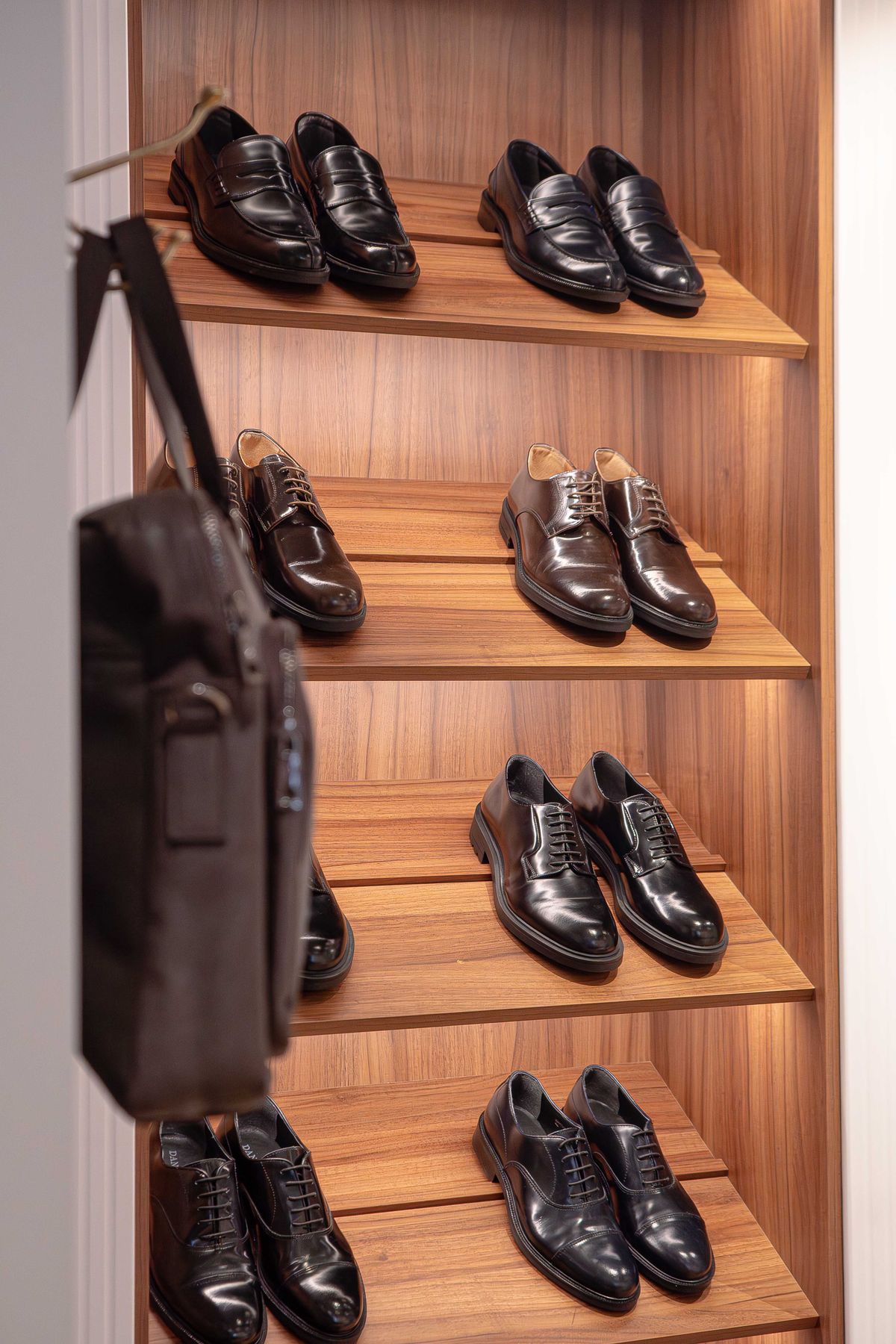
Leather shoes stay cleaner and keep their shine longer when stored behind a cover instead of on an open shelf. Photo: Pexels.
Related Guides
If you are sorting out shoe storage for your home, these guides from BaBaShop.pk will help you go further:
- Shoe Organizer Price in Pakistan — organisers for inside cupboards and under beds.
- Shoe Storage Bags Price in Pakistan — bags for seasonal shoes, travel and dust protection.
- Shoe Boxes for Sale in Pakistan — clear and stackable boxes for shoes you want to see and protect.
- L Shape Sofa Cover Price in Pakistan — covers for the rest of your home, in the same Covers theme.
For travel and small-space storage, a shoe organiser or a set of shoe storage bags can work alongside a covered rack. Use the rack for daily shoes near the door, and bags or boxes for the pairs you wear once a month.
FAQs: Shoe Rack with Cover
What is the price of a shoe rack with cover in Pakistan?
A fabric-covered shoe rack costs Rs 2,990 to Rs 4,999 in Pakistan as checked on 22 November 2026. A 3-layer rack costs about Rs 2,999, a 5-layer rack about Rs 3,999, and a 7-layer rack about Rs 4,999. Wooden shoe cabinets with doors cost far more, from about Rs 28,000 to Rs 72,000.
Which cover material is best — fabric, PVC or plastic?
Non-woven fabric is best for a tight budget and light use. PVC is best if you want to see your shoes and wipe the cover clean. Rigid plastic lift panels are best for daily use, because you open only one shelf at a time. Wooden doors are best overall, but they cost ten times more than fabric.
How many pairs does a 5-layer shoe rack with cover hold?
A 5-layer shoe rack with cover holds about 15 pairs of adult shoes, with 3 pairs on each layer. Children’s shoes fit more per shelf, and large boots or joggers fit fewer. Always count your own shoes before choosing a size.
Is a shoe rack with cover waterproof?
No. A fabric cover is dust-proof, not waterproof. It keeps most dust off and stops light splashes, but rain or standing water will soak through non-woven fabric. PVC covers handle splashes better, and wooden cabinets with a proper finish handle water best. Keep any fabric-covered rack away from direct water.
Zip cover vs door cabinet — which is better?
A zip cover is cheaper, lighter and easy to move, but the zip is the part most likely to fail. A wooden cabinet with doors looks tidier, protects better against dust, and lasts a decade, but it costs Rs 28,000 or more and cannot be folded away. For most rented homes, a zip cover is the practical choice. For a home you own, a cabinet is worth considering.
Where can I buy a shoe rack with cover in Pakistan?
You can buy one online from Daraz.pk, Bin Zahid Market, NoBrainer.pk and Habitt, all of which had live listings on 22 November 2026. You can also buy in person from markets like Shah Alam Market in Lahore and Saddar in Karachi, where bargaining is normal but returns are harder. BaBaShop does not sell shoe racks.
How do I clean a fabric shoe rack cover?
Dust the cover weekly with a dry cloth. Remove it and hand-wash it in mild soapy water if it gets dirty, then dry it fully in shade before putting it back. Never machine-wash a fabric cover unless the seller says you can. Brush dust out of the zip teeth with an old toothbrush so the zip keeps running smoothly.
Does a covered shoe rack stop bad smell?
No, a cover does not stop smells by itself, and it can trap them if shoes go in damp. Let shoes air for 15 minutes before putting them away, keep a small open box of baking soda on the bottom shelf, and open the cover fully once a week. Smelly shoes need washing or airing in sunlight — no rack fixes that on its own.
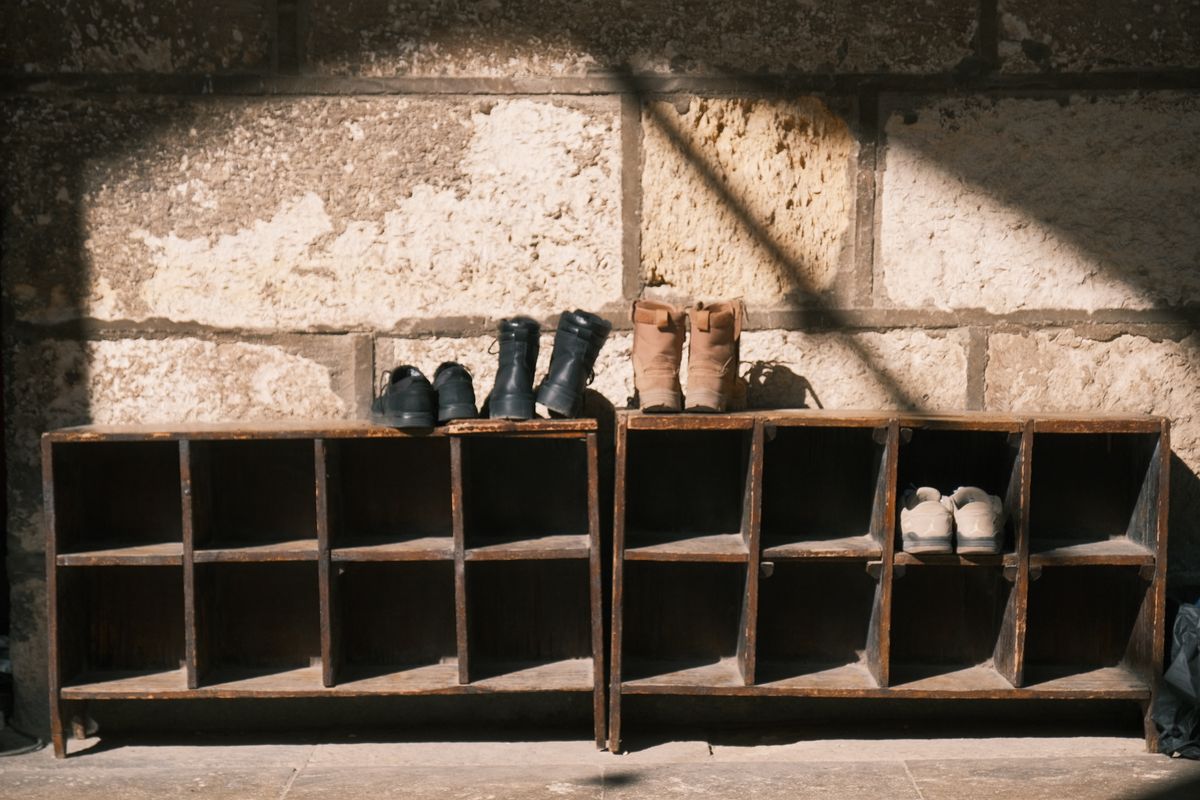
An old open rack against a stone wall shows why a cover matters: dust and weather reach every shoe. Photo: Pexels.
Conclusion
A shoe rack with cover is one of the simplest upgrades a Pakistani home can make. For Rs 2,990 to Rs 4,999, you get a tidy hallway, cleaner shoes and less daily dusting. The 5-layer fabric rack at about Rs 3,999 is the right choice for most families, holding about 15 pairs in a small footprint.
Choose the size by counting your pairs, not by guessing. Pick a steel frame over a plastic one. Treat the zip gently, air your shoes before putting them away, and keep the rack out of direct sun and water. If your budget stretches past Rs 25,000 and you own your home, a wooden cabinet with doors is the long-term answer.
The shoe rack with cover price in Pakistan is stable, the options are clear, and the 12.12 sale is a good time to buy. Shortlist your size now, note the price, and check it again when the sale starts. Your hallway will thank you.
Methodology: How We Checked Prices
All prices in this guide were checked live on 22 November 2026 from the sellers’ own product pages: Bin Zahid Market, NoBrainer.pk, Habitt, Daraz.pk (via a marketplace listing), WideTraders, Homducts, Woodixa and PakTurk. We did not use prices from any other guide, and we did not copy the price table from our earlier open-rack guide (post 4842). Where a seller did not state a pair count or a height, we said so instead of guessing.
Two listings were excluded from the price table because they were not buyable on the check date: WideTraders at Rs 4,150 (out of stock) and Homducts at Rs 3,831 (sold out). OLX prices were not used, because used-rack prices vary by seller and city and cannot be checked as a fixed price.
An honest note on search volume: the keyword “shoe rack with cover” gets about 170 searches a month in Pakistan at KD 7. That is below our usual rule of 1,000+ searches a month for new articles. We published this guide anyway because it is a distinct product from our open-rack guide, the 12.12 Covers theme needs it, and readers searching for covered racks deserve an accurate answer rather than being sent to a general rack guide. The low volume is stated here openly, not hidden.
Transparency Note
BaBaShop does not sell shoe racks, covered or open. The prices in this guide are market prices from other sellers, checked on 22 November 2026. They can change without notice, especially during sale events. Always confirm the price, delivery charge and return policy on the seller’s page before ordering.
BaBaShop.pk is a shop in Sargodha — Shop No: 85, General Bus Stand, near Gosia Masjid, Jinnah Colony, Sargodha, Punjab, Pakistan 40100. On our own products, delivery is weight-based at Rs 200 per 0.5 kg slab (not a flat Rs 200), cash on delivery is available across Pakistan, and Raast online payment gets Rs 50 off. Those terms apply to BaBaShop products, not to the shoe racks in this guide.
Need help choosing home covers?
Browse our covers range or message us on WhatsApp at 0302-4096495 — we reply with honest advice, even when the product you need is not one we sell.