Pink salt in Pakistan costs between Rs 65 for a 400 g supermarket pouch and Rs 375 for a 1 kg coarse refill. A good everyday 1 kg pack of Himalayan pink salt costs Rs 150 to Rs 230. That is the short answer. The rest of this guide shows you which packs are worth the money, how to use pink salt in Pakistani cooking, and how to spot the fake stuff — because a pink packet is not proof of anything on its own.
Pink salt is not an imported luxury. It is mined in Pakistan, in the Salt Range of Punjab, at Khewra — one of the oldest salt mines in the world. The same pink crystals that sell for high prices abroad sit on our own supermarket shelves for less than a cup of chai. The catch is that the market is full of mixed claims. Some packs are genuine food-grade salt. Some are decorative rocks sold in food-looking bags. Some carry big health promises that no study supports.
This guide covers real prices checked live on 20 November 2026. Every price in the table below comes from a Pakistani seller page or a published Pakistani price guide we opened the same day. No guessed figures. No old listings. Where a price could not be checked, we say so plainly.
Roman Urdu mein isay aam tor par gulabi namak ya sendha namak kaha jata hai — is guide mein aap ko “pink salt” aur “gulabi namak” dono naam milenge, ek hi cheez ke liye.
Quick answer: pink salt in Pakistan 2026
- Rs 65 — lowest verified price: Falak Himalayan pink salt, 400 g pouch (Al-Fatah online).
- Rs 75 — National Iodized Himalayan pink salt, 800 g pouch — the cheapest iodized option we found.
- Rs 100 — Shan Taest, Hamdard and HubSalt, all 800 g packs — the standard supermarket price.
- Rs 150–Rs 230 — the honest 1 kg range: ALBAIG Rs 150, Gowara Foods Rs 170, Riwayat Foods Rs 199, Organic Pearls Rs 230.
- Rs 265–Rs 375 — premium 1 kg packs: The Salt Company Rs 265, unbranded coarse refill Rs 375.
- Rs 9.38 per 100 g — the cheapest per-100 g price in our table (National, 800 g at Rs 75). Small 125 g packs cost up to Rs 108 per 100 g.
- Best value for most homes: one 800 g branded pouch at Rs 75–Rs 100 — iodized if you want iodine, fine ground if you cook daily.
- Health, in one line: pink salt is about 97–98% sodium chloride, just like table salt. Its trace minerals are too small to matter at normal serving sizes — a peer-reviewed study found you would need to eat more than 30 g a day before they added up to anything.
In this guide:
- Himalayan Pink Salt Price in Pakistan 2026: Full Table
- What Is Pink Salt? Khewra and the Pink Colour
- Pink Salt vs Table Salt: The Honest Comparison
- Nutrition: What Is Really in Pink Salt?
- Himalayan Pink Salt for Cooking: How Pakistanis Use It
- How to Spot Fake Pink Salt: 7 Checks
- How to Choose the Right Pack
- Full Cost Breakdown: What a Kilo Really Costs You
- Where to Buy: Online vs Local Market
- City-Wise Buying Notes
- Storage, Care and Safety
- Who Should Buy — and Who Should Avoid It
- 7 Common Mistakes to Avoid
- Related Guides from BaBaShop.pk
- Where to Go Next
- FAQs: Pink Salt in Pakistan
- Conclusion
- Methodology and Transparency
Himalayan Pink Salt Price in Pakistan 2026: Full Table
The table below lists every price we could verify live on 20 November 2026. The “Per 100 g” column matters more than the pack price. A 400 g pouch at Rs 65 looks cheap, but an 800 g pouch at Rs 75 is cheaper per gram. Always divide before you decide.
All twelve rows are edible, food-grade salt sold for cooking. Bath salt and lamp salt are not in this table. They are not food, even when the bag looks the same.
| Brand / Product | Pack size | Price | Per 100 g | Seller / Source | Availability note |
|---|---|---|---|---|---|
| National Iodized Himalayan Pink Salt | 800 g pouch | Rs 75 | Rs 9.38 | Al-Fatah online, via WhatIsPrice.pk | Iodized; cheapest per 100 g in our table |
| Falak Himalayan Pink Salt | 400 g pouch | Rs 65 | Rs 16.25 | Al-Fatah online, via WhatIsPrice.pk | Lowest pack price; small pouch |
| Shan Taest Virgin Himalayan Pink Salt | 800 g pouch | Rs 100 | Rs 12.50 | Al-Fatah online, via WhatIsPrice.pk | Standard supermarket price |
| Hamdard Himalayan Pink Salt | 800 g pouch | Rs 100 | Rs 12.50 | Naheed.pk, via WhatIsPrice.pk | Standard supermarket price |
| HubSalt Himalayan Pink Table Salt | 800 g pouch | Rs 100 | Rs 12.50 | Naheed.pk, via WhatIsPrice.pk | Table-salt grind, ready to use |
| Himalayan Chef Pink Salt, Coarse | 454 g (1 lb) | Rs 70 | Rs 15.42 | WBM Mart | Coarse crystals; needs a grinder |
| ALBAIG Himalayan Pink Salt | 1 kg pouch | Rs 150 | Rs 15.00 | ALBAIG Trading Company | COD available; Khewra origin stated |
| Gowara Foods Himalayan Pink Salt | 1 kg (also 400 g at Rs 100) | Rs 170 | Rs 17.00 | Gowara Foods | Free delivery above Rs 2,500; COD available |
| Riwayat Foods Himalayan Pink Salt | 1 kg (also 2 kg at Rs 349) | Rs 199 | Rs 19.90 | Riwayat Foods brand store, via WhatIsPrice.pk | 2 kg pack is cheaper per gram (Rs 17.45/100 g) |
| Organic Pearls Powdered Pink Salt | 1 kg | Rs 230 | Rs 23.00 | Organic Pearls | In stock; fine powder, delivery 24–48 hours |
| The Salt Company Natural Himalayan Rock Salt | 1 kg | Rs 265 | Rs 26.50 | Al-Fatah online, via WhatIsPrice.pk | Premium rock salt; whole crystals |
| Unbranded Pink Coarse Salt Refill | 1 kg | Rs 375 | Rs 37.50 | Al-Fatah online, via WhatIsPrice.pk | Highest per-100 g in our table; coarse refill |
*Per-100 g figures are our own maths — price divided by pack weight — not seller claims. Delivery charges are extra on most orders. The National 800 g pouch at Rs 75 is the cheapest per gram we verified, but it is a supermarket price from Al-Fatah online, so check your own store before you travel for it.
Key takeaway: Everyday Himalayan pink salt in Pakistan costs Rs 65 to Rs 375 per pack, and Rs 9.38 to Rs 37.50 per 100 g. The gap between the cheapest and dearest 1 kg pack is more than double — Rs 150 against Rs 375 — for what is, chemically, almost the same salt. Pay for the grind, the brand, and the packaging. Do not pay extra for health promises.
What the price range really means
Rs 65 to Rs 100 is the supermarket range. National, Falak, Shan, Hamdard and HubSalt all sell 400 g or 800 g pouches in this band. These are the packs most Pakistani homes actually buy. They are sealed, labelled, and made for the kitchen. The National 800 g pouch at Rs 75 is the standout: it is iodized, which matters for iodine intake, and it is the cheapest per 100 g in the whole table.
Rs 150 to Rs 230 is the online 1 kg range. ALBAIG at Rs 150, Gowara Foods at Rs 170, Riwayat Foods at Rs 199, Organic Pearls at Rs 230. These sellers ship across Pakistan and take cash on delivery. The salt is the same mineral. The extra rupees buy a bigger pack, a finer grind, or a nicer bag — not a different salt.
Rs 265 to Rs 375 is the premium range. The Salt Company at Rs 265 and the unbranded coarse refill at Rs 375. The unbranded refill is the odd one: it costs more per gram than any branded pack in the table, with no brand on the bag to justify it. If a shop charges Rs 375 for an unbranded kilo, ask what you are paying for. A brand name at Rs 150 is a better buy than a nameless bag at Rs 375.
Prices we checked but left out of the table
Some prices looked real but did not belong in a like-for-like table, so we left them out rather than guessing. Fresh Street Himalayan Pink Salt X Fine, 125 g, is listed at Rs 135 — that is Rs 108 per 100 g, nearly twelve times the National pouch, because a tiny pack carries the same packaging cost as a big one. Organicles Himalayan Pink Salt, 400 g, is listed at Rs 350 — Rs 87.50 per 100 g — a premium price for a small pack. One Organics Himalayan Pink Salt Powder is listed at Rs 200, but it was out of stock when we checked, so you cannot buy it at that price today. Falak Pink Rock Salt, 200 g, is listed at Rs 645 — far above every other Falak pack — which suggests a grinder jar with packaging included, not plain salt, so we do not compare it against pouches. HubSalt also sells a pink bath salt at Rs 200–Rs 250 per kilo. That is not food. Never cook with bath salt, whatever the bag says.
We also could not verify a single live Daraz listing price for a named pink salt brand on 20 November 2026. Daraz search results pointed to wholesale export listings and aggregator pages, not one clear retail product page with a price we could read. Daraz does sell pink salt, and prices there move with vouchers and flash sales, so check the listing on the day you buy — but we will not print a Daraz price we did not see.
What Is Pink Salt? Khewra and the Pink Colour
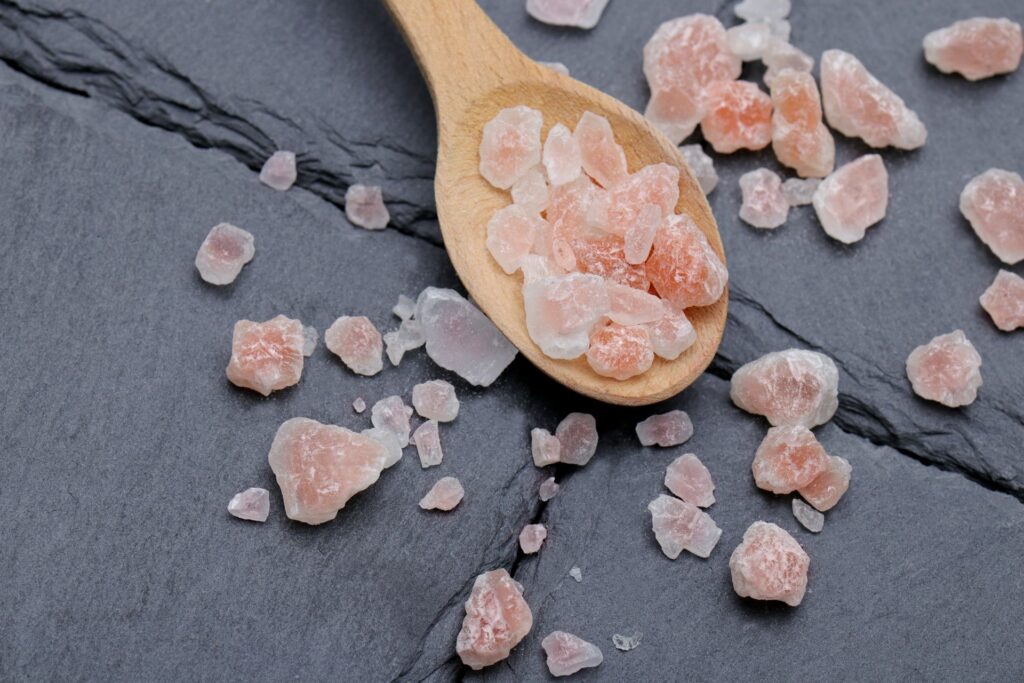
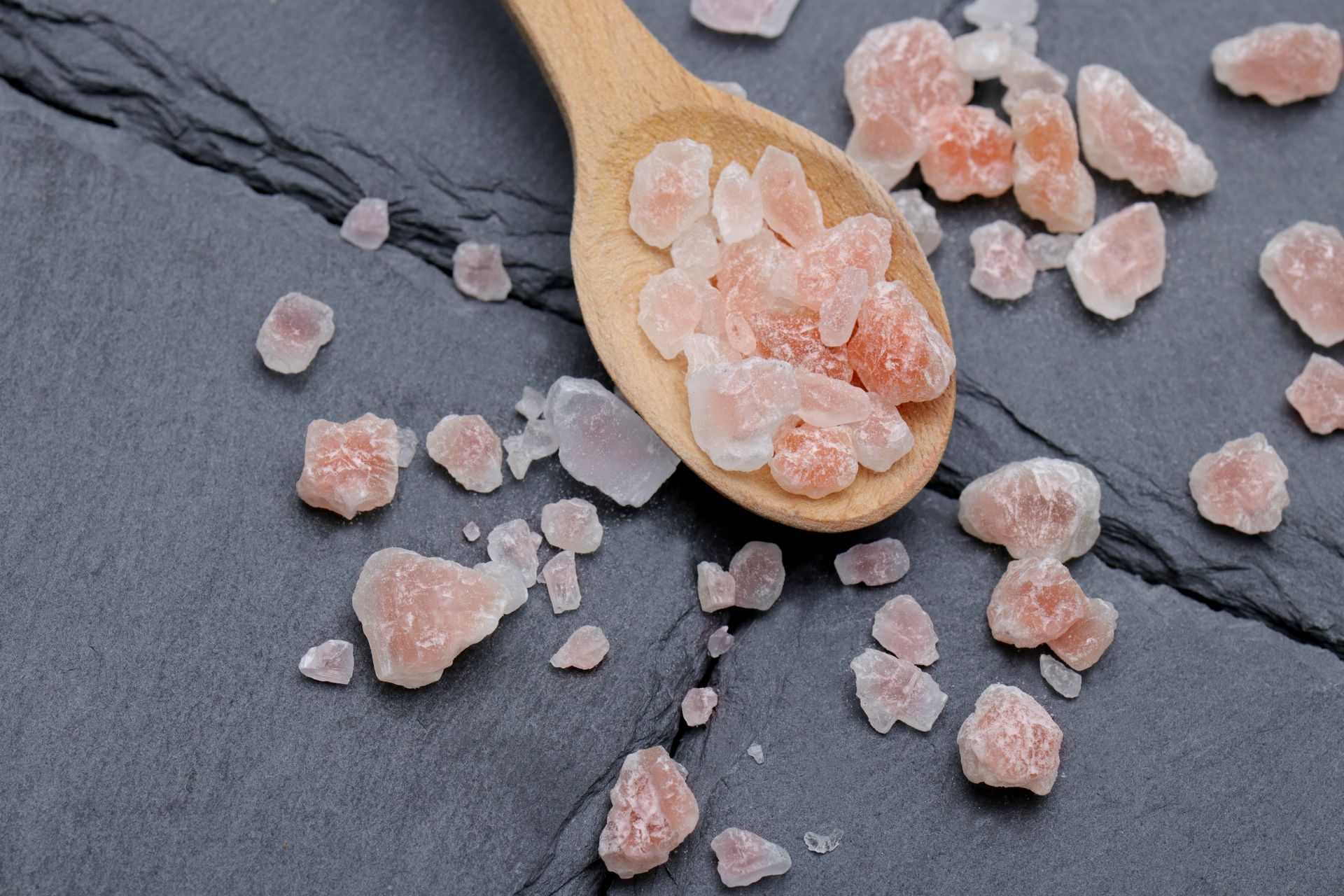
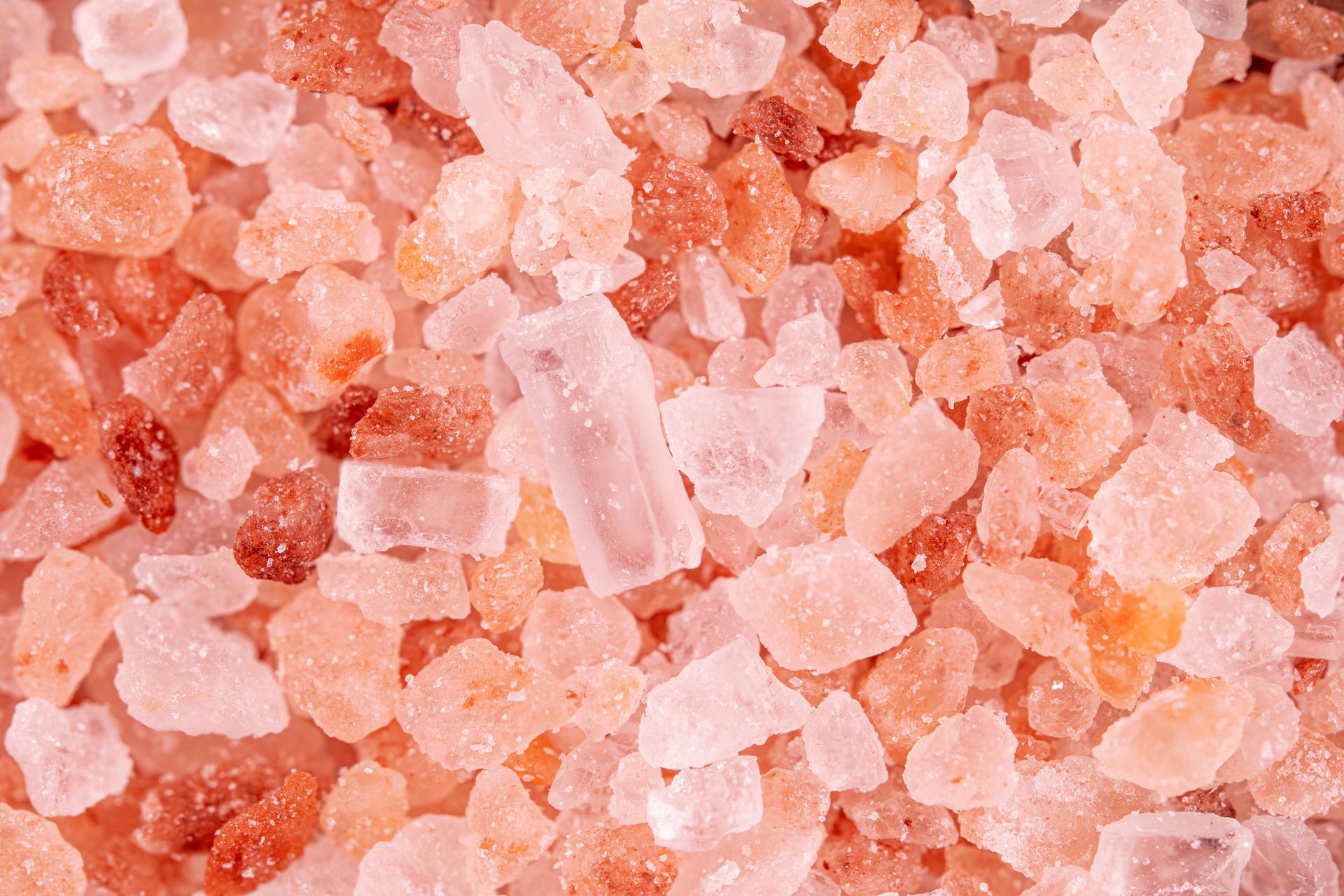
Pink salt is rock salt. It is mined, not made. The pink colour comes from iron oxide — the same compound that makes rust pink-red — plus tiny amounts of other minerals in the rock. The colour varies from seam to seam. Some crystals are pale pink. Some are deep rose. Some are nearly white. Colour alone tells you nothing reliable about quality, purity, or price. A dark crystal is not automatically more nutritious, and a pale powder is not automatically inferior.
Most of the world’s pink salt comes from Pakistan. The Khewra Salt Mine, in the Salt Range of Punjab, is the main source. The Pakistan Mineral Development Corporation (PMDC) identifies Khewra as a major source of white, pink and reddish rock salt, and lists edible pink salt in granular and powder forms. PMDC describes Khewra rock salt as mostly sodium chloride, with an average salt purity of about 98% at the mine. That is mine-level information, not a laboratory certificate for every retail packet. A bag that says “Khewra” without a traceable supplier is a claim, not proof.
Do not assume every pink packet in Pakistan came from Khewra. PMDC lists salt operations in other places too, including Warcha and Kalabagh. Commercial packets may use broad marketing words and pass through different processors and packers. If genuine Khewra origin matters to you, look for a traceable origin statement and supplier details on the pack. A printed mountain picture is not proof.
The three forms you will meet in shops
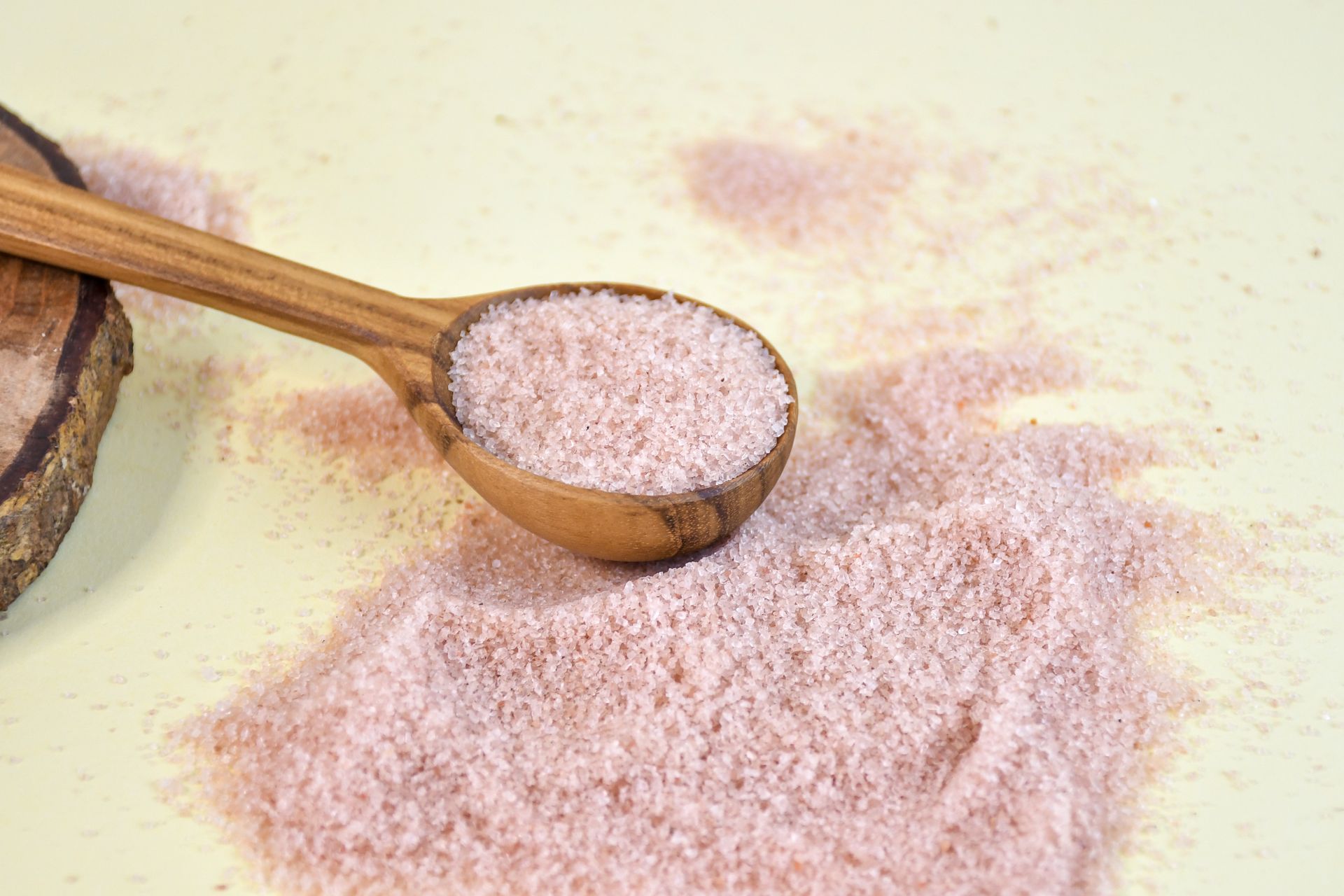
Fine powder. Ground salt, ready for the pot and the table. This is the form most homes need. It dissolves fast, measures easily, and works in every Pakistani dish. National, Shan, Hamdard and HubSalt pouches are fine powder.
Coarse crystals. Small pink rocks, from a few millimetres across. These suit a salt grinder, or a dish where you want a crunch of salt at the end. Himalayan Chef coarse at Rs 70 for 454 g and the unbranded coarse refill at Rs 375 are this form. Do not throw coarse crystals into a salan and expect them to dissolve like powder. They take time, and uneven pieces mean uneven saltiness.
Raw rock pieces. Large lumps, sometimes sold by the kilo for further processing. These are not ready to eat. They need grinding, and the grinder must be built for hard crystals. A cheap plastic grinder can crack on raw rock salt. Buy the ground form unless you own a proper mill.
Then there are the non-food forms: salt lamps, bath salt, spa blocks, and decorative rocks. These share the same mineral origin, but they are not food. They may carry adhesives, coatings, or handling histories that make them unfit to eat. Buy salt that is labelled for food use, from a traceable seller. A shared origin does not make two products interchangeable.
Tip: For a first purchase, buy one fine 800 g pouch from a supermarket brand — National at Rs 75 if it is iodized, or Shan, Hamdard or HubSalt at Rs 100. Use it for a month. Only then decide whether you want coarse crystals and a grinder. Most homes never need the grinder.
Pink Salt vs Table Salt: The Honest Comparison
This is the comparison every buyer asks about, and the answer is simpler than the marketing suggests. Pink salt and table salt are both, almost entirely, sodium chloride. The difference is what else is in the bag, and how much of it you actually eat.
| Feature | Himalayan pink salt | Ordinary iodized table salt |
|---|---|---|
| Sodium chloride | About 97–98% | About 99%+ |
| Colour | Pink to reddish, from iron oxide | White |
| Processing | Mined, washed, ground; little refining | Refined, with anti-caking agents |
| Iodine | Usually NOT added — check the label | Added (iodized) in most Pakistani brands |
| Trace minerals | Calcium, magnesium, potassium, iron — in tiny amounts | Almost none, beyond the added iodine |
| Sodium per 100 g | About 38,000–39,000 mg | About 39,000 mg |
| Taste | Mild, slightly earthy; coarse crystals crunch | Clean, sharp, uniform |
| Typical price (800 g–1 kg) | Rs 75–Rs 375 | Rs 50–Rs 100 (National refined salt 800 g is about Rs 60–Rs 80) |
| Best for | Finishing, grinders, chaat, raita, pickles | Daily cooking, baking, iodized nutrition |
The honest summary is this: pink salt is not healthier than table salt in any way that matters at the amounts you eat. It has slightly less sodium per gram and more trace minerals, but the minerals are present in such small quantities that they make no real difference to your diet. The one real nutritional difference runs the other way — most pink salt is not iodized, while ordinary table salt is. If you replace iodized salt with pink salt completely, you lose an important source of iodine.
That does not make pink salt bad. It makes it a flavour and texture choice, not a health upgrade. Buy it because you like the taste, the look, or the crunch — not because a label promises minerals your body will never notice.
The iodine question, in plain words
The World Health Organization recommends that the salt people eat should be iodized, and that adults keep total salt intake below 5 grams a day. Iodine matters for the thyroid, and for children’s growth and brain development. Pakistan has had iodine deficiency problems in the past, which is why iodized salt is the standard here.
Pink colour does not mean iodine. A salt can contain trace minerals and still give you no dependable iodine at all. If iodine matters to your household — and for most families with children, it should — check the pack. If it says “iodized”, you are covered. If it does not, keep iodized table salt for daily cooking and use pink salt as a second salt for finishing and flavour. The National Iodized Himalayan pink salt pouch at Rs 75 gives you both: pink salt and iodine, in one bag.
Nutrition: What Is Really in Pink Salt?
Here are the numbers, from a real study, not from a label. In 2020, researchers at Nutrition Research Australia and several Australian universities published a laboratory analysis of 31 commercial pink salt samples sold in Australia, alongside an iodized white-salt control. They used mass spectrometry to measure 25 minerals. The paper is Fayet-Moore et al., “An Analysis of the Mineral Composition of Pink Salt Available in Australia”, published in the journal Foods in 2020 (volume 9, issue 10, article 1490; PMID 33086585).
What they found: pink salt did contain more calcium, magnesium, potassium, iron and manganese than the white table salt, and slightly less sodium — about 8% less by weight on average. But the amounts were so small that they did not matter. The authors worked out that a person would need to eat more than 30 grams of pink salt a day — about six teaspoons — before the minerals added up to anything meaningful for daily nutrient needs. That much salt would overshoot sodium targets by hundreds of percent; the authors put it at 592% of the recommended sodium limit. In short, you would poison yourself with sodium long before the minerals helped you.
The “84 trace minerals” claim you see on many labels has no published analysis behind it. The Australian study screened for 25 elements and found many of them only in trace amounts, some not at all. A separate laboratory check of 15 commercial Himalayan crystal salt samples found roughly 98% sodium chloride and only ten elements in total beyond sodium and chloride, most in the smallest traces. The marketing number is bigger than the measured number.
| Nutrient (per 100 g) | Himalayan pink salt | Ordinary table salt | What it means |
|---|---|---|---|
| Sodium | About 38,000–39,000 mg | About 39,000 mg | Almost identical; both are salt first |
| Sodium chloride | About 97–98% | About 99%+ | The rest is trace minerals and moisture |
| Calcium | Trace — a few hundred mg at most | About 1.4 mg | Far below the 1,000 mg daily need |
| Potassium | Trace — tens of mg | About 0.5 mg | Far below the 3,500 mg daily need |
| Magnesium | Trace — tens of mg | Almost none | Far below the 300–400 mg daily need |
| Iron | Trace — a few mg | 0 mg | Far below the 8–18 mg daily need |
| Iodine | Not added (unless labelled iodized) | Added in iodized brands | The one real gap — check the label |
| Protein, fat, carbohydrate | 0 g | 0 g | Salt has no calories and no macros |
*Mineral figures for pink salt are ranges drawn from the published laboratory analyses cited above. Exact amounts vary widely from brand to brand and from batch to batch, which is itself the point: no two pink salt samples have the same mineral profile, and none of them has enough to matter at a normal serving size. A teaspoon of pink salt is about 5 grams. At that serving, every mineral except sodium supplies only a tiny share of daily needs.
The World Health Organization’s position is the clearest expert guidance we found, and it is worth quoting directly: WHO recommends that adults consume less than 5 grams of salt a day, and that the salt consumed should be iodized. That is the standard against which every salt claim should be measured. Pink salt is not exempt from it, and no trace mineral changes it.
Safety note: Pink salt is still salt. A gram of sodium chloride delivers the same sodium whatever its colour. High sodium intake is linked to raised blood pressure and heart disease. The pink colour is not a licence to use more. If a doctor has told you to limit salt, that advice applies to pink salt exactly as it applies to white salt. If you have kidney disease, heart disease, or high blood pressure, ask your doctor before changing your salt — do not take a buying guide’s word for it.
Claims we do NOT repeat
You will see pink salt credited with detoxing the body, balancing pH, improving sleep, curing disease, and helping weight loss. None of these claims is supported by the published evidence we found. The Fayet-Moore study is a mineral analysis, not a health trial — it measured what is in the salt, not what the salt does to people. There is no published clinical trial showing pink salt treats or prevents any disease. A viral “pink salt drink” for weight loss has no scientific evidence behind it, and higher sodium intake is in fact linked with obesity and cardiovascular risk, not weight loss.
We have not tested pink salt in a laboratory, and we have not home-tested these brands. What this guide reports is the published science, the labelled prices, and general kitchen practice. Where a claim cannot be verified, we say so instead of repeating it.
Himalayan Pink Salt for Cooking: How Pakistanis Use It
Pink salt works in every dish white salt works in. The taste is close enough that most people cannot tell the difference in a cooked salan. The difference shows in dishes where salt is added at the end, where you can see it and feel it. That is where pink salt earns its place.
Where pink salt shines
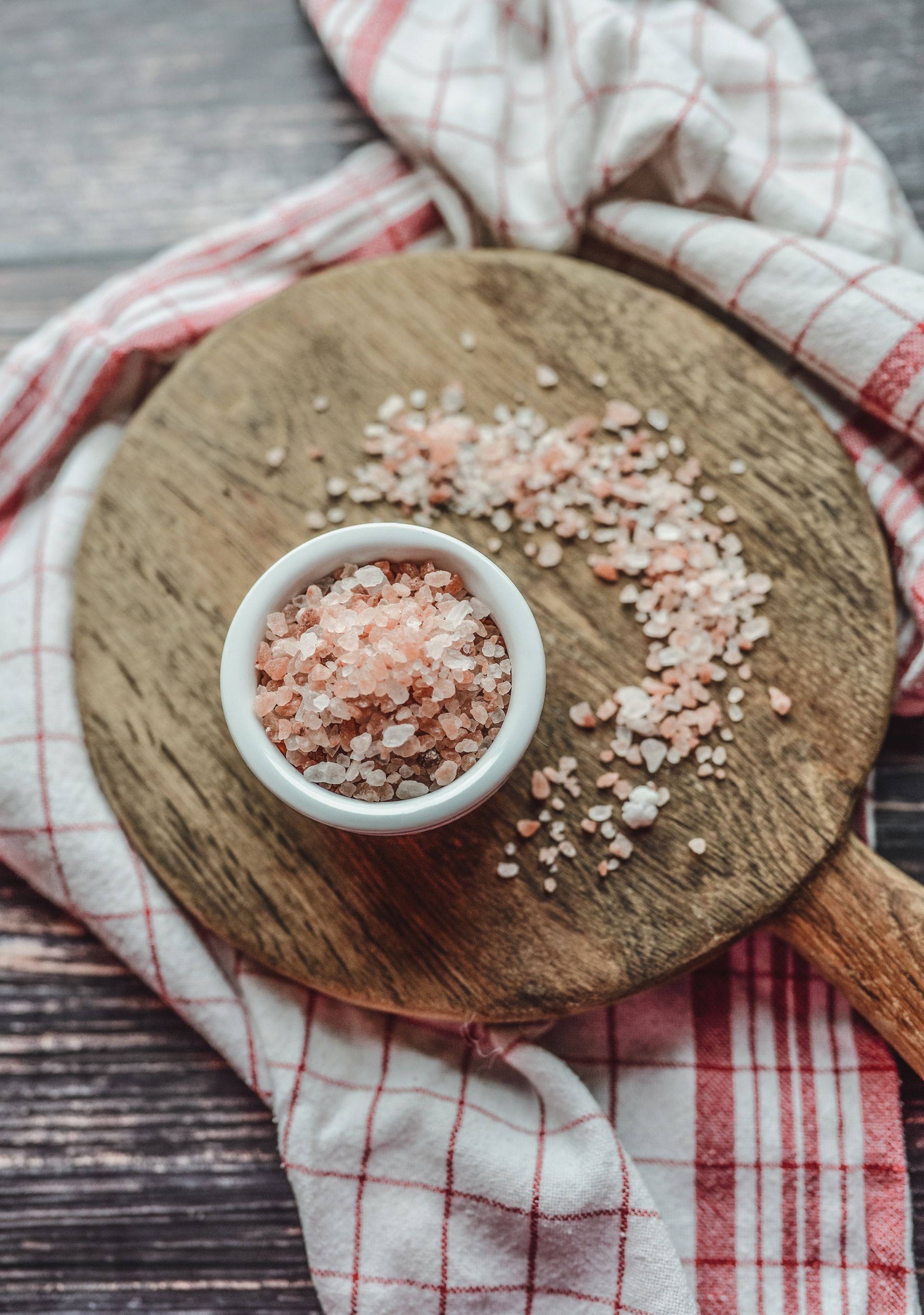
Chaat and fruit chaat. A pinch of coarse pink salt over chaat, dahi bhallay, or a plate of sliced guava and oranges gives a crunch and a mild mineral taste that fine white salt cannot match. This is the single best use of pink salt in a Pakistani kitchen.
Raita and dahi. Fine pink salt dissolves cleanly into yoghurt and gives raita a soft pink tint. It looks good on the table, and the taste is gentle. Add it last, after the yoghurt is whisked, and stir once.
Pickles (achaar). Pink salt is a traditional choice for pickles, including mango and lemon achaar. Its larger crystals dissolve slowly, which suits a pickle that sits for weeks. Use food-grade salt only, and keep the jar dry.
Sattu and summer drinks. A pinch of pink salt in sattu, lassi, or lemonade is an old habit in Punjab, and it works: a little salt sharpens the drink and replaces what sweat takes out. Keep the pinch small — a quarter teaspoon per glass is plenty.
Grilled meat and BBQ. Coarse pink salt on seekh kebab, tikka, or grilled chicken adds a crust and a visual finish. Add it in the last minutes of cooking, not at the start, so the crystals survive.
Finishing salads and fries. A pinch of flaky or coarse pink salt over a salad, or over fries, gives texture that fine salt cannot. This is the restaurant trick, and it works at home for the price of one grinder.
Where white salt is the better tool
Daily salan and daal. Fine white iodized salt dissolves evenly, measures the same every time, and carries iodine. Pink salt does the same job, but costs more per gram and, unless iodized, gives up the iodine. For the pot you cook in every day, iodized salt is the practical pick.
Baking. Bread, naan, cakes, and biscuits need salt that dissolves evenly and measures precisely. Fine white salt wins. Coarse pink crystals dissolve unevenly and can leave salty spots in a bake.
Recipes measured by volume. A teaspoon of coarse pink salt weighs less than a teaspoon of fine table salt, because the crystals leave air gaps in the spoon. If a recipe says one teaspoon of salt, and you use coarse pink salt, you are adding less salt than the recipe means. Weigh it instead, or grind it fine first.
How much to use
Use the same weight as white salt, not the same spoon. A level teaspoon of fine table salt weighs about 5–6 grams. A level teaspoon of fine pink salt weighs about the same. A level teaspoon of coarse pink salt weighs less — roughly 4 grams — because of the air gaps. If you switch to coarse crystals, add a little more by volume, then taste. The rule for every salt is the same: add less than you think, taste, then add more. You can always add salt. You cannot take it out.
Tip: Keep two salts in the kitchen. One fine iodized salt for daily cooking — that is your workhorse. One small pack of pink salt for finishing, chaat, raita, and pickles — that is your flavour salt. A 400 g Falak pouch at Rs 65 lasts months as a finishing salt, because you use a pinch at a time.
Three simple ways to use pink salt this week
1. Chaat masala finish. Sprinkle coarse pink salt over fruit chaat just before serving. Add a squeeze of lemon. The salt, the sourness, and the fruit work together, and the pink crystals look good on the plate.
2. Raita with a pink tint. Whisk dahi with a pinch of fine pink salt, a little roasted zeera, and chopped green chilli. The pink tint is faint but real, and guests notice it.
3. Achaar salt. When you make mango achaar, use pink salt for the curing stage. Keep the jar in a dry place and use a clean, dry spoon every time. Wet spoons are how pickles spoil, whatever salt you use.
How to Spot Fake Pink Salt: 7 Checks
Real pink salt is cheap in Pakistan, so outright fakes are less common here than abroad — but dyed white salt, industrial salt in food bags, and decorative salt sold as edible salt all exist. Run these seven checks before you pay.
1. Read the label, all of it. A real food product lists the producer or packer, the net weight, the intended food use, contact details, and a batch or lot number. A bag with no producer, no weight, and no contact details is not a food product. It is a risk.
2. Look for “food grade” or “edible”. The pack should say it is for food. If it says “bath”, “spa”, “lamp”, “decorative”, or nothing at all, do not eat it. Bath salt can carry coatings and handling that make it unfit for the kitchen.
3. Check the colour. Real pink salt varies in shade — some crystals pale, some deep rose. A bag where every single crystal is the exact same bright pink may be dyed. Real rock salt is uneven. Perfect uniformity is a warning sign, not a quality mark.
4. Do the water test. Drop a spoonful of pink salt into a glass of water. Real pink salt dissolves and leaves the water faintly pink or almost clear. If the water turns a strong pink or red, and the salt left behind turns white, the colour was a dye, not a mineral. Throw it away.
5. Taste a crystal. Real pink salt tastes like salt — clean, sharp, a little earthy. If it tastes bitter, chemical, or oddly sweet, do not use it. Trust your tongue.
6. Check the price against the table. An 800 g pouch should cost roughly Rs 75–Rs 100. A 1 kg pack should cost roughly Rs 150–Rs 375. If someone sells you a kilo for Rs 40, ask why. If someone sells you a kilo for Rs 800, ask what makes it worth five times the ALBAIG pouch.
7. Buy sealed, from a traceable seller. A sealed, labelled pack from National, Shan, Hamdard, HubSalt, or a named online store is a safer buy than an open sack in a bazaar with no label. Open sacks can be mixed with cheaper white salt, and you have no way to check. If you do buy loose salt, buy from a shop you know and trust, and run the water test at home.
Warning: Never eat salt sold for lamps, animal licks, water softeners, or de-icing. These are industrial products. They share a mineral origin with food salt, but they are not made, handled, or tested for food. The price may tempt you — industrial salt is very cheap — but the risk is not worth it.
How to Choose the Right Pack
Five checks, in this order. Run them before you buy, and you will not waste money.
Check 1: The grind — fine or coarse?
Fine powder is for daily cooking, raita, and drinks. Coarse crystals are for a grinder, chaat, and finishing. If you buy only one pack, buy fine. If you buy two, add one coarse pack for the table. Do not buy raw rock lumps unless you own a proper mill.
Check 2: Iodized or not?
Look for the word “iodized” on the pack. If your household relies on this salt for daily cooking, iodized is the right choice — the National 800 g pouch at Rs 75 is iodized and the cheapest per gram in our table. If you already use iodized white salt daily, a non-iodized pink salt for finishing is fine.
Check 3: Pack size — match it to your household
A family of four uses roughly 1 kg of salt a month for cooking, though the exact figure depends on how much you cook at home. An 800 g pouch lasts about three to four weeks. A 1 kg pack lasts about a month. A 2 kg Riwayat pack at Rs 349 lasts about two months and costs Rs 17.45 per 100 g, cheaper than the same brand’s 1 kg pack. A 125 g pack at Rs 135 is only worth it if you want to try pink salt once before committing.
Check 4: The seller — sealed, labelled, traceable
Buy a sealed pack with a producer name, a net weight, and contact details. Prefer a supermarket brand or a named online store with cash on delivery. Avoid open sacks with no label, and avoid any pack that does not say it is for food.
Check 5: The per-100 g price — divide before you pay
Divide the price by the weight. The National pouch is Rs 9.38 per 100 g. The unbranded coarse refill is Rs 37.50 per 100 g — four times as much. Same mineral, four times the price. The per-100 g column in our table is the fair comparison. Use it.
Evaluation criteria — our scoring list: food-grade labelling; iodized or clearly not; grind matched to use (fine for cooking, coarse for finishing); sealed and traceable packaging; per-100 g price at or below Rs 20 for a 1 kg pack; seller with a real address and a way to contact them; no health promises on the label that the science does not support.
Full Cost Breakdown: What a Kilo Really Costs You
Pink salt is one of the cheapest upgrades in a Pakistani kitchen, because a kilo lasts so long. Work it out with real numbers.
Worked example: a month of salt for a family of four
Say your family uses about 1 kg of salt a month. Buy the National 800 g iodized pouch at Rs 75 and a 400 g Falak pouch at Rs 65 for finishing and chaat. Total: Rs 140 for about 1.2 kg, which covers more than a month. That is about Rs 4.50 a day for all the salt your family eats. Even the dearest 1 kg pack in our table, the unbranded coarse refill at Rs 375, works out to about Rs 12.50 a day. Salt is not where your grocery budget goes. The choice between a Rs 75 pouch and a Rs 375 refill is about taste and trust, not about money.
| Option | Pack price | Cost per day (1 kg/month) | Cost per year |
|---|---|---|---|
| National iodized 800 g + Falak 400 g (our pick) | Rs 140 | About Rs 4.50 | About Rs 1,680 |
| ALBAIG 1 kg pouch, monthly | Rs 150 | About Rs 5.00 | About Rs 1,800 |
| Riwayat Foods 2 kg pack, every 2 months | Rs 349 | About Rs 5.80 | About Rs 2,094 |
| Organic Pearls 1 kg, monthly | Rs 230 | About Rs 7.70 | About Rs 2,760 |
| Unbranded coarse refill 1 kg, monthly | Rs 375 | About Rs 12.50 | About Rs 4,500 |
*Daily and yearly figures are our own maths, assuming 1 kg of salt a month for a family of four. Your own usage will differ. The point is the scale: even the dearest pack costs less per day than a single biscuit.
Delivery is extra on most online orders. A Rs 150 pouch with Rs 200 delivery costs Rs 350 at your door — more than double the shelf price. That is why supermarket pouches win for most buyers: you pick them up with the rest of the groceries, and there is no delivery fee. If you order online, buy two kilos at once, or add the salt to a bigger order that crosses the seller’s free-delivery threshold. Gowara Foods, for example, offers free delivery above Rs 2,500.
Where to Buy: Online vs Local Market
You have two honest routes. Each suits a different buyer.
Supermarket: the best route for most homes
Al-Fatah, Naheed, and your local supermarket stock National, Shan, Falak, Hamdard, and HubSalt pouches at Rs 65–Rs 100. You can read the label, check the seal, and compare the per-100 g price on the shelf. There is no delivery fee, and you can take the pack home the same day. For a first purchase, this is the route we recommend.
Online: brand stores and small sellers
Online gives you the 1 kg and 2 kg packs that supermarkets do not always stock. ALBAIG sells a 1 kg pouch at Rs 150 with cash on delivery. Gowara Foods sells 400 g at Rs 100 and 1 kg at Rs 170. Riwayat Foods sells 1 kg at Rs 199 and 2 kg at Rs 349. Organic Pearls sells a fine 1 kg powder at Rs 230, in stock, with delivery in 24–48 hours. Check the final checkout total before you pay — delivery can double the cost of a small order.
Local market: the bazaar route
Local karyana shops and bazaar stalls sell pink salt loose and in pouches, often at the lowest prices in town. In Sargodha, try the karyana lanes near the main bazaar. In Lahore, Akbari Mandi and the spice lanes carry rock salt in every grade. In Karachi, Jodia Bazaar is the wholesale spice market. Loose salt is cheapest, but you lose the label, the seal, and the traceability. If you buy loose, buy from a shop you know, and run the water test at home before you cook with it.
Tip: If you buy online, pay cash on delivery where it is offered. Open the parcel and check the seal before the courier leaves. A torn seal or a damp bag goes back the same day. Salt that has been stored damp clumps and can pick up smells from whatever sat next to it.
City-Wise Buying Notes
Prices in this guide come from online sellers who deliver nationwide, so the pack price is the same in every city. What changes by city is delivery time, delivery cost, and what you can find in a local shop.
- Lahore: widest local choice. Akbari Mandi sells rock salt loose and in bulk. Al-Fatah branches stock all the supermarket brands in our table.
- Karachi: Jodia Bazaar is the wholesale spice market — the cheapest loose rock salt in the country. Humidity is high, so store salt sealed and dry, away from the sink.
- Islamabad and Rawalpindi: good online delivery coverage. Supermarkets stock the same National, Shan, and Falak pouches as Lahore.
- Sargodha: BaBa Shop’s home city. Karyana shops in the main bazaar carry pink salt pouches and loose rock salt. For branded 1 kg and 2 kg packs, online ordering is usually the faster route.
- Faisalabad and Multan: online delivery works well. Local choice is thinner, so compare two online sellers before ordering.
- Smaller towns: delivery takes a day or two longer. Order early if you need salt before Ramazan cooking or a family event. Supermarket pouches are the safest bet where online delivery is slow.
Delivery charges differ by seller and by city. Always check the final checkout total, not the pack price alone. A Rs 150 pouch with Rs 200 delivery costs Rs 350 at your door. That is the number that matters.
Storage, Care and Safety
Salt itself does not spoil. It lasts for years if you store it right. The problems come from moisture, dirt, and mixing it up with non-food salt.
Storing pink salt
- Keep it dry and sealed. Moisture makes salt clump. Store it in a sealed jar or a tied pouch, away from the sink and the stove’s steam.
- Use a clean, dry spoon. A wet spoon brings water into the jar, and water brings clumping and spoilage of anything the salt touches.
- Keep food salt away from non-food salt. Do not store lamp salt, bath salt, or animal lick blocks next to kitchen salt. A mix-up in a busy kitchen is easy, and the result is not food.
- Grind only what you need. If you use coarse crystals, grind a small jar at a time. Ground salt absorbs moisture faster than whole crystals.
- Check your grinder. Before grinding hard crystals, make sure the grinder is built for them. A cheap plastic grinder can crack on raw rock salt.
Safety warnings
- Pink salt is still salt. The WHO limit of less than 5 grams a day applies to it exactly as it applies to white salt.
- Do not use pink salt as a medicine. It does not detox the body, balance pH, or cure disease. Claims like these have no published evidence behind them.
- Do not drink strong salt water as a health drink. A viral “pink salt trick” recipe has no scientific support, and too much salt water can raise blood pressure and cause water retention.
- If a doctor has told you to limit salt — for blood pressure, kidney disease, or heart disease — that advice covers pink salt too. Ask your doctor before changing your salt.
- Keep salt out of small children’s reach in large amounts. A child eating spoonfuls of salt is a medical emergency, whatever the colour of the salt.
Who Should Buy — and Who Should Avoid It
Buy pink salt if you:
- Cook chaat, raita, pickles, or BBQ often. Coarse pink salt adds crunch and looks good on the plate.
- Want a second salt for finishing. Keep iodized salt for daily cooking and pink salt for the table.
- Like the taste. Some people prefer the mild, earthy taste of pink salt. Taste is a fair reason to buy it.
- Want a grinder salt. Coarse pink crystals are made for grinders, and a grinder on the table looks and feels good.
- Buy in bulk for a restaurant or a food business. A 2 kg Riwayat pack at Rs 349, or a 1 kg ALBAIG pouch at Rs 150, gives you food-grade salt at a fair per-gram price.
Skip it, or use it only as a second salt, if you:
- Need iodine from your salt. Most pink salt is not iodized. If this is your household’s only salt, buy the iodized National pouch at Rs 75, or keep iodized white salt for daily cooking.
- Have high blood pressure, kidney disease, or heart disease. Pink salt has the same sodium as white salt. Your doctor’s limit applies to both.
- Cook only simple daily salan and daal. Fine white iodized salt does the same job for less money, and you will not taste the difference in a cooked pot.
- Bake often. Fine white salt dissolves evenly and measures precisely. Coarse pink crystals do not.
- Are buying it for health reasons. The trace minerals are too small to matter, and no study shows pink salt treats or prevents disease. Spend the money on vegetables instead — they carry the minerals your body can actually use.
Honest limit: Pink salt is a flavour and texture choice, not a health upgrade. It does not make your food healthier, and it does not fix a poor diet. If your meals need more nutrition, the answer is in the vegetables, daal, and seeds on the plate — not in the salt on top of it. We have not tested these brands in a laboratory, and no expert reviewed this article before publication. What we report is the published science and the labelled prices, nothing more.
7 Common Mistakes to Avoid
1. Replacing iodized salt completely. Most pink salt is not iodized. Swap it in as a second salt, not as your only salt — unless the pack says “iodized”.
2. Paying Rs 375 for an unbranded kilo. The unbranded coarse refill costs four times per gram what the National pouch costs. A brand name at Rs 150 beats a nameless bag at Rs 375.
3. Cooking with bath salt or lamp salt. Non-food salt is not food. It can carry coatings and handling that make it unfit to eat, whatever the bag looks like.
4. Measuring coarse salt by the spoon. A teaspoon of coarse crystals weighs less than a teaspoon of fine salt. Weigh it, or grind it fine first, or your recipe will be under-salted.
5. Buying a 125 g pack as your main salt. At Rs 135 for 125 g, Fresh Street costs Rs 108 per 100 g — twelve times the National pouch. Small packs are for trying, not for stocking.
6. Believing the “84 minerals” label. No published analysis supports that number. The best study found 25 elements screened, most in traces, and concluded the minerals do not matter at normal serving sizes.
7. Forgetting delivery in the maths. A Rs 150 pouch with Rs 200 delivery costs Rs 350 at your door. Buy supermarket pouches with the weekly shop, or order two kilos at once online.
Related Guides from BaBaShop.pk
Pink salt is one part of a healthy Pakistani pantry. These guides cover the rest of it:
- Black Sesame Seeds in Urdu — til, its uses, and its real prices in Pakistan.
- Kalonji Price in Pakistan 2026 — nigella seeds, their uses in cooking and home remedies, and verified prices.
- Desi Ghee Price in Pakistan 2026 — real desi ghee prices from 16 brands, with a 16-row comparison table.
- Chia Seeds — BaBaShop.pk — our own chia seeds, the pantry staple that pairs with pink salt in summer drinks and healthy breakfasts.
- BaBaShop.pk — home — seeds, home essentials, and covers, delivered across Pakistan.
BaBaShop.pk does not sell pink salt. Our Seeds & Nutrition range covers the pantry instead: chia seeds, golden flax seeds, and sunflower seeds, delivered across Pakistan with cash on delivery. Delivery is Rs 200 flat, and Raast online payment gets Rs 50 off.
Where to Go Next
If you came here for pink salt, these are the natural next steps:
- Stocking the pantry: read our kalonji guide and our black sesame guide — the same honest-price method, for two more pantry staples.
- Cooking fat: our desi ghee guide compares 16 brands with verified prices, the same way this guide compares salt.
- Shopping the seeds range: browse Seeds & Nutrition on BaBaShop.pk — chia, flax, and sunflower seeds, delivered across Pakistan.
FAQs: Pink Salt in Pakistan
What is the price of pink salt in Pakistan?
Verified prices on 20 November 2026 run from Rs 65 for a 400 g Falak pouch to Rs 375 for a 1 kg unbranded coarse refill. A good everyday 1 kg pack costs Rs 150 to Rs 230: ALBAIG Rs 150, Gowara Foods Rs 170, Riwayat Foods Rs 199, Organic Pearls Rs 230. The cheapest per 100 g is the National iodized 800 g pouch at Rs 75, which works out to Rs 9.38 per 100 g.
Is Himalayan pink salt healthier than table salt?
No, not in any way that matters at normal serving sizes. Pink salt is about 97–98% sodium chloride, almost the same as table salt. A peer-reviewed study (Fayet-Moore et al., Foods, 2020) found its trace minerals are so small that you would need to eat more than 30 g a day — six teaspoons — before they added up to anything, an amount that would overshoot sodium limits by about 592%. The one real difference is iodine: most pink salt is not iodized, while ordinary table salt is.
How do I use Himalayan pink salt for cooking?
Use fine pink salt exactly like table salt in any dish, by weight rather than by spoon if it is coarse. It works best where salt is added at the end: chaat, fruit chaat, raita, pickles, sattu, grilled meat, and salads. For daily salan and daal, fine iodized salt is the more practical choice, because it dissolves evenly and carries iodine.
How can I spot fake pink salt?
Check the label for a producer name, net weight, food-use statement, and batch number. Look for uneven natural colour — perfectly uniform bright pink can mean dye. Do the water test: real pink salt dissolves and leaves the water faintly pink or almost clear, while dyed salt turns the water strongly pink and leaves white salt behind. Never eat salt labelled for baths, lamps, or decoration.
Where can I buy pink salt in Pakistan?
From supermarkets (Al-Fatah, Naheed) for National, Shan, Falak, Hamdard and HubSalt pouches at Rs 65–Rs 100, or online from brand stores like ALBAIG (1 kg at Rs 150), Gowara Foods (1 kg at Rs 170), Riwayat Foods (1 kg at Rs 199) and Organic Pearls (1 kg at Rs 230). Local karyana shops and spice markets like Akbari Mandi in Lahore and Jodia Bazaar in Karachi sell it loose and in pouches, usually cheapest — but buy sealed and labelled packs where you can.
Does pink salt contain iodine?
Most pink salt does not. The pink colour comes from iron oxide and trace minerals, not from iodine. If iodine matters to your household, buy a pack that says “iodized” on the label — the National Iodized Himalayan pink salt pouch (800 g, Rs 75) is iodized — or keep iodized table salt for daily cooking and use pink salt only for finishing.
Is pink salt from Khewra?
Most of the world’s pink salt comes from Pakistan’s Salt Range, and Khewra is the best-known mine. The Pakistan Mineral Development Corporation identifies Khewra as a major source of pink rock salt, with about 98% salt purity at the mine. But not every pink packet in Pakistan came from Khewra — other mines, including Warcha and Kalabagh, also produce rock salt. Check for a traceable origin statement on the pack rather than trusting a mountain picture.
Can I use pink salt in pickles and raita?
Yes. Pink salt is a traditional choice for achaar, and fine pink salt dissolves cleanly into raita and dahi. Use food-grade salt only, keep the jar dry, and always use a clean, dry spoon — wet spoons are how pickles spoil, whatever salt you use.
Conclusion
Pink salt in Pakistan is simple once you cut through the labels. A 400 g pouch costs Rs 65. An 800 g supermarket pouch costs Rs 75 to Rs 100. A 1 kg pack costs Rs 150 to Rs 375, and the cheapest per 100 g is the National iodized pouch at Rs 9.38. That is the whole market in five numbers.
For most homes, the right buy is one 800 g iodized pouch from a supermarket brand, plus a small pack of coarse pink salt for chaat, raita, and the table. Use fine salt for the pot and pink salt for the finish. Check the label for “food grade” and “iodized”. Divide the price by the weight. Run the water test on any loose salt you buy. Four small steps, and you get the taste and the look of pink salt without paying for promises the science does not support.
Pink salt is about 97–98% sodium chloride, just like the white salt it sits next to on the shelf. Its minerals are real and too small to matter. Its colour is pretty and honest — iron oxide, from a mine in our own Punjab. Buy it for the flavour, the crunch, and the look on the plate. Do not buy it for health. And when the salt runs out, remember the rest of the pantry matters more than the salt on top of it.
Stock the rest of your pantry too
BaBaShop.pk Seeds & Nutrition range — chia seeds, golden flax seeds, and sunflower seeds. Delivery Rs 200 flat across Pakistan, COD available, Raast online payment gets Rs 50 off.
WhatsApp: 0302-4096495 | Shop Seeds & Nutrition at BaBaShop.pk
Methodology and Transparency
Updated: 20 November 2026. All prices in this guide were checked live on 20 November 2026 by opening the seller’s own product page or a published Pakistani price guide and reading the listed price.
Sources: WhatIsPrice.pk pink salt price page, opened 20 November 2026 (National iodized 800 g Rs 75; Falak 400 g Rs 65; Shan Taest 800 g Rs 100; Hamdard 800 g Rs 100; HubSalt 800 g Rs 100; The Salt Company 1 kg Rs 265; unbranded coarse refill 1 kg Rs 375; Riwayat Foods 1 kg Rs 199 and 2 kg Rs 349; Fresh Street 125 g Rs 135 — all via Al-Fatah online or Naheed.pk listings quoted on that page); ALBAIG Trading Company Himalayan pink salt page (1 kg pouch Rs 150, COD available); Gowara Foods Himalayan pink salt page (400 g Rs 100; 1 kg Rs 170); Organic Pearls powdered pink salt page (1 kg Rs 230, in stock); WBM Mart Himalayan Chef pink salt page (454 g Rs 70); Organicles Himalayan pink salt page (400 g Rs 350); One Organics Himalayan pink salt powder page (Rs 200, out of stock); HubSalt bath salt page (Rs 200–Rs 250, non-food, excluded). National refined salt 800 g at about Rs 60–Rs 80 is from GrocerApp via a published price summary. Fayet-Moore F, Wibisono C, Carr P, et al., “An Analysis of the Mineral Composition of Pink Salt Available in Australia”, Foods, 2020, 9(10):1490, PMID 33086585 — 31 pink salt samples, 25 minerals measured by mass spectrometry, more than 30 g a day needed for a meaningful nutrient contribution, 592% of the sodium limit at that intake. World Health Organization guidance: adults should consume less than 5 g of salt a day, and the salt consumed should be iodized. Pakistan Mineral Development Corporation descriptions of Khewra rock salt (about 98% salt purity at the mine) via the WhatIsPrice.pk guide. BaBaShop.pk own prices (delivery Rs 200 flat; Raast Rs 50 off) are the store’s standing rates.
Volume note: this keyword, “pink salt in pakistan”, has an estimated search volume of about 320 per month in Pakistan with KD 5, verified in the Semrush PK run of 18 November 2026. Sub-keywords covered as H2 sections: “himalayan pink salt price in pakistan” (210/month, KD 7) and “himalayan pink salt for cooking” (110/month, KD 5). The keyword is below the owner’s usual 1,000-volume rule and was assigned for this draft; the angle is a 12.12 buying guide that does not compete with the homepage, since BaBaShop.pk does not sell pink salt.
What we could not verify: a single live Daraz retail listing price for a named pink salt brand (search results pointed to wholesale export listings and aggregators, not one readable retail product page); local bazaar prices for loose rock salt (they vary by shop and day); the wattage or grinder suitability of any specific grinder (no grinder is recommended in this guide); aggregated buyer ratings for pink salt products on Daraz or any seller (no verified rating found — none is cited); the exact mineral content of any individual Pakistani retail pack (the nutrition table uses ranges from the published laboratory analyses cited above, not a lab test of the packs listed). We left all of these out of the price table rather than guessing. Per-100 g, per-day and per-year figures are our own maths, clearly labelled, not seller claims.
12.12 note: this guide is evergreen — prices are stated as verified on 20 November 2026, and sale events like 12.12 may lower them further. Check the seller’s page on the day you buy. No seasonal claim is made about the salt itself.
No invented claims: this guide contains no invented expert quotes, no invented studies, no aggregated buyer reviews of our own, and no “organic” claims. The only study cited is Fayet-Moore et al. (2020), quoted with its journal, volume, and PMID. The only expert guidance cited is the World Health Organization’s published salt guidance. The “84 trace minerals” claim is reported as a marketing claim and explicitly contradicted by the published evidence. No expert reviewed this article before publication. No author photo is on file. Where a seller’s own words are used (for example, product descriptions), they are described as the seller’s listing, not as our own test. We have not home-tested these salt brands and we have not laboratory-tested any pack. Our advice comes from the published science, the listed prices, and general kitchen practice, not from a lab test.
Seller disclosure: BaBaShop.pk does not sell pink salt and earns nothing from the sellers listed here. Links to other sellers are for price comparison only. Prices change. Check the seller’s page before you pay.
Author: BaBaShop.pk Team. Shop: BaBa Shop, Sargodha, Pakistan. WhatsApp: 0302-4096495. Delivery: Rs 200 flat across Pakistan. COD available. Raast online payment: Rs 50 off.