
Kalonji Oil Price in Pakistan 2026: 11.11 Buying Guide
Kalonji Oil Price in Pakistan 2026: 11.11 Buying Guide
Updated: 6 November 2026 | By BaBaShop.pk Team
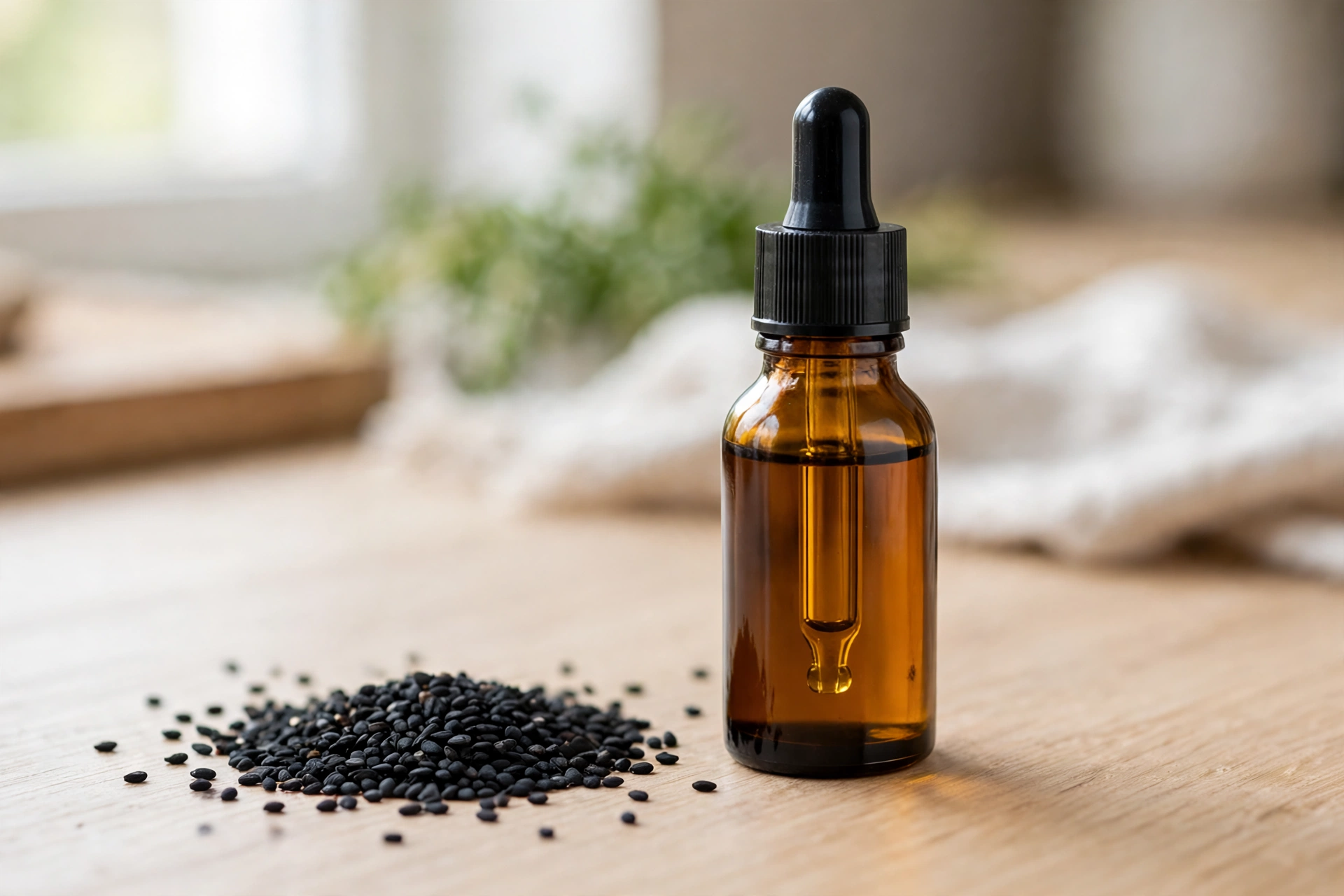
You search for the kalonji oil price in Pakistan and get ten different answers. One shop says Rs 600. Another says Rs 2,150. Same oil, same country — a gap of more than three times. Which bottle is real, and which one is a thin, watered-down oil with a fancy label?
This guide gives you the real numbers. We checked the kalonji oil price in Pakistan on five brands’ own websites on 6 November 2026 — eight bottles, sizes from 30ml to 200ml — and worked out the per-100ml cost for each, so you can compare fairly. If you are searching kalonji oil ki qeemat or kalonji ka tel ki price, this is the page to read before the 11.11 sale.
⚡ Direct answer — kalonji oil price in Pakistan:
- PRICE: Cheapest per 100ml is Rs 800 — NaumanSAB 125ml at Rs 1,000 and NatureZone 200ml at Rs 1,600. Most expensive is OLIM 30ml at Rs 2,600 per 100ml.
- 1. Typical range for pure oil from named brands: Rs 800–Rs 1,800 per 100ml.
- 2. Cold-pressed costs more: ChiltanPure 140ml cold-pressed is Rs 1,799 (Rs 1,285/100ml).
- 3. Honest note: BaBa Shop does NOT sell kalonji oil. We sell the seeds — chia, flax and sunflower — and this guide still tells you the truth about the oil, including where to buy it.
📑 In this guide
- Quick verdict: which bottle should you buy?
- Price comparison: 8 bottles + per-100ml cost
- What Rs 1,000 actually buys you
- Cold-pressed vs regular: is it worth paying more?
- Kalonji seeds vs kalonji oil: which is better value?
- What the research shows (and doesn’t)
- What dietitians actually say
- Safety warnings you should not skip
- Who should buy — and who should skip
- Local confusion cleared: kalonji, black seed, black cumin
- How to spot pure kalonji oil before you pay
- How we collected these prices
- Honest limitations
- Buying before the 11.11 sale
- FAQs
🏆 Quick verdict: which bottle should you buy?
Buy the bigger bottle. The 30ml bottles look cheap at Rs 600–780, but they cost two to three times more per millilitre than a 100ml or 200ml bottle of the same oil. If you plan to use the oil daily, a 100ml+ bottle is the only size that makes sense.
Buy NaumanSAB 125ml or NatureZone 200ml if…
Budget is your main concern. Both work out at Rs 800 per 100ml — the lowest verified rate in our check. One warning: NaumanSAB’s Rs 1,000 is a sale price against a regular price of Rs 2,200, so it may not last.
Buy ChiltanPure 140ml if…
You want cold-pressed oil from a well-known Pakistani brand at a mid-range price: Rs 1,799 (Rs 1,285/100ml). The site states it is cold-pressed, which the two cheapest bottles do not state.
Skip the 30ml bottles if…
You will use the oil every day. OLIM’s 30ml bottle costs Rs 780 — nearly the same money as a 125ml NaumanSAB bottle, for a quarter of the oil. Small bottles only make sense as a first trial.
⚠️ One honest caveat: we have NOT tested this oil ourselves. We do not sell kalonji oil, we have no lab results for these brands, and the prices below are the brands’ own listed prices — not our recommendation of any one bottle. What this guide does is show you the real price range and what the research actually says, so you can decide with open eyes.
💰 Price comparison: 8 bottles + per-100ml cost
Sticker price lies. A Rs 780 bottle can cost three times more per millilitre than a Rs 1,600 bottle. Here are eight verified bottles from five Pakistani brands, sorted from the lowest to the highest cost per 100ml:
| Brand | Size | Price | Per 100ml | Cold-pressed? |
|---|---|---|---|---|
| NaumanSAB Black Seed Oil | 125ml | Rs 1,000 (regular Rs 2,200) | Rs 800.0 ✅ cheapest | Not stated |
| NatureZone Black Seed Oil | 200ml | Rs 1,600 | Rs 800.0 ✅ cheapest | Not stated |
| NatureZone Black Seed Oil | 100ml | Rs 1,000 | Rs 1,000.0 | Not stated |
| NatureZone Black Seed Oil | 50ml | Rs 600 | Rs 1,200.0 | Not stated |
| ChiltanPure Black Seed Oil | 140ml | Rs 1,799 | Rs 1,285.0 | Yes ✅ |
| OLIM Naturals Kalonji Oil | 120ml | Rs 1,924 | Rs 1,603.3 | Yes ✅ |
| The Nature’s Store Black Seed Oil | 120ml | Rs 2,150 | Rs 1,791.7 | Not stated |
| OLIM Naturals Kalonji Oil | 30ml | Rs 780 | Rs 2,600.0 | Yes ✅ |
Source: each brand’s own website, checked 6 November 2026. Per-100ml = price ÷ size × 100. Delivery charges are extra and vary by seller. Full source URLs are listed in the methodology section below.
Two patterns jump out. First, size matters more than brand: the same NatureZone oil costs Rs 800/100ml in the 200ml bottle but Rs 1,200/100ml in the 50ml bottle — a 50% markup for the small pack. Second, the cold-pressed label does not fully explain the price: the two cold-pressed brands sit in the middle and top of the range, while the cheapest bottles simply do not state their extraction method at all.
🧮 What Rs 1,000 actually buys you
To make the comparison concrete, here is how much oil Rs 1,000 gets you at each verified rate — and what it costs per day if you take half a teaspoon (2.5ml) daily, the starting amount most brands suggest:
- At Rs 800/100ml (NaumanSAB, NatureZone 200ml): 125ml — about 50 days of use — Rs 8 a day.
- At Rs 1,285/100ml (ChiltanPure): about 78ml — about 31 days — Rs 13 a day.
- At Rs 1,792/100ml (The Nature’s Store): about 56ml — about 22 days — Rs 18 a day.
- At Rs 2,600/100ml (OLIM 30ml): about 38ml — about 15 days — Rs 26 a day.
A 100ml bottle at the cheapest rate lasts roughly 40 days at half a teaspoon a day. That is the number to keep in mind when a seller tells you a bottle is “only” Rs 600 — ask how many days it actually lasts.
🫗 Cold-pressed vs regular: is it worth paying more?
Cold-pressed means the oil is pressed out of the seeds mechanically at low temperature, without heat or chemical solvents. Regular or refined oil may use heat or solvents to squeeze out more oil per seed. Heat can damage the delicate compounds in the oil — including thymoquinone, the main active compound researchers study.
Only two of the five brands in our check state “cold-pressed” on their own product pages: ChiltanPure and OLIM Naturals. The other three do not state their method, so we will not guess — a bottle that does not say cold-pressed might still be cold-pressed, or it might not.
Is the premium worth it? The cold-pressed bottles in our table cost Rs 1,285–Rs 2,600 per 100ml, while the unstated-method bottles cost Rs 800–Rs 1,792 per 100ml. The ranges overlap, so the label alone does not explain the price gap. If cold-pressing matters to you, buy a bottle that states it clearly on the label — and check the thymoquinone (TQ) figure if the brand publishes one. SadaPure, for example, states a 0.60% thymoquinone content for its oil (a brand claim, not our test). Most brands publish no TQ figure at all, which makes honest comparison hard.
🌱 Kalonji seeds vs kalonji oil: which is better value?
The seeds are far cheaper than the oil. ChiltanPure lists kalonji seeds at Rs 599 for 200g — about Rs 300 per 100g — while its oil is Rs 1,285 per 100ml. That gap is normal: it takes a lot of seeds to press a small bottle of oil, and the oil is concentrated.
But seeds and oil are different products, not substitutes. The seeds go on naan, in curries and in pickles. The oil is used by the teaspoon, or massaged into scalp and skin. Do not buy seeds expecting the same use as oil, and do not buy oil expecting it to season your food the way whole seeds do.
If your budget is tight and you want kalonji in your daily routine, the seeds give you far more product per rupee. If you specifically want the oil — for scalp massage or a measured daily teaspoon — the 100ml+ bottles above are the sensible sizes. And if you want quality seeds at honest prices, BaBa Shop’s own range is below in the sale section: chia, golden flax and roasted sunflower seeds, all with per-100g prices listed.
🔬 What the research shows (and doesn’t)
Kalonji oil’s main active compound is thymoquinone. It is the compound most researchers focus on, and it is also what gives real kalonji oil its warm, peppery bite at the back of the throat. Here is what human trials — not animal or lab-dish studies — have actually found:
Blood fats (cholesterol and triglycerides)
A 2016 meta-analysis by Sahebkar and colleagues in Pharmacological Research pooled 17 randomised, placebo-controlled trials. On average, Nigella sativa lowered total cholesterol by 15.65 mg/dL, LDL (“bad”) cholesterol by 14.10 mg/dL, and triglycerides by 20.64 mg/dL. HDL (“good”) cholesterol did not change significantly. The oil form had a greater effect than seed powder on total and LDL cholesterol.
Blood pressure
A second 2016 meta-analysis by the same team in the Journal of Hypertension pooled 11 trials with 860 people. Over about eight weeks, black seed lowered systolic pressure by about 3.26 mmHg and diastolic by 2.80 mmHg versus placebo. That is a small, real effect — not a replacement for blood-pressure medicine.
Blood sugar
A 2017 meta-analysis by Daryabeygi-Khotbehsara and colleagues in Complementary Therapies in Medicine found that Nigella sativa modestly improved fasting glucose and HbA1c in people with type 2 diabetes. Again: modest, and as an addition to normal care, not a substitute for it.
The quality problem nobody mentions
Here is the part most sellers leave out. A 2023 overview by Li and colleagues in Frontiers in Nutrition looked at 20 meta-analyses of Nigella sativa and graded 88 of 110 outcome measures as very-low certainty. Only five reached moderate certainty. The trials are mostly small, short, and from a small number of regions. So the direction of the evidence is encouraging, but the strength of it is weak — and anyone selling kalonji oil as a proven cure is going far beyond what the research supports.
What kalonji oil has NOT been shown to do: the Memorial Sloan Kettering Cancer Center states plainly that black seed has not been shown to treat cancer in humans. Most of the dramatic claims you see online — cancer, miracle hair regrowth, diabetes reversal — come from lab or animal studies, not human trials. Do not buy a bottle expecting those results.
🎓 What dietitians actually say
Instead of our opinion, here are two registered dietitians, quoted verbatim:
“Black seed oil is typically safe for both internal and external use, but quality is key,” says Sarah Steele, MS, RDN, a registered dietitian and metabolic specialist at Signos. “I tell my clients to start low and go slow, so they can spot any side effects before ramping up.”
— The Healthy, “5 Black Seed Oil Benefits, According to Metabolism Specialists”
Black seed oil “is the oil extracted from black seeds, which come from the fruit of the plant Nigella sativa,” says Julia Zumpano, RD, LD, a registered dietitian with the Cleveland Clinic Center for Human Nutrition.
— The Healthy, “5 Black Seed Oil Benefits, According to Metabolism Specialists” (Source)
The balanced picture: dietitians treat black seed oil as a traditional food oil with modest, early evidence — worth trying in small amounts if you like it, never a replacement for prescribed medicine. A Cleveland Clinic preventive-medicine specialist has likewise said there is no robust, rigorous evidence supporting black seed oil for any specific condition (as summarised by Food Index). That is the honest middle ground: promising, not proven.
⚠️ Safety warnings you should not skip
Talk to your doctor first if you take prescription medicine. Black seed oil can lower blood sugar and blood pressure slightly, so it can add to the effect of diabetes and blood-pressure medicines. It can also slow blood clotting. Cleveland Clinic, WebMD and RxList all advise stopping it at least 2 weeks before scheduled surgery.
Avoid medicinal doses in pregnancy. Small amounts of the seeds in food are normal, but concentrated daily oil is not recommended during pregnancy without a doctor’s supervision. Breastfeeding mothers should also ask their doctor first.
- Start low, go slow: half a teaspoon (2.5ml) a day with food for the first week, then up to one teaspoon (5ml) if your stomach handles it. That is the routine SadaPure suggests on its own product page — not a medical prescription.
- Allergies and skin reactions: rashes and allergic reactions are documented. Patch-test on your inner arm before putting it on your face or scalp, and dilute a few drops into a plain moisturiser or carrier oil for sensitive skin.
- Stomach upset: nausea and gut discomfort are among the most commonly reported side effects. Taking it with food, honey or yoghurt — not on an empty stomach — helps most people.
- Rare but serious: Cleveland Clinic cites a case report of acute kidney failure in a person with diabetes after taking black seed oil, and irregular menstrual bleeding has also been documented. Rare does not mean impossible.
- Storage: keep the bottle tightly capped in a cool, dark cupboard below 25°C, away from stove heat and sunny windows. Light, heat and air break down thymoquinone and turn the oil rancid.
🧭 Who should buy — and who should skip
Buy if…
You want a traditional oil for scalp massage or skin care, you are happy to start with a small bottle to test it, and you have no medical reason to avoid it. Buy the 100ml+ size for daily use, and pick a bottle that states “100% Nigella sativa seed oil” and cold-pressed on the label.
Skip if…
You are pregnant or breastfeeding (medicinal doses), you take blood-pressure, diabetes or blood-thinner medicine and have not asked your doctor, you have surgery coming up in the next two weeks, or you are buying it expecting it to cure a health condition. Skip it too if you only want the cheapest bottle with no brand name and no label details — that is where diluted and mislabelled oil hides.
❓ Local confusion cleared
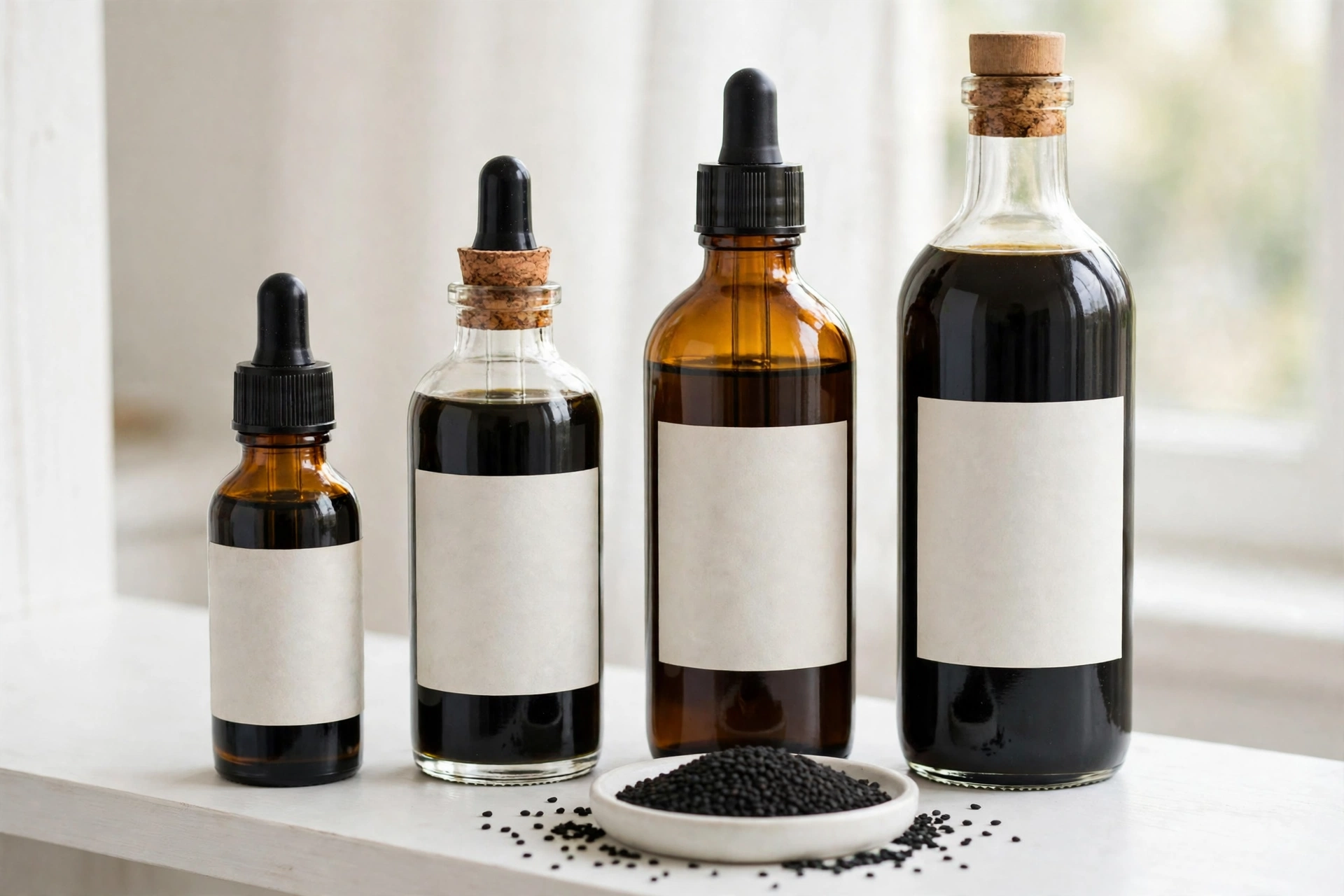
Is kalonji the same as black seed? Yes. Kalonji (کلونجی) is the Urdu name for the seeds of Nigella sativa. Black seed, black cumin and nigella sativa oil all mean the same product. In Roman Urdu it is searched as “kalonji ka tel” and “kalonji oil ki qeemat”.
Is kalonji the same as onion seed? No. Kalonji is often confused with onion seed (pyaz ke beej) because the two look similar, but they come from different plants. True kalonji is Nigella sativa — check the botanical name on the label.
Are kalonji seeds and kalonji oil the same thing? No. The seeds are the raw spice; the oil is pressed from them. They are used differently and priced very differently — seeds around Rs 300 per 100g, oil around Rs 800–1,800 per 100ml.
Is “black seed hair oil” the same as kalonji oil? Not always. Some products labelled “black seed hair oil” are blends — kalonji mixed with other oils. For example, Hemani Black Seeds Hair Oil 200ml sells for Rs 1,650, but it is a hair-oil blend, not pure kalonji oil — which is why it is not in our price table. If you want pure oil, the label should list only one ingredient: Nigella sativa seed oil.
🔍 How to spot pure kalonji oil before you pay
Use these five checks, drawn from what the brands themselves publish about genuine cold-pressed oil:
- Colour: deep amber to dark golden. Pale, clear oil is a warning sign.
- Smell and taste: a warm, herbal, peppery bite at the back of the throat. If it smells neutral or tastes bland, it has likely been heat-refined or blended with a neutral carrier oil (SadaPure).
- Label: one ingredient only — 100% Nigella sativa seed oil. No mineral oil, no sesame oil, no “fragrance” listed.
- Method: “cold-pressed” or “first-press” stated on the label. If the method is not stated, ask the seller before paying.
- Price: the cheapest verified pure oil in our check was Rs 800 per 100ml. A bottle far below that rate should make you suspicious, not happy.
Nutrition, for reference: one teaspoon of black seed oil contains about 45 calories and 5g of fat, with only trace vitamins and minerals (as listed on Khalispur’s product page). The oil is mostly fat — about 57.7% linoleic acid (omega-6) and 24.5% oleic acid (omega-9), per SadaPure’s published fatty-acid profile. It is not a vitamin source, and no honest seller should present it as one.
📋 How we collected these prices
All eight prices were checked on 6 November 2026 on each brand’s own website: ChiltanPure (chiltanpure.com), OLIM Naturals (olim.pk), NatureZone (naturezone.pk), The Nature’s Store (thenaturesstore.com) and NaumanSAB (naumansaboilcompany.com). Per-100ml values are simple division (price ÷ ml × 100). We did not survey Daraz sellers or local shops, so marketplace prices may differ — and Daraz listings change daily, which is why we stuck to brand websites with stable list prices.
What we left out, and why: SadaPure lists its oil at Rs 800 but states no bottle size anywhere on the page, so no per-100ml figure could be worked out. Khalispur lists three prices (Rs 850, Rs 1,200, Rs 2,200) but no sizes for its variants. Hemani’s pure black seed oil had no verified price we could find — only a blended hair oil. Marhaba had no kalonji oil listing we could find. Every one of these was omitted rather than guessed.
City-wise note: these are online list prices, identical whether you order from Karachi, Lahore, Islamabad, Sargodha or anywhere else in Pakistan. Local pansari and karyana shops may charge different prices, but we did not survey them and will not claim a city-wise price table we do not have. BaBa Shop’s own seeds range ships nationwide at a flat Rs 200 delivery charge, with the same pack prices in every city.
🔍 Honest limitations
- We have not tested any of these oils ourselves — no lab analysis, no taste test, no purity test. Our checks are label claims and listed prices only.
- We have no verified buyer reviews to aggregate for kalonji oil, because BaBa Shop does not sell it. We will not invent reviews, and we will not copy other sellers’ reviews and present them as our own findings.
- Prices are at the time of writing and can change; NaumanSAB’s Rs 1,000 is a sale price against a regular Rs 2,200, so it may not last. Stock availability is not guaranteed.
- Health figures are from published studies of generic Nigella sativa, not from testing these specific bottles. Thymoquinone content varies between brands, and most brands publish no figure at all.
🛒 Buying before the 11.11 sale
The 11.11 sale starts 10 November 2026 at 8pm PKT. No discount figures have been announced yet, so we will not guess at them — check the sale page on the night. And one thing is already certain: BaBa Shop does not sell kalonji oil, so there will be no kalonji oil sale price from us.
What we do sell — and what you can stock up on — is the seeds range. These are BaBa Shop’s verified pack prices, with the per-100g cost worked out:
| Seed | Pack | Price | Per 100g |
|---|---|---|---|
| Chia Seeds | 250g | Rs 799 | Rs 319.6 |
| Chia Seeds | 500g | Rs 1,299 | Rs 259.8 |
| Chia Seeds | 1kg | Rs 2,199 | Rs 219.9 |
| Golden Flax Seeds | 250g | Rs 499 | Rs 199.6 |
| Golden Flax Seeds | 500g | Rs 749 | Rs 149.8 |
| Golden Flax Seeds | 1kg | Rs 1,199 | Rs 119.9 |
| Roasted Sunflower Seeds | 250g | Rs 549 | Rs 219.6 |
| Roasted Sunflower Seeds | 500g | Rs 849 | Rs 169.8 |
| Roasted Sunflower Seeds | 1kg | Rs 1,399 | Rs 139.9 |
Seeds store well for months in airtight jars, so buying your 2–3 month supply in one order also saves on the flat Rs 200 delivery charge. Read the full comparison in our chia vs flax vs sunflower seeds guide, or the chia seeds buying guide if you want to start with one seed.
❔ Frequently asked questions
What is the kalonji oil price in Pakistan?
From our check of five brands’ own websites on 6 November 2026: bottles cost Rs 600–Rs 2,150, which works out at Rs 800–Rs 2,600 per 100ml. The lowest verified rate is Rs 800 per 100ml (NaumanSAB 125ml at Rs 1,000 and NatureZone 200ml at Rs 1,600).
Which kalonji oil is best in Pakistan?
There is no tested “best” — we have not lab-tested these oils, so we will not crown a winner. What to look for: 100% Nigella sativa seed oil as the only ingredient, cold-pressed on the label, a thymoquinone figure if the brand publishes one, and a per-100ml price in the Rs 800–1,800 range. ChiltanPure (140ml, Rs 1,799, cold-pressed) is the mid-range option that states its method clearly.
Is kalonji oil the same as black seed oil?
Yes. Kalonji oil, black seed oil, black cumin oil and nigella sativa oil are the same product — oil pressed from Nigella sativa seeds. Kalonji is simply the Urdu name.
What is kalonji oil used for?
Traditionally it is used for scalp and hair care, skin care, and as a food oil taken by the teaspoon. Human trials show only modest effects on blood fats, blood pressure and blood sugar — it is a traditional food oil with early evidence, not a medicine.
How do I use kalonji oil?
For daily use, brands generally suggest starting with half a teaspoon (2.5ml) a day mixed into warm water, honey or yoghurt after a meal, rising to one teaspoon (5ml) if your stomach handles it. For scalp care, massage a small amount in 45 minutes before shampooing. Patch-test on your inner arm first.
Is kalonji oil safe?
For most healthy adults in small amounts, yes — but with clear limits. Avoid medicinal doses in pregnancy, ask your doctor if you take blood-pressure, diabetes or blood-thinner medicine, and stop it at least two weeks before scheduled surgery. Rashes, nausea and stomach upset are the most commonly reported side effects.
Does BaBa Shop sell kalonji oil?
No. BaBa Shop does not sell kalonji oil, and this guide invents no price for one. We sell chia seeds, golden flax seeds and roasted sunflower seeds — see the price table above — with cash on delivery all over Pakistan.
✅ Conclusion
The kalonji oil price in Pakistan is not one number — it is a range from Rs 800 to Rs 2,600 per 100ml, and the bottle size matters more than the brand name. Buy 100ml or larger, check that the label says 100% Nigella sativa seed oil and cold-pressed, and treat the health claims the way the research does: modest, early evidence — worth trying in small amounts, never a cure. And if you want honest value from BaBa Shop itself, the seeds range in the table above is where your money goes furthest per rupee.
🛍️ Order seeds from BaBa Shop, Sargodha
- WhatsApp: 0092-302-4096495
- Cash on Delivery available all over Pakistan
- Flat Rs 200 delivery · Rs 50 off on Raast online payment
- Chia Seeds · Golden Flax Seeds · Sunflower Seeds
Kalonji oil is not sold by BaBa Shop — the guide above lists where to buy it.